
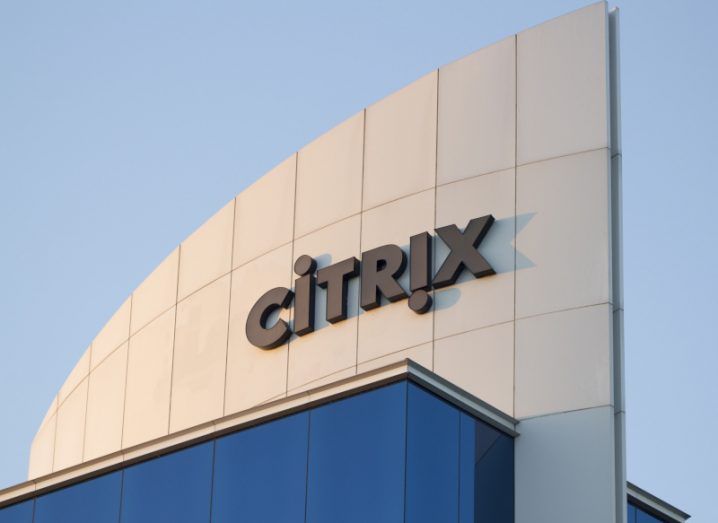
Citrix Layoffs
The Citrix Metamorphosis: Navigating the Turbulent Waters of Modern Tech Restructuring
The story of Citrix Systems over the last three years is a case study in the ruthless efficiency of modern private equity, the shifting tides of the enterprise software market, and the human cost of corporate consolidation. Once the undisputed king of Virtual Desktop Infrastructure (VDI), Citrix has transitioned from a public tech titan to a leaner, private entity under the umbrella of Cloud Software Group (CSG). However, this transition hasn’t come without a significant toll: thousands of layoffs that have reshaped the company’s culture and sent shockwaves through the tech industry.
Citrix Layoffs Citrix Layoffs
The Genesis of Change: A $16.5 Billion Bet
The catalyst for the massive downsizing began in early 2022, when Vista Equity Partners and Elliott Investment Management announced a $16.5 billion deal to take Citrix private. For years, Citrix had struggled to maintain its dominance as cloud-native competitors like Microsoft and Amazon Web Services (AWS) began encroaching on its territory.
The deal wasn’t just a simple acquisition; it was a merger of Citrix with TIBCO Software, another Vista portfolio company. The vision was to create a massive enterprise software conglomerate—Cloud Software Group—that could leverage “synergies” to improve profitability. In the language of private equity, “synergies” is often a polite euphemism for eliminating redundancy. By combining sales, marketing, and back-end operations, the new leadership aimed to squeeze an additional $500 million in EBITDA out of the combined entity.
Citrix Layoffs
The Timeline of the Citrix Layoffs
The restructuring didn’t wait for the ink to dry. The layoffs at Citrix and TIBCO occurred in distinct waves, each more surgical than the last.
1. The January 2023 “Bloodbath”
The most significant blow landed in January 2023. Shortly after the merger was finalized, CSG announced it was laying off approximately 15% of its workforce—roughly 2,000 to 4,000 employees. The cuts were broad, hitting everything from commercial sales and marketing to channel-facing roles and high-level engineering.
For many long-term employees, the delivery of the news was as jarring as the news itself. Reports surfaced of “brutal” termination processes, with some employees discovering they were locked out of their accounts before receiving official notice. One widely discussed anecdote on social media even claimed an employee was laid off via a video call by a representative who appeared to be wearing a bathrobe, highlighting a perceived lack of empathy in the process.
Citrix Layoffs
2. The 2024 “Efficiency” Pivot
As 2024 rolled in, the layoffs continued, albeit in more targeted “tranches.” The focus shifted toward off-shoring certain support roles to lower-cost regions and consolidating product lines. By this time, the goal of CSG CEO Tom Krause was clear: predictability. The company moved away from chasing high-growth, low-margin accounts and focused on its top 1,000 enterprise customers, leading to further reductions in the general sales force.
Citrix Layoffs
3. The 2025-2026 AI Restructuring
As of 2025 and 2026, the narrative has shifted toward AI integration. Like many of its peers in the tech sector (Intel, Microsoft, and Amazon), Citrix is currently undergoing a “skills-rebalancing” phase. While the company continues to trim roles that are easily automated, it is paradoxically hiring for AI-specialized positions. This “hollow-out” strategy has left the middle-tier workforce in a precarious position, where institutional knowledge is being traded for algorithmic efficiency.
Citrix Layoffs
Understanding the Strategy: The Private Equity Playbook
To understand why Citrix laid off over 1,200 people (and continues to trim), one must understand the Vista Equity Partners playbook. Vista, led by billionaire Robert F. Smith, is known for its rigorous, data-driven approach to software management. Their strategy often involves:
Standard Operating Procedures (SOPs): Implementing strict, uniform processes across all departments to ensure every dollar spent has a measurable ROI.
Customer Prioritization: Focusing almost exclusively on the “Global 2000.” If a customer isn’t spending enough to justify the high cost of high-touch support, they are pushed toward self-service or channel partners.
Operational Lean-ness: Eliminating “middle management” and roles that don’t directly contribute to product development or retention.
For Citrix, this meant a radical departure from its history as a “partner-first” company. The commercial sales team, which once helped thousands of small and medium businesses (SMBs) adopt VDI, was largely dismantled. The result is a company that is undeniably more profitable on paper, but arguably less influential in the broader market.
Citrix Layoffs
The Competitive Landscape: The “Microsoft” Factor
The layoffs weren’t just about internal efficiencies; they were a defensive response to an existential threat. For decades, Citrix enjoyed a symbiotic relationship with Microsoft. Citrix provided the sophisticated management layers on top of Windows that enterprises needed.
However, the launch and rapid maturation of Microsoft Azure Virtual Desktop (AVD) and Windows 365 changed the game. Many organizations found that Microsoft’s native cloud solutions were “good enough” and far cheaper than maintaining complex Citrix environments.
“We are no longer just competing on features; we are competing on the simplicity of the cloud,” noted one former Citrix engineer.
As Microsoft integrated VDI capabilities directly into the Azure stack, the “Citrix Tax”—the additional licensing fee enterprises paid to use Citrix on top of Windows—became harder to justify. The layoffs represent a downsizing of the company to match this new, smaller footprint in a world where Microsoft is the primary provider of remote work infrastructure.
Citrix Layoffs
The Impact on Company Culture and the Channel
Perhaps the most lasting damage of the layoffs has been to the Citrix Culture. Once known for its “Citrite” community—a group of fiercely loyal employees and engineers—the atmosphere has reportedly shifted to one of survival.
| Factor | Pre-Merger (Public) | Post-Merger (CSG/Private) |
| Primary Goal | Market Share & Growth | Profitability & EBITDA |
| Employee Sentiment | Community-focused | Performance-heavy / Fear of cuts |
| Sales Approach | Broad Market (SMB to Enterprise) | High-value Enterprise Only |
| Innovation Focus | New product categories | Refining core “Citrix Platform” |
The Channel Partners (resellers and consultants) have also felt the sting. Historically, Citrix relied on a massive network of partners to sell and support its products. By laying off channel managers and pivoting to a “direct-heavy” model for large accounts, Citrix has alienated many of the very people who built the brand. This has led to a surge in customers migrating to competitors like Nutanix or VMware (now Broadcom), though Broadcom’s own recent layoffs and price hikes have created a similar vacuum in the market.
Citrix Layoffs
The Human Cost of Technical Evolution
Beyond the balance sheets, the Citrix layoffs represent a significant loss of institutional knowledge. When you cut thousands of people, you lose the “how” and “why” of complex systems built over 30 years.
Many of those laid off were senior architects who understood the intricacies of the HDX protocol or the nuances of NetScaler (now rebranded back to Citrix ADC). While these cuts improve the bottom line in the short term, they risk slowing down innovation and degrading support quality in the long term. Former employees on platforms like TheLayoff.com have expressed concerns that the company is “running on fumes,” relying on its legacy install base rather than building the next generation of secure access.
Citrix Layoffs
Looking Ahead: Can Citrix Reclaim Its Throne?
Is there a future for Citrix after the layoffs? The answer lies in the “Citrix Platform” strategy. CSG is betting that by bundling Citrix’s virtualization, networking (NetScaler), and security tools into a single, high-value subscription, they can provide a level of security and performance that Microsoft’s “basic” tools cannot match.
However, this future requires a delicate balance. To succeed, Citrix must:
Stop the Brain Drain: They must find a way to retain the engineers who remain and convince them that the company still values innovation over just cost-cutting.
Integrate AI Effectively: Use AI not just to replace workers, but to make the complex management of virtual environments simpler for IT admins.
Repair Partner Relationships: Rebuild the trust of the channel partners who feel abandoned by the recent restructuring.
Citrix Layoffs
Conclusion
The Citrix layoffs are a sobering reminder of the volatility of the tech industry in the 2020s. As the era of “growth at all costs” gives way to the era of “efficiency at all costs,” even the most established names are not safe. For the 1,200+ employees who lost their jobs, the transition has been a painful disruption. For the industry, it is a signal that the VDI market has matured, and the giants of yesterday must become the lean, focused machines of tomorrow to survive.
Citrix remains a powerful tool, used by the world’s largest organizations. But the company that exits this period of restructuring will be fundamentally different from the one that entered it: quieter, leaner, and much more focused on the bottom line than the “Citrite” community of the past.
Citrix Layoffs
