Examples of Platform as a Service (PaaS)
In today’s fast-paced digital landscape, businesses are under constant pressure to develop, deploy, and scale applications quickly and efficiently. Traditional software development environments often require extensive infrastructure management, complex configurations, and ongoing maintenance. This is where Platform as a Service (PaaS) comes into play.
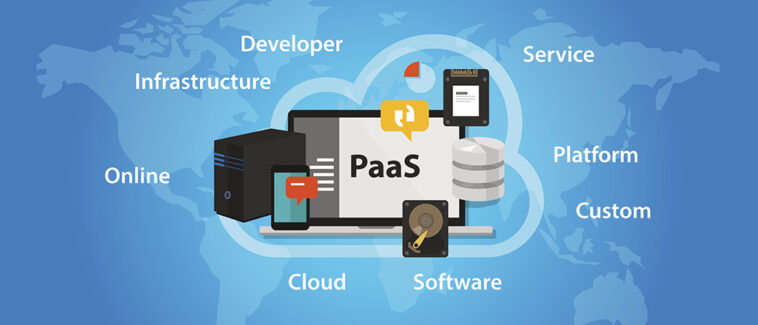
PaaS is a cloud computing model that provides developers with a complete platform to build, test, deploy, and manage applications without worrying about the underlying infrastructure. By abstracting away hardware, operating systems, and runtime environments, PaaS enables teams to focus entirely on innovation and application logic.
This article explores the most important examples of PaaS platforms, how they work, and the real-world use cases that make them essential for modern software development.
Examples of Platform as a Service (PaaS)
What is Platform as a Service (PaaS)?
Platform as a Service (PaaS) is a cloud-based environment that provides all the tools and services needed to support the full application lifecycle—from development to deployment and maintenance.
Unlike Infrastructure as a Service (IaaS), where users manage virtual machines and operating systems, or Software as a Service (SaaS), where users simply consume applications, PaaS sits in the middle by offering a ready-to-use development environment.
PaaS platforms typically include:
Development frameworks
Runtime environments
Database management systems
Middleware
Deployment tools
Monitoring and scaling features
This integrated environment reduces development complexity and accelerates time-to-market.
Key Benefits of PaaS
Before diving into examples, it is important to understand why PaaS has become so popular.
1. Faster Development
Developers can start building applications immediately without setting up infrastructure.
2. Reduced Complexity
No need to manage servers, operating systems, or network configurations.
3. Built-in Scalability
Applications can automatically scale based on demand.
4. Cost Efficiency
Organizations only pay for the resources they use.
5. Collaboration
Teams can work together in shared environments, improving productivity.
Examples of Platform as a Service (PaaS)
Top Examples of Platform as a Service (PaaS)
Below are some of the most widely used and influential PaaS platforms in the industry today.
1. Google Cloud Platform (App Engine)
One of the most well-known PaaS offerings is Google App Engine, part of Google Cloud Platform.
Key Features:
Fully managed environment
Automatic scaling
Support for multiple programming languages
Integrated services like databases and machine learning
Use Cases:
Web application development
Mobile backend services
API development
App Engine allows developers to deploy applications without managing infrastructure, making it ideal for startups and scalable applications.
Examples of Platform as a Service (PaaS)
2. Microsoft Azure (Azure App Service)
Microsoft Azure offers a robust PaaS environment through Azure App Service.
Key Features:
Support for .NET, Java, Python, Node.js
Built-in DevOps tools
Continuous integration and deployment
Enterprise-grade security
Use Cases:
Enterprise web applications
SaaS product development
Internal business tools
Azure is particularly popular among enterprises that rely on Microsoft technologies.
3. Amazon Web Services (Elastic Beanstalk)
AWS Elastic Beanstalk simplifies application deployment and management.
Key Features:
Easy deployment of applications
Automatic load balancing
Monitoring and logging
Integration with AWS ecosystem
Use Cases:
Scalable web applications
Microservices architectures
Backend systems
Elastic Beanstalk provides flexibility while still reducing infrastructure complexity.
4. Heroku
Heroku is one of the most developer-friendly PaaS platforms available.
Key Features:
Simple deployment using Git
Support for multiple programming languages
Add-ons for databases and services
Managed infrastructure
Use Cases:
Startup applications
Rapid prototyping
MVP development
Heroku is widely used for building and launching applications quickly.
5. Red Hat OpenShift
OpenShift is a Kubernetes-based PaaS platform designed for containerized applications.
Key Features:
Container orchestration
CI/CD pipelines
Hybrid and multi-cloud support
Enterprise-grade security
Use Cases:
Containerized applications
DevOps automation
Hybrid cloud deployments
OpenShift is ideal for organizations adopting container technologies.
Examples of Platform as a Service (PaaS)
6. IBM Cloud Foundry
IBM Cloud offers a PaaS solution based on Cloud Foundry.
Key Features:
Open-source architecture
Multi-language support
Integration with AI and analytics tools
Scalable infrastructure
Use Cases:
Enterprise applications
AI-powered applications
Data-driven systems
IBM Cloud Foundry is often used by large enterprises.
Examples of Platform as a Service (PaaS)
7. Salesforce Platform (Force.com)
Salesforce provides a PaaS environment for building CRM-based applications.
Key Features:
Low-code and no-code tools
Integration with CRM systems
Cloud-based database
Custom app development
Use Cases:
Business process automation
CRM customization
Enterprise workflows
This platform is particularly useful for organizations already using Salesforce.
Examples of Platform as a Service (PaaS)
8. Oracle Cloud Platform
Oracle Cloud offers a comprehensive PaaS solution for enterprise applications.
Key Features:
Database services
Application development tools
Integration services
Security and compliance features
Use Cases:
Enterprise resource planning (ERP)
Data analytics applications
Financial systems
Oracle’s PaaS is widely used in large-scale enterprise environments.
Examples of Platform as a Service (PaaS)
Real-World Use Cases of PaaS
Beyond individual platforms, PaaS enables a wide range of real-world applications.
1. Web Application Development
PaaS platforms allow developers to build and deploy web applications quickly without managing servers.
2. Mobile Application Backends
Developers can create backend services for mobile apps, including authentication, data storage, and APIs.
3. API Development and Integration
PaaS simplifies API creation and integration with other services.
4. DevOps and Continuous Delivery
Many PaaS platforms include built-in CI/CD tools, enabling automated testing and deployment.
5. Data Analytics and Machine Learning
Some PaaS solutions integrate advanced analytics and AI tools for building intelligent applications.
Examples of Platform as a Service (PaaS)
PaaS vs Other Cloud Models
Understanding PaaS requires comparing it with other cloud service models.
Infrastructure as a Service (IaaS) gives full control over infrastructure but requires more management.
Software as a Service (SaaS) provides ready-to-use applications but offers limited customization.
PaaS balances flexibility and convenience by offering a development platform without infrastructure management.
Examples of Platform as a Service (PaaS)
Challenges of Using PaaS
While PaaS offers many advantages, it also comes with some limitations.
1. Vendor Lock-In
Switching platforms can be difficult due to dependencies on specific tools and services.
2. Limited Control
Developers have less control over infrastructure compared to IaaS.
3. Security Considerations
Organizations must trust the provider to secure the platform.
4. Customization Limits
Some advanced configurations may not be supported.
Examples of Platform as a Service (PaaS)
The Future of PaaS
PaaS continues to evolve with emerging technologies such as:
Containerization
AI-driven development tools
Modern PaaS platforms are becoming more flexible and powerful, enabling developers to build complex applications with minimal effort.
Examples of Platform as a Service (PaaS)
Conclusion
Platform as a Service (PaaS) has become a cornerstone of modern application development. By providing a fully managed environment for building, testing, and deploying applications, PaaS allows developers to focus on innovation rather than infrastructure.
From platforms like Google Cloud App Engine and Microsoft Azure to developer-friendly tools like Heroku and enterprise solutions like OpenShift, PaaS offers a wide range of options to suit different needs.
As organizations continue to embrace cloud technologies, PaaS will play an increasingly important role in accelerating development, improving efficiency, and enabling scalable, high-performance applications in the cloud era.
Examples of Platform as a Service (PaaS)