
B2B SaaS Examples: to Leading Platforms and Business Applications
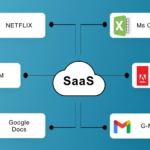
Software as a Service (SaaS) has reshaped how modern organizations operate, allowing businesses to access advanced software online without the need for local infrastructure. Within this vast ecosystem, B2B SaaS (Business-to-Business Software as a Service) has become one of the most influential technology models driving digital transformation.
From CRM systems to HR management tools, cybersecurity platforms, and advanced analytics engines, B2B SaaS solutions empower companies to improve productivity, reduce costs, and scale efficiently.
This article presents a detailed, academic-style overview of B2B SaaS, discusses its core benefits, and highlights the most important examples and platforms that dominate today’s enterprise software landscape.
What Is B2B SaaS?
B2B SaaS refers to cloud-based software solutions designed specifically for businesses, delivered via subscription and accessed through the internet.
Key Characteristics of B2B SaaS
Cloud-Based Infrastructure: No physical installation or hardware required.
Subscription Pricing Model: Monthly or yearly recurring revenue for providers.
Scalability: Ability to adjust plans according to business size.
Automatic Updates: Users always have access to the latest features.
Strong Security Management: Providers handle security, backups, and performance optimization.
High Availability: Ensures stable access across multiple devices and locations.
B2B SaaS Examples
Why Businesses Choose B2B SaaS
1. Reduced Operational Costs
Companies avoid expenses related to servers, maintenance, and technical staff. SaaS offers low upfront costs and predictable pricing.
2. Fast Deployment
Most solutions can be activated instantly after sign-up, minimizing implementation time.
3. Remote Accessibility
Teams can access the software from anywhere, which supports modern hybrid and remote work models.
4. Integrations and APIs
B2B SaaS solutions integrate seamlessly with CRM, ERP, marketing tools, accounting systems, and more.
5. Real-Time Analytics
Dashboards and reporting tools allow businesses to make data-driven decisions.
B2B SaaS Examples
Types of B2B SaaS Solutions
1. Customer Relationship Management (CRM)
Examples: Salesforce, HubSpot, Zoho CRM
Use cases: Lead management, sales analytics, customer communication.
2. Human Resources & Workforce Management
Examples: Workday, BambooHR, Gusto
Use cases: Payroll, performance management, employee onboarding.
3. Project & Collaboration Tools
Examples: Asana, Monday.com, Slack, Trello
Use cases: Task management, workflow automation, team communication.
4. Cybersecurity SaaS
Examples: CrowdStrike, Okta, Palo Alto Prisma Cloud
Use cases: Identity management, endpoint protection, cloud security.
5. Accounting & Finance SaaS
Examples: QuickBooks Online, Xero, FreshBooks
Use cases: Invoicing, financial reporting, expense management.
6. E-Commerce Platforms
Examples: Shopify Plus, BigCommerce Enterprise
Use cases: Online store management, payment processing, customer analytics.
B2B SaaS Examples
Top B2B SaaS Examples
Below are the most influential and widely used B2B SaaS platforms globally, along with analysis of their capabilities and competitive strengths.
1. Salesforce – The Global CRM Leader
Salesforce pioneered the concept of cloud-based CRM and remains one of the most dominant SaaS companies in the world.
Key Features
Sales Cloud for sales pipeline management
Service Cloud for customer support
Marketing Cloud for automated campaigns
Integration ecosystem through AppExchange
AI-powered analytics via Einstein AI
Why Salesforce Is Successful
Deep enterprise features
Massive marketplace of extensions
Continuous innovation in AI and automation
2. HubSpot – All-in-One CRM and Marketing Platform
HubSpot began as a marketing automation tool but has evolved into a comprehensive CRM suite.
Core Modules
Free CRM system
Marketing Hub
Sales Hub
Customer Service Hub
Content and SEO tools
Live chat, chatbots, and workflow automation
Distinct Strengths
Extremely user-friendly interface
Free tier that attracts small businesses
Strong content and inbound marketing capabilities
B2B SaaS Examples
3. Slack – Corporate Messaging and Collaboration
Slack is a B2B SaaS communication platform used by thousands of teams across the world.
Main Features
Real-time messaging via channels
File sharing and centralized communication
Call and video meeting capabilities
Integrations with Google Workspace, Trello, Salesforce, GitHub, and more
Slack streamlines communication and reduces reliance on email within organizations.
B2B SaaS Examples
4. Shopify Plus – Enterprise SaaS for E-Commerce
Shopify Plus is a scalable solution for large businesses seeking powerful online store management tools.
Business Capabilities
High-performance online storefront
Payment gateways and fraud protection
API integrations
Multi-channel selling (website, POS, social media)
Advanced automation via Shopify Flow
Major brands like Tesla, Pepsi, and Sephora use Shopify Plus for enterprise operations.
B2B SaaS Examples
5. Zoom – Video Conferencing SaaS
Zoom became popular globally due to its simplicity and reliability in virtual meetings.
Key Capabilities
High-quality video meetings
Breakout rooms and webinars
Cloud-based recording
Integration with enterprise tools
Scalable pricing for small and large teams
Zoom forms the foundation of remote collaboration for many organizations.
B2B SaaS Examples
6. Monday.com – Modern Work Operating System
Monday.com helps businesses plan, track, and automate workflows.
Features
Visual dashboards
Templates for HR, marketing, sales, and IT
Automation and integrations
Time tracking
Resource management
It is ideal for distributed teams that require visibility and accountability.
B2B SaaS Examples
7. Atlassian Suite (Jira & Confluence)
Atlassian offers two of the most essential B2B SaaS tools for tech teams.
Jira
Agile project management
Bug tracking
DevOps integrations
Sprint planning
Confluence
Collaborative documentation
Knowledge base creation
Centralized company resources
Together, they support software engineering, product teams, and enterprise operations.
8. Workday – Enterprise HR and Financial Management
Workday is a premium B2B SaaS platform for large enterprises.
Capabilities
HR lifecycle management
Talent acquisition and development
Payroll and compensation
Financial analytics
Workforce planning
Workday is widely used in government, finance, universities, and Fortune 500 companies.
B2B SaaS Examples
How to Choose the Right B2B SaaS Platform
1. Identify Business Needs
Clarify the exact challenges the software should solve (e.g., CRM, HR, security, accounting).
2. Evaluate Scalability
Ensure the platform can grow with your business.
3. Check Integrations
Look for compatibility with existing tools and APIs.
4. Assess Security Standards
Verify compliance with ISO, SOC 2, GDPR, and other regulations.
5. Consider Usability
The simpler the interface, the higher the employee adoption rate.
6. Compare Pricing
Review subscription tiers, usage limits, and hidden costs.
B2B SaaS Examples
Future Trends in B2B SaaS
1. Generative AI Integration
SaaS platforms increasingly use AI to automate tasks like forecasting, sales predictions, content creation, and customer support.
2. Vertical SaaS (Industry-Specific SaaS)
Tailored solutions for healthcare, finance, logistics, manufacturing, and hospitality.
3. Automation and RPA in the Cloud
Robotic Process Automation combined with SaaS reduces manual workloads.
4. Zero-Trust and Cloud Security Tools
With remote work increasing, cybersecurity SaaS is expected to grow rapidly.
5. No-Code and Low-Code SaaS
These tools allow employees to build internal apps without coding skills, improving agility.
B2B SaaS Examples
Conclusion
B2B SaaS has become a cornerstone of digital transformation, enabling companies to adopt powerful cloud solutions that enhance efficiency, reduce operational costs, and improve collaboration. From global leaders like Salesforce, HubSpot, Slack, Shopify Plus, Zoom, Workday, to specialized platforms like Jira and Monday.com, businesses now have access to scalable and secure software that can be deployed instantly.
As technology evolves and AI integrates deeper into SaaS ecosystems, B2B SaaS will continue to redefine how organizations operate—and remain one of the most critical areas of innovation in the global tech industry.