Managed Cloud Services for Modern Businesses
In today’s rapidly evolving digital landscape, organizations are increasingly relying on cloud technologies to enhance scalability, efficiency, and innovation. However, managing cloud environments can be complex, time-consuming, and resource-intensive. This is where managed cloud services come into play. Managed cloud services allow businesses to outsource the management, maintenance, and optimization of their cloud infrastructure to specialized providers.
By leveraging managed cloud services, companies can focus on their core operations while experts handle the technical aspects of cloud environments. This model has become a critical strategy for organizations seeking reliability, security, cost optimization, and continuous performance improvements in their cloud infrastructure.
This article explores the concept of managed cloud services, their benefits, components, use cases, challenges, and future trends.
Managed Cloud Services
What Are Managed Cloud Services?
Managed cloud services refer to the outsourcing of cloud infrastructure management and related technical responsibilities to a third-party provider. These providers handle tasks such as monitoring, maintenance, security, performance optimization, backup management, and system updates.
Typically, managed cloud service providers (MCSPs) support cloud platforms such as:
Amazon Web Services (AWS)
Microsoft Azure
Google Cloud Platform (GCP)
Hybrid and multi-cloud environments
Instead of building a large internal IT team to manage cloud operations, businesses rely on these specialized providers to ensure that their systems run efficiently and securely.
Managed cloud services can cover a wide range of responsibilities, from simple monitoring to full lifecycle management of cloud infrastructure.
Managed Cloud Services
Key Components of Managed Cloud Services
Managed cloud services typically include several critical components that ensure smooth operation of cloud environments.
1. Infrastructure Management
Infrastructure management involves maintaining virtual machines, storage systems, networking configurations, and operating systems within the cloud. Providers ensure that resources are properly allocated and optimized for performance and cost efficiency.
Tasks include:
Server configuration and management
Storage allocation and monitoring
Network setup and optimization
Capacity planning
2. Monitoring and Performance Optimization
Continuous monitoring is essential to maintain system reliability. Managed service providers use advanced monitoring tools to track performance metrics such as CPU usage, memory utilization, network traffic, and application response times.
If any issues arise, the provider can quickly identify and resolve them before they impact users.
3. Security Management
Security is one of the most important aspects of cloud management. Managed cloud providers implement robust security measures including:
Identity and access management (IAM)
Firewall configuration
Threat detection and response
Security patching
Compliance monitoring
These services help protect sensitive data and ensure compliance with regulatory requirements.
4. Backup and Disaster Recovery
Managed cloud services often include automated backup solutions and disaster recovery strategies. This ensures that businesses can recover quickly from unexpected failures, cyberattacks, or data loss incidents.
Key features include:
Automated data backups
Replication across multiple locations
Disaster recovery planning
Rapid system restoration
5. Patch Management and Updates
Cloud environments require regular updates and patches to maintain security and functionality. Managed service providers ensure that operating systems, applications, and security patches are applied promptly.
This reduces the risk of vulnerabilities and system downtime.
6. Cost Management and Optimization
Cloud costs can quickly escalate if resources are not properly managed. Managed cloud providers analyze usage patterns and recommend optimization strategies such as:
Scaling resources up or down
Eliminating unused instances
Choosing cost-efficient pricing models
This helps organizations maximize value while minimizing expenses.
Types of Managed Cloud Services
Managed cloud services can vary depending on the level of management and the type of infrastructure involved.
Fully Managed Cloud
In a fully managed cloud environment, the provider handles nearly all aspects of cloud infrastructure, including monitoring, security, maintenance, and optimization. Businesses simply use the applications without worrying about the underlying systems.
Co-Managed Cloud
In a co-managed model, responsibilities are shared between the internal IT team and the managed cloud provider. This allows businesses to retain control over certain processes while benefiting from expert support.
Managed Multi-Cloud
Many organizations use multiple cloud providers to avoid vendor lock-in and improve flexibility. Managed multi-cloud services help coordinate and manage workloads across different cloud platforms.
Managed Hybrid Cloud
Hybrid cloud environments combine on-premises infrastructure with public cloud services. Managed hybrid cloud providers ensure seamless integration between these systems.
Benefits of Managed Cloud Services
Managed cloud services offer numerous benefits for businesses of all sizes.
1. Reduced Operational Complexity
Managing cloud infrastructure requires specialized knowledge and constant attention. Managed cloud providers handle these complexities, allowing businesses to focus on strategic initiatives.
2. Improved Security and Compliance
Experienced providers implement advanced security frameworks and ensure compliance with industry regulations such as GDPR, HIPAA, and ISO standards.
3. Cost Efficiency
By optimizing resource usage and eliminating unnecessary infrastructure, managed cloud services help reduce overall IT costs.
4. Scalability and Flexibility
Managed cloud environments can quickly scale resources up or down based on demand, enabling businesses to respond to market changes effectively.
5. Access to Expertise
Managed cloud providers employ skilled engineers and cloud specialists who stay updated on the latest technologies and best practices.
6. 24/7 Monitoring and Support
Most managed cloud services include round-the-clock monitoring and support, ensuring rapid response to issues and minimizing downtime.
Common Use Cases
Managed cloud services are widely used across many industries.
Startups and Small Businesses
Startups often lack large IT teams. Managed cloud services provide the infrastructure and expertise needed to scale quickly without heavy upfront investment.
E-Commerce Platforms
Online stores require reliable infrastructure that can handle traffic spikes during sales events. Managed cloud services ensure performance and uptime.
Healthcare Organizations
Healthcare providers must maintain strict data security and compliance standards. Managed cloud providers help meet these regulatory requirements.
Financial Institutions
Banks and financial services companies rely on managed cloud services to maintain secure and highly available systems.
Software Development Companies
Development teams benefit from managed cloud platforms that support continuous integration, testing, and deployment pipelines.
Challenges and Considerations
While managed cloud services offer significant advantages, businesses must consider certain challenges before adopting them.
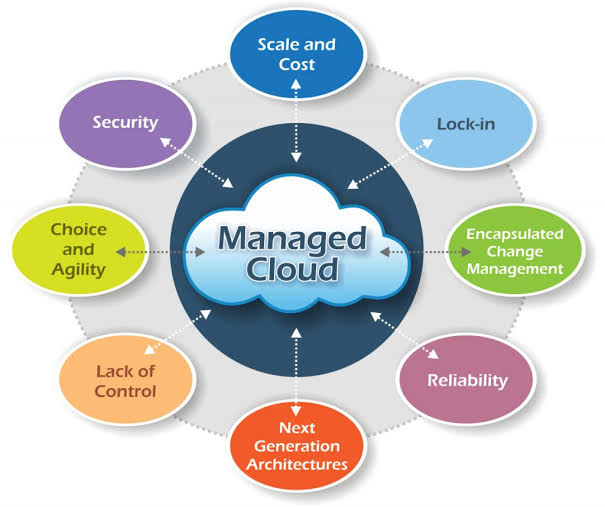
Vendor Lock-In
Some organizations become heavily dependent on a single provider. This can make switching providers difficult.
Cost Transparency
Although managed services can reduce costs, pricing models may sometimes be complex. Businesses must carefully review service agreements and billing structures.
Data Control and Privacy
Companies handling sensitive information must ensure that managed cloud providers follow strict data protection policies.
Service Level Agreements (SLAs)
It is essential to review SLAs carefully to understand uptime guarantees, response times, and support availability.
Best Practices for Choosing a Managed Cloud Provider
Selecting the right managed cloud provider is crucial for long-term success.
Organizations should evaluate:
Experience and certifications in major cloud platforms.
Security expertise and compliance capabilities.
Transparent pricing models.
Customer support availability.
Scalability and flexibility of services.
Reputation and customer reviews.
A reliable provider should also offer customized solutions tailored to the organization’s specific needs.
Future Trends in Managed Cloud Services
The managed cloud services market continues to grow as businesses increasingly adopt cloud technologies.
Key trends include:
AI-Driven Cloud Management
Artificial intelligence and machine learning are being integrated into cloud monitoring tools to predict failures and automate optimization processes.
Increased Adoption of Multi-Cloud Strategies
Organizations are moving toward multi-cloud environments to increase flexibility and avoid reliance on a single vendor.
Enhanced Cybersecurity Solutions
With rising cyber threats, managed cloud providers are investing heavily in advanced threat detection and zero-trust security models.
Edge Computing Integration
Edge computing is expanding the role of managed cloud services by processing data closer to its source, improving performance for real-time applications.
Conclusion
Managed cloud services have become a fundamental component of modern IT strategies. By outsourcing cloud infrastructure management to specialized providers, organizations can improve efficiency, strengthen security, and reduce operational complexity.
These services enable businesses to focus on innovation and growth rather than spending valuable time managing technical infrastructure. As cloud technologies continue to evolve, managed cloud services will play an even more significant role in supporting digital transformation across industries.
Organizations that carefully choose the right managed cloud provider and adopt best practices can unlock the full potential of cloud computing while ensuring reliability, scalability, and long-term success.