B2B SaaS: The Backbone of Modern Digital Business
Over the past two decades, the software industry has undergone a profound transformation. Traditional software distribution models—where companies purchased expensive licenses, installed programs locally, and managed infrastructure themselves—have largely given way to cloud-based solutions. Among the most impactful of these innovations is B2B SaaS (Business-to-Business Software as a Service), a model that has fundamentally reshaped how organizations access, deploy, and scale software.
B2B SaaS refers to cloud-based software solutions designed specifically for businesses rather than individual consumers. These applications are delivered over the internet and are typically accessed through web browsers or APIs. Instead of buying software outright, companies subscribe to these services, paying monthly or annually for access.
Today, B2B SaaS powers everything from customer relationship management (CRM) and human resources systems to cybersecurity platforms, marketing automation tools, and enterprise resource planning (ERP) solutions. In fact, many of the world’s fastest-growing technology companies operate entirely on the B2B SaaS model.
This article explores what B2B SaaS is, how it works, its advantages and challenges, common business models, real-world examples, and why it has become one of the most powerful forces shaping the modern digital economy.
What is B2B SaaS?
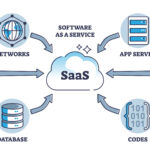
B2B SaaS stands for Business-to-Business Software as a Service. It is a cloud computing model where software providers develop applications that are hosted online and delivered to other businesses through a subscription-based system.
Instead of installing software on local servers or computers, businesses simply log into the software via the internet. The service provider manages everything behind the scenes, including:
Hosting infrastructure
Software updates
Security patches
Data backups
System maintenance
This means customers can focus on using the software rather than maintaining it.
Key Characteristics of B2B SaaS
Cloud-Based Delivery
The software runs on remote servers and is accessed through the internet.Subscription Pricing
Customers typically pay monthly or annually instead of purchasing a perpetual license.Automatic Updates
New features and security updates are deployed automatically.Scalability
Businesses can increase or decrease usage based on their needs.Multi-Tenant Architecture
A single software instance serves multiple customers while keeping their data separate.
How B2B SaaS Works
The B2B SaaS model relies on cloud infrastructure and modern web technologies. Providers host their software on cloud platforms, allowing users to access it from anywhere.
The general workflow looks like this:
Software Development
The company builds a web-based application designed to solve a specific business problem.Cloud Hosting
The software is deployed on cloud servers such as AWS, Microsoft Azure, or Google Cloud.Subscription Access
Businesses subscribe to the software through pricing plans.User Access
Customers log in through a browser or integrate the software via APIs.Continuous Updates
The provider improves the software continuously without requiring users to reinstall anything.
This architecture allows companies to deploy powerful software solutions quickly and efficiently.
The B2B SaaS Business Model
One of the defining aspects of B2B SaaS is its recurring revenue model. Instead of selling software once, companies earn predictable income through subscriptions.
Common Pricing Models
1. Subscription-Based Pricing
Customers pay a fixed monthly or annual fee.
Example:
$29 per user per month
$500 per company per month
2. Tiered Pricing
Different packages offer varying levels of features.
Example tiers:
Basic
Professional
Enterprise
3. Usage-Based Pricing
Customers pay based on how much they use the service.
Example:
Cost per API call
Cost per gigabyte of data
4. Freemium Model
A limited version of the software is free, encouraging users to upgrade for advanced features.
Benefits of B2B SaaS for Businesses
The rise of B2B SaaS is not accidental. The model offers significant advantages compared to traditional software.
1. Lower Upfront Costs
Traditional enterprise software often required large upfront investments in licenses and infrastructure. B2B SaaS eliminates this barrier by offering affordable subscription plans.
Companies can start small and scale over time.
2. Rapid Deployment
Since the software is hosted in the cloud, implementation is much faster. Businesses can begin using the software almost immediately after signing up.
There is no need for lengthy installation or hardware setup.
3. Automatic Updates
Software vendors regularly release updates, improvements, and security patches automatically.
Users always have access to the latest version of the software.
4. Scalability
As businesses grow, their software needs evolve. B2B SaaS platforms allow organizations to easily add users, expand storage, or upgrade features.
This flexibility makes SaaS ideal for startups and enterprises alike.
5. Accessibility and Remote Work
Cloud-based SaaS tools can be accessed from anywhere with an internet connection.
This has become especially important in the era of remote and hybrid work.
Common Categories of B2B SaaS Software
B2B SaaS spans a wide range of business functions. Some of the most popular categories include:
Customer Relationship Management (CRM)
CRM platforms help businesses manage customer interactions, track sales pipelines, and improve relationships with clients.
Features often include:
Contact management
Sales forecasting
Marketing automation
Human Resources Management (HRM)
HR SaaS solutions simplify employee management, payroll, recruitment, and performance tracking.
Key functions include:
Employee records
Benefits management
Time tracking
Marketing Automation
These tools help companies automate marketing campaigns, email outreach, and lead generation.
Capabilities include:
Email marketing
Lead scoring
Campaign analytics
Project Management
Project management SaaS platforms help teams collaborate and track tasks.
Common features:
Task assignments
Timeline tracking
Team collaboration
Accounting and Finance
Financial SaaS software helps businesses manage invoices, expenses, taxes, and financial reports.
Challenges of B2B SaaS
While B2B SaaS offers many advantages, the model also presents challenges for both providers and customers.
Security Concerns
Because data is stored in the cloud, businesses must trust providers to protect sensitive information.
Strong encryption, compliance certifications, and security protocols are essential.
Vendor Lock-In
Switching SaaS providers can be difficult once a company integrates the software deeply into its operations.
Data migration and retraining employees can be costly.
Internet Dependency
SaaS platforms require a stable internet connection. If connectivity is disrupted, access to the software may be temporarily unavailable.
Competitive Market
The SaaS market is highly competitive. Many companies offer similar solutions, making differentiation and customer retention critical for providers.
Key Metrics in B2B SaaS
Successful SaaS companies rely heavily on data and performance metrics to measure growth.
Some of the most important metrics include:
Monthly Recurring Revenue (MRR)
The predictable monthly income generated from subscriptions.
Customer Acquisition Cost (CAC)
The total cost required to acquire a new customer.
Customer Lifetime Value (LTV)
The total revenue expected from a customer over the entire relationship.
Churn Rate
The percentage of customers who cancel their subscriptions.
Maintaining a healthy balance between CAC and LTV is essential for sustainable growth.
The Future of B2B SaaS
The B2B SaaS market continues to grow rapidly as digital transformation accelerates across industries.
Several trends are shaping the future of SaaS:
Artificial Intelligence Integration
AI-powered SaaS tools are becoming increasingly common. Businesses now rely on AI for automation, analytics, and decision-making.
Examples include:
Predictive sales analytics
AI-powered customer support
Intelligent marketing automation
Vertical SaaS
Instead of generic tools, many companies now build SaaS solutions tailored to specific industries such as healthcare, logistics, finance, or education.
These specialized platforms address the unique needs of each sector.
API-Driven Ecosystems
Modern SaaS products are designed to integrate with many other platforms through APIs.
This creates powerful ecosystems where multiple SaaS tools work together seamlessly.
Global SaaS Expansion
Because SaaS products are delivered online, companies can reach global markets more easily than traditional software vendors.
Conclusion
B2B SaaS has become a cornerstone of modern business technology. By delivering software through the cloud, it allows companies to access powerful tools without the complexity of traditional infrastructure.
The model offers numerous advantages, including lower costs, faster deployment, scalability, and continuous innovation. At the same time, businesses must consider challenges such as security, vendor dependency, and data management.
As digital transformation continues across industries, the demand for flexible, cloud-based solutions will only increase. With the integration of artificial intelligence, industry-specific platforms, and global accessibility, B2B SaaS is poised to remain one of the most influential business models in the technology sector for years to come.
For organizations seeking efficiency, scalability, and innovation, B2B SaaS is not just a technological option—it is becoming a fundamental component of the modern digital economy.