Citrix vs VMware VDI: for Modern Virtual Desktop Infrastructure
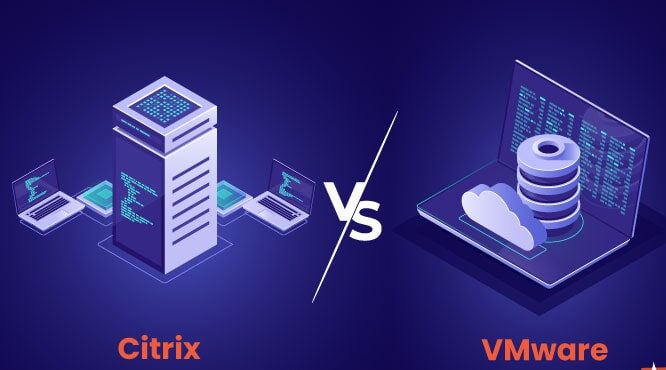
Virtual Desktop Infrastructure (VDI) has become a cornerstone of modern IT strategies, enabling organizations to deliver secure, scalable, and flexible desktop environments to users anywhere in the world. Among the leading players in this space, Citrix and VMware stand out as the most widely adopted solutions. The debate of Citrix vs VMware VDI is common among IT decision-makers, system architects, and CIOs seeking the best solution for their enterprise needs.
This in-depth guide explores Citrix vs VMware VDI across architecture, performance, user experience, security, scalability, licensing, cost, and real-world use cases—helping you make an informed decision.
What Is VDI and Why It Matters?
VDI allows desktops to be hosted centrally in a data center or cloud environment and delivered to end users over a network. Instead of running operating systems locally, users access virtual desktops from thin clients, laptops, or mobile devices.
Key benefits of VDI include:
Centralized management
Improved security
Remote workforce enablement
Reduced hardware dependency
Scalability and flexibility
With the rise of hybrid work, choosing the right VDI platform is more critical than ever.
Overview of Citrix VDI
Citrix has been a pioneer in virtualization and remote access technologies for decades. Its flagship VDI solution, Citrix Virtual Apps and Desktops (CVAD), is known for high performance, superior user experience, and advanced protocol optimization.
Key Citrix Components
Citrix Virtual Apps and Desktops
Citrix Hypervisor (formerly XenServer)
HDX Protocol
Citrix Workspace
Citrix NetScaler (ADC)
Citrix is often favored in environments where user experience over low-bandwidth or high-latency networks is critical.
Overview of VMware VDI
VMware’s VDI solution, VMware Horizon, is tightly integrated into the VMware ecosystem, making it a natural choice for organizations already invested in VMware infrastructure.
Key VMware Components
VMware Horizon
vSphere
vCenter
Blast Extreme Protocol
Unified Access Gateway
VMware Horizon excels in simplicity, integration, and operational consistency—especially for VMware-centric IT teams.
Citrix vs VMware VDI: Architecture Comparison
Citrix Architecture
Citrix offers a highly modular architecture that supports:
On-premises
Multi-cloud (Azure, AWS, GCP)
Citrix’s architecture allows granular control and customization, but it can be more complex to deploy and manage.
VMware Architecture
VMware Horizon benefits from native integration with vSphere, reducing architectural complexity. Deployment is often faster and more straightforward for existing VMware customers.
Verdict:
Citrix = More flexible and customizable
VMware = Simpler and more unified
Citrix vs VMware VDI
Performance and User Experience
Citrix Performance
Citrix is widely regarded as the leader in performance optimization. Its HDX protocol dynamically adapts to network conditions, making it ideal for:
Remote users
Low-bandwidth environments
Graphics-intensive workloads
Citrix performs exceptionally well for industries such as healthcare, finance, and engineering.
VMware Performance
VMware’s Blast Extreme protocol delivers strong performance, especially in stable, high-bandwidth networks. GPU acceleration and multimedia handling have improved significantly in recent releases.
Verdict:
Citrix excels in challenging network conditions
VMware performs best in controlled enterprise networks
Security Capabilities
Security is a top concern when evaluating Citrix vs VMware VDI.
Citrix Security
Citrix offers:
Advanced session isolation
App-level security controls
Zero Trust integration
Secure ICA proxy via NetScaler
Granular policy enforcement
Citrix is often chosen by organizations with strict compliance requirements.
VMware Security
VMware integrates seamlessly with:
NSX micro-segmentation
Identity federation
Secure Access Gateway
Endpoint compliance checks
VMware’s strength lies in infrastructure-level security and ecosystem integration.
Verdict:
Both platforms are highly secure, but Citrix provides more fine-grained session controls, while VMware excels in network-level security.
Citrix vs VMware VDI
Scalability and Cloud Readiness
Citrix Scalability
Citrix supports:
Large-scale global deployments
Multi-cloud environments
Elastic scaling with Citrix DaaS
It is particularly strong for enterprises with geographically distributed users.
VMware Scalability
VMware Horizon scales efficiently within VMware environments and supports cloud deployments via:
VMware Cloud on AWS
Azure VMware Solution
Verdict:
Citrix is more cloud-agnostic
VMware is optimal for VMware-based clouds
Citrix vs VMware VDI
Management and Administration
Citrix Management
Citrix offers deep customization but has a steeper learning curve. Administrators must manage multiple components and policies.
VMware Management
VMware Horizon is generally easier to manage, especially for teams already familiar with vSphere and vCenter.
Verdict:
Citrix = Powerful but complex
VMware = Simpler and more intuitive
Licensing and Cost Comparison
Cost plays a major role in the Citrix vs VMware VDI decision.
Citrix Licensing
Citrix uses subscription-based licensing, often perceived as expensive. Pricing increases with advanced features and scalability.
VMware Licensing
VMware Horizon is typically more cost-effective, especially for existing VMware customers who can leverage bundled licensing.
Verdict:
Citrix = Higher cost, premium features
VMware = Better value for VMware-centric organizations
Citrix vs VMware VDI
Use Case Scenarios
When to Choose Citrix
Remote and hybrid workforce
Poor or variable network conditions
High-security environments
Global enterprise deployments
Advanced user experience requirements
When to Choose VMware
Existing VMware infrastructure
Cost-sensitive projects
Simpler deployments
Internal enterprise users
IT teams with VMware expertise
Citrix vs VMware VDI: Feature Comparison Table
| Feature | Citrix VDI | VMware VDI |
|---|---|---|
| User Experience | Excellent | Very Good |
| Network Optimization | Superior | Good |
| Security Controls | Advanced | Strong |
| Ease of Management | Moderate | High |
| Cloud Flexibility | Excellent | Good |
| Cost Efficiency | Lower | Higher |
| VMware Integration | Limited | Native |
Future Outlook
Both Citrix and VMware continue to innovate, especially in:
Cloud-native VDI
Desktop-as-a-Service (DaaS)
Zero Trust security
AI-driven performance optimization
Citrix is focusing heavily on secure workspace and experience optimization, while VMware is aligning VDI with broader cloud and infrastructure strategies.
Final Verdict: Citrix vs VMware VDI
The decision between Citrix vs VMware VDI ultimately depends on your organization’s priorities.
Choose Citrix VDI if your focus is performance, security, and global scalability.
Choose VMware VDI if you value simplicity, cost-efficiency, and tight VMware integration.
There is no one-size-fits-all solution. A successful VDI strategy aligns technology with business goals, user needs, and IT capabilities.