
Example of Platform as a Service in Cloud Computing
Cloud computing has fundamentally changed how software is built, delivered, and maintained. In the past, developing an application required purchasing servers, installing operating systems, configuring databases, and maintaining hardware infrastructure. Today, developers can launch complex applications in hours instead of months. One of the main technologies that made this transformation possible is Platform as a Service (PaaS).
Many people searching for an example of platform as a service in cloud computing want to understand not only what PaaS means, but also how it works in real life and why businesses rely on it. This article provides a detailed explanation of the PaaS model, real-world examples, advantages, limitations, and how it compares to other cloud service models.
Example of Platform as a Service in Cloud Computing
What Is Platform as a Service (PaaS)?
Platform as a Service (PaaS) is a cloud computing model that provides a complete development and deployment environment over the internet. The cloud provider supplies the infrastructure and platform components required to build and run applications, while the developer focuses only on writing and managing application code.
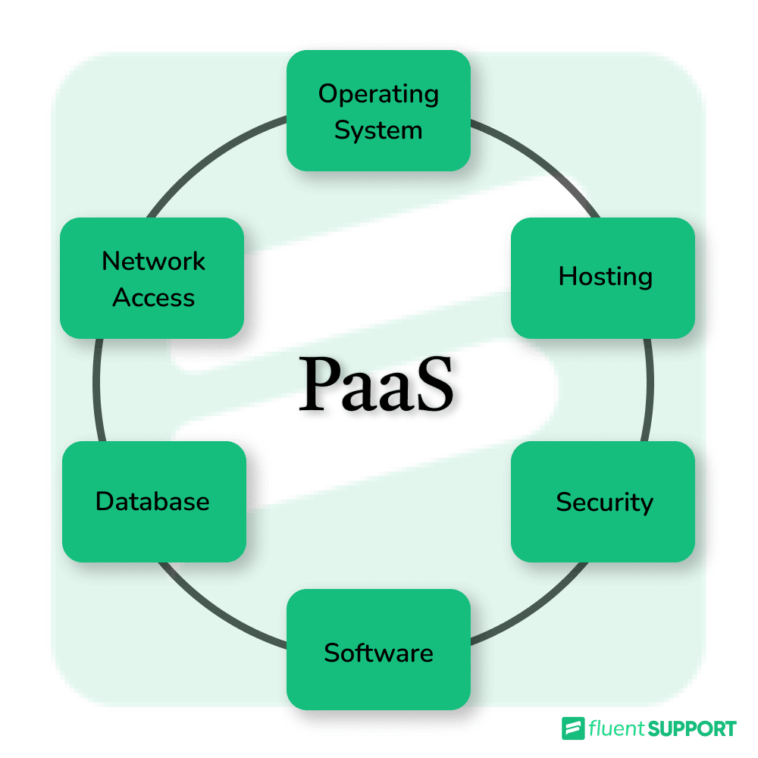
In a PaaS environment, the provider manages:
Servers and storage
Networking
Virtualization
Operating systems
Middleware
Runtime environments
Databases
Security patching
Performance monitoring
Developers simply upload their application and run it.
This is why PaaS is often described as a developer-centric cloud service.
Understanding the Cloud Service Models
To fully understand an example of platform as a service in cloud computing, it is important to see where PaaS fits within the cloud computing stack.
There are three primary service models:
1. Infrastructure as a Service (IaaS)
The provider gives virtual servers and networking resources, but the user manages the operating system and applications.
2. Platform as a Service (PaaS)
The provider manages both infrastructure and operating system, while the user manages the application and data.
3. Software as a Service (SaaS)
The provider manages everything, and the user simply uses the application.
PaaS sits in the middle — offering flexibility without the complexity of infrastructure management.
Example of Platform as a Service in Cloud Computing (Real-World Platforms)
Below are some of the most widely used real-world PaaS platforms.
1. Google App Engine
Google App Engine is one of the clearest examples of platform as a service in cloud computing. It allows developers to build and host scalable web applications directly on Google’s infrastructure.
Key features:
Automatic scaling
Built-in load balancing
Integrated NoSQL and SQL databases
Support for Python, Java, Node.js, Go, and PHP
If your application suddenly receives thousands of users, Google automatically increases resources without manual configuration.
2. Microsoft Azure App Service
Microsoft Azure App Service is a popular enterprise PaaS solution used by startups and large corporations alike.
It allows developers to deploy:
Web apps
Mobile backends
REST APIs
Supported languages include:
.NET
Java
Python
Node.js
PHP
Azure handles operating system updates, server maintenance, and security patches automatically.
3. Heroku
Heroku is one of the simplest and most beginner-friendly PaaS platforms.
Developers can deploy an application using a single command:
Heroku manages:
Containers
Runtime environment
Scaling
Monitoring
Because of its simplicity, it is widely used for prototypes and startup applications. This makes it a classic example of platform as a service in cloud computing.
4. AWS Elastic Beanstalk
Amazon Web Services offers AWS Elastic Beanstalk as its PaaS solution. Developers upload code, and AWS automatically handles deployment, scaling, and monitoring.
Supported technologies include:
Java
Python
Node.js
.NET
Docker
It integrates seamlessly with other AWS services like S3 and RDS.
How Platform as a Service Works
Here is the typical workflow in a PaaS environment:
A developer writes application code.
The code is uploaded to the PaaS platform.
The platform automatically configures the runtime environment.
The application is deployed to the internet.
The provider monitors performance and scales resources automatically.
This process removes the need for system administration, allowing development teams to focus entirely on innovation.
Example of Platform as a Service in Cloud Computing
Key Advantages of PaaS
1. Faster Development
Preconfigured environments eliminate setup time. Teams can begin coding immediately.
2. Lower Costs
There is no need to purchase servers, networking equipment, or data center space.
3. Automatic Scaling
Resources expand or shrink depending on user demand.
4. Built-in Security
Providers continuously update operating systems and patch vulnerabilities.
5. Collaboration
Multiple developers can work on the same project simultaneously from different locations.
6. DevOps Integration
PaaS integrates with CI/CD pipelines, enabling continuous delivery and automated testing.
Example of Platform as a Service in Cloud Computing
Common Use Cases
Businesses use PaaS in many real scenarios:
Developing web applications
Creating SaaS platforms
Building APIs
Mobile application backends
Rapid prototyping
Internal enterprise software
Microservices architecture
For example, an e-commerce startup can launch an online store without managing servers or databases.
Example of Platform as a Service in Cloud Computing
PaaS vs Traditional Hosting
| Feature | Traditional Hosting | PaaS |
|---|---|---|
| Server setup | Manual | Automatic |
| Scaling | Difficult | Automatic |
| Maintenance | User responsibility | Provider responsibility |
| Updates | Manual | Automatic |
| Deployment speed | Slow | Fast |
PaaS dramatically reduces operational overhead.
Example of Platform as a Service in Cloud Computing
Challenges of Platform as a Service
Despite its benefits, there are some limitations.
Vendor Lock-In
Applications may rely on provider-specific services, making migration difficult.
Limited Customization
You cannot control the underlying operating system.
Long-Term Costs
Heavy usage may increase monthly subscription expenses.
Compliance Considerations
Some industries require strict control over data environments.
Example of Platform as a Service in Cloud Computing
Why Startups Prefer PaaS
Startups especially benefit from PaaS because they need speed and flexibility. They can:
Launch products quickly
Test ideas rapidly
Scale instantly if successful
Avoid hiring system administrators
Instead of building infrastructure, they focus on customer experience and innovation.
Example of Platform as a Service in Cloud Computing
The Future of PaaS
PaaS is evolving alongside new technologies such as:
Containers (Docker)
Kubernetes orchestration
Serverless computing
AI-assisted development
Low-code and no-code platforms
Modern PaaS solutions now include automated monitoring, AI performance optimization, and security analytics. Many experts predict PaaS will become the default development environment for most applications within the next decade.
Example of Platform as a Service in Cloud Computing
Practical Example Scenario
Imagine a team creating an online learning platform.
Without PaaS they must:
Configure Linux servers
Install web servers
Set up databases
Implement load balancing
Manage security updates
With PaaS:
They upload the code, and the platform handles everything.
This is a perfect example of platform as a service in cloud computing — developers build software while the provider manages the infrastructure.
Example of Platform as a Service in Cloud Computing
Conclusion
Platform as a Service represents one of the most impactful innovations in modern cloud computing. By removing infrastructure complexity, it allows developers and companies to focus on what truly matters: building applications and delivering value to users.
An example of platform as a service in cloud computing can be seen in platforms like Google App Engine, Microsoft Azure App Service, Heroku, and AWS Elastic Beanstalk. These services provide scalable environments, automatic updates, and built-in monitoring that dramatically simplify software deployment.
As organizations continue their digital transformation journey, PaaS will play a central role in enabling faster development, reduced operational costs, and continuous innovation. Companies that adopt PaaS gain a competitive advantage by releasing products faster and adapting quickly to market demands.
In the modern cloud era, managing servers is no longer a requirement for building powerful applications — and Platform as a Service is the technology that made this possible.