Deployment Models of Cloud Computing
Cloud computing has revolutionized the IT landscape by providing flexible, scalable, and cost-effective solutions for businesses and individuals alike. One of the most critical aspects of cloud computing is the deployment model, which determines how cloud services are hosted, managed, and accessed. Understanding these models is essential for organizations seeking to leverage cloud technology effectively while meeting specific business, security, and compliance requirements.
Deployment Models of Cloud Computing
What Are Cloud Deployment Models?
A cloud deployment model refers to the type of access, management, and ownership of a cloud environment. It defines how resources such as servers, storage, networks, and applications are provisioned and delivered to users. Cloud deployment models determine the level of control an organization has, the level of security, and the cost structure.
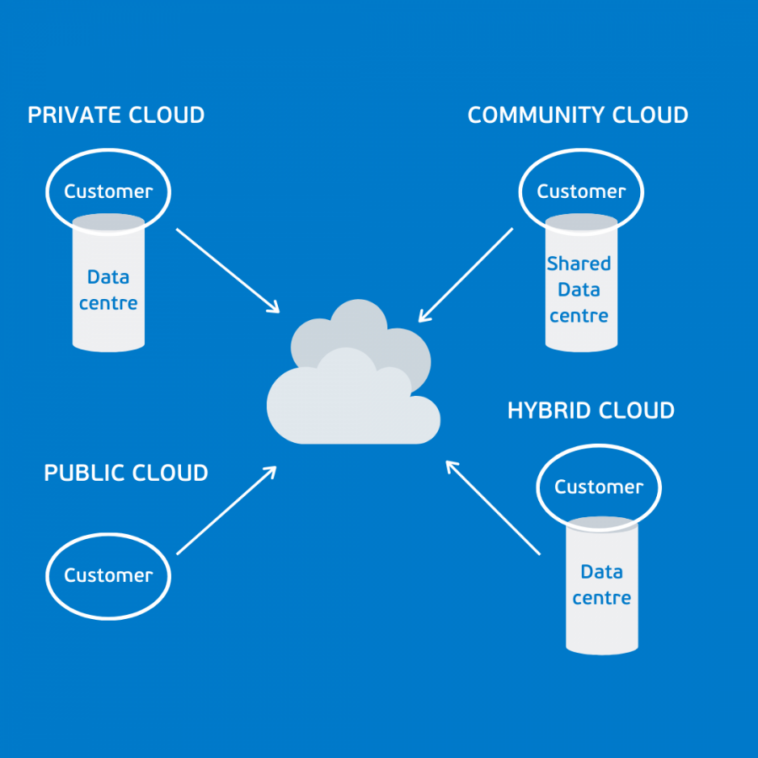
There are four primary deployment models in cloud computing: Public Cloud, Private Cloud, Hybrid Cloud, and Community Cloud. Each model offers unique advantages and use cases.
Deployment Models of Cloud Computing
Deployment Models of Cloud Computing
1. Public Cloud
Definition
A public cloud is a cloud environment hosted and managed by a third-party cloud service provider. Resources such as servers, storage, and applications are shared among multiple users or organizations over the internet.
Characteristics
Shared Infrastructure: Multiple tenants share the same physical resources, but their data and applications remain isolated.
Pay-as-you-go Pricing: Organizations pay only for the resources they consume, making it cost-effective.
High Scalability: Resources can be rapidly scaled up or down to meet demand.
Managed by Provider: The cloud provider handles maintenance, updates, and security.
Examples
Amazon Web Services (AWS): Offers computing, storage, and networking resources for businesses of all sizes.
Microsoft Azure: Provides a wide range of cloud services, including virtual machines, databases, and AI solutions.
Google Cloud Platform (GCP): Delivers scalable computing, data analytics, and machine learning services.
Advantages
Lower upfront costs
Easy scalability and flexibility
Minimal management overhead
Disadvantages
Limited control over infrastructure
Potential security and compliance concerns
Dependence on the internet connection
Deployment Models of Cloud Computing
2. Private Cloud
Definition
A private cloud is a cloud environment dedicated to a single organization. It can be hosted on-premises or by a third-party provider and offers greater control over resources, security, and compliance.
Characteristics
Exclusive Access: Only one organization uses the infrastructure, ensuring higher privacy and security.
Customization: Organizations can configure hardware, software, and network resources according to their requirements.
Enhanced Security: Ideal for businesses handling sensitive data or operating under strict regulatory requirements.
Managed Internally or Externally: The private cloud can be managed by internal IT teams or outsourced to specialized providers.
Examples
VMware vSphere: Enables organizations to build private cloud environments on their existing infrastructure.
Microsoft Azure Stack: Extends Azure services to on-premises private environments.
OpenStack: An open-source platform for creating private and hybrid cloud environments.
Advantages
High level of security and privacy
Greater control and customization
Compliance with regulatory standards
Disadvantages
Higher setup and maintenance costs
Requires skilled IT personnel
Less scalability compared to public cloud
Deployment Models of Cloud Computing
3. Hybrid Cloud
Definition
A hybrid cloud combines public and private cloud environments, allowing organizations to leverage the benefits of both. Data and applications can be shared between private and public clouds based on business needs.
Characteristics
Flexible Resource Allocation: Organizations can run sensitive workloads on a private cloud while using the public cloud for less critical operations.
Cost Optimization: Hybrid cloud reduces the need for expensive on-premises infrastructure while providing scalability.
Enhanced Disaster Recovery: Organizations can back up data in public clouds while maintaining primary operations on private clouds.
Examples
Microsoft Azure Hybrid Solutions: Integrates on-premises data centers with Azure public cloud services.
AWS Outposts: Brings AWS infrastructure and services on-premises for hybrid deployments.
Google Anthos: Provides a hybrid and multi-cloud platform for deploying applications across private and public clouds.
Advantages
Flexibility to choose the optimal environment for each workload
Improved scalability and resource optimization
Better disaster recovery and business continuity
Disadvantages
Complex management and integration
Higher costs compared to using a single cloud model
Security challenges in managing multiple environments
Deployment Models of Cloud Computing
4. Community Cloud
Definition
A community cloud is a cloud infrastructure shared by several organizations with common goals, policies, or compliance requirements. It can be managed internally or by a third-party provider.
Characteristics
Shared Infrastructure: Resources are shared among a specific community of users.
Governance and Compliance: Tailored to meet industry-specific regulations, such as healthcare or finance.
Cost Sharing: Expenses are distributed among community members, making it more cost-effective than a private cloud.
Examples
Government Cloud Initiatives: Shared cloud platforms for multiple government agencies to improve collaboration and security.
Healthcare Cloud Platforms: Designed for hospitals and research institutions to store and share patient data securely.
Financial Sector Community Clouds: Banks and financial institutions sharing resources while complying with regulatory standards.
Advantages
Cost-efficient compared to private clouds
Meets compliance requirements for specific industries
Facilitates collaboration among similar organizations
Disadvantages
Limited control compared to private clouds
Shared risks among multiple organizations
May require complex governance
Deployment Models of Cloud Computing
Deployment Models of Cloud Computing
Choosing the Right Cloud Deployment Model
Selecting the appropriate cloud deployment model depends on several factors:
Security and Compliance Requirements: Organizations handling sensitive data may prefer private or hybrid clouds.
Cost Considerations: Public clouds offer lower upfront costs, while private clouds require more investment.
Scalability Needs: Businesses with variable workloads can benefit from hybrid or public clouds.
Collaboration Needs: Community clouds are ideal for organizations in the same industry or sector.
By analyzing these factors, businesses can select a deployment model that aligns with their goals, reduces risks, and optimizes performance.
Deployment Models of Cloud Computing
Deployment Models of Cloud Computing
Conclusion
Understanding deployment models of cloud computing is essential for businesses and IT professionals navigating the cloud landscape. Public, private, hybrid, and community clouds each offer distinct advantages, disadvantages, and use cases.
Public clouds provide cost-effective, scalable solutions for general workloads.
Private clouds offer enhanced security and control for sensitive operations.
Hybrid clouds combine the benefits of both public and private clouds, offering flexibility and scalability.
Community clouds facilitate collaboration and compliance for organizations with shared goals.
By choosing the right deployment model, organizations can optimize resources, improve security, and achieve operational efficiency. As cloud technology continues to evolve, understanding these models ensures businesses can harness the full potential of cloud computing to drive innovation and growth.
Deployment Models of Cloud Computing