Desktop as a Service Providers
The modern workplace is undergoing a profound transformation. Organizations increasingly demand flexibility, scalability, and secure access to enterprise applications and data, regardless of employee location. Traditional desktop infrastructure, which relies heavily on physical machines and on-premises management, is struggling to keep pace with these demands. This has created a significant opportunity for Desktop as a Service (DaaS) providers, who deliver cloud-hosted virtual desktops to organizations of all sizes.
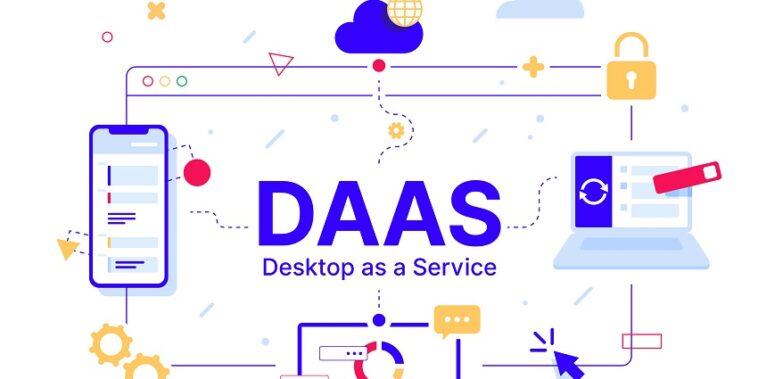
DaaS allows users to access a fully functional desktop environment, including applications, storage, and computing resources, through the internet. It abstracts the underlying hardware and infrastructure, offering businesses agility, cost efficiency, and improved security. While DaaS itself is a relatively recent evolution of virtualization technology, providers are now offering robust, enterprise-ready solutions capable of supporting diverse industries and work environments. This article explores the concept of DaaS, the role of providers, and an in-depth analysis of leading DaaS providers in today’s market.
Desktop as a Service Providers
Understanding Desktop as a Service
Desktop as a Service is a cloud-based offering where virtual desktops are hosted, managed, and delivered by a third-party provider. Unlike traditional Virtual Desktop Infrastructure (VDI), which requires significant on-premises investment and management, DaaS eliminates much of the operational overhead. Users connect to their desktops using lightweight devices, such as laptops, tablets, or thin clients, while the provider manages servers, storage, security, and maintenance.
DaaS delivers a range of benefits including:
Flexibility: Employees can access desktops from any location with an internet connection, supporting remote and hybrid work models.
Scalability: Organizations can rapidly provision or decommission desktops based on workforce needs.
Security: Centralized management allows better control over data, encryption, and access policies.
Cost Efficiency: DaaS replaces high capital expenditures on physical hardware with a predictable subscription model.
The DaaS provider’s role is crucial in ensuring high availability, low latency, and a seamless user experience. Providers typically offer additional services such as GPU-enabled desktops for graphics-intensive workloads, disaster recovery, compliance monitoring, and integration with SaaS and enterprise applications.
Desktop as a Service Providers
Key Considerations When Choosing a DaaS Provider
Selecting the right DaaS provider requires careful evaluation of several factors. The following considerations are critical:
Performance and Latency: Providers must ensure responsive desktops, particularly for applications requiring high computational power or real-time data processing.
Security and Compliance: Providers should comply with industry standards and offer encryption, multi-factor authentication, and secure data storage.
Scalability: The platform should support dynamic scaling to accommodate temporary employees, seasonal spikes, or project-based teams.
Integration Capabilities: Compatibility with existing cloud services, SaaS applications, and on-premises systems is essential for hybrid environments.
Support and Service Level Agreements (SLAs): Providers must guarantee uptime, quick incident resolution, and reliable customer support.
Organizations should also consider pricing models, including per-user subscription fees, pay-as-you-go options, or tiered packages for different performance levels.
Desktop as a Service Providers
Leading Desktop as a Service Providers
1. VMware Horizon Cloud
VMware Horizon Cloud is one of the most widely used DaaS solutions for enterprises seeking flexibility and integration with existing VMware environments. It offers deployment on private clouds, public clouds such as Microsoft Azure, or hybrid configurations.
Key features include:
Persistent and non-persistent desktop options
GPU-enabled virtual desktops for design and engineering workloads
Seamless integration with VMware Workspace ONE for endpoint management
Centralized monitoring and automated updates
VMware Horizon Cloud is particularly well-suited for organizations already leveraging VMware virtualization or hybrid IT strategies, as it provides a unified management interface across on-premises and cloud resources.
Desktop as a Service Providers
2. Citrix Managed Desktops
Citrix Managed Desktops is renowned for high-performance virtual desktops and application delivery. It supports GPU-intensive applications, enabling organizations in engineering, finance, and healthcare to run resource-heavy workloads efficiently.
Highlights of Citrix Managed Desktops include:
Advanced display protocol (HDX) for low-latency and high-fidelity remote desktop experiences
Centralized security controls and encryption
Easy deployment of Windows desktops with preconfigured templates
Integration with Citrix Analytics for monitoring performance and security
Citrix’s reputation for enterprise-grade security and reliability makes it a preferred choice for organizations with strict compliance requirements.
Desktop as a Service Providers
3. Microsoft Azure Virtual Desktop
Azure Virtual Desktop (AVD) is Microsoft’s cloud-native DaaS offering that integrates seamlessly with Microsoft 365 and other Azure services. AVD provides highly scalable desktops in the cloud while leveraging Microsoft’s global data center network.
Features of Azure Virtual Desktop include:
Multi-session Windows 10/11 desktops to optimize cost efficiency
Native integration with Microsoft 365 apps such as Teams, Outlook, and OneDrive
Security features including conditional access, encryption, and Azure Active Directory integration
Rapid deployment templates for different user groups
AVD is ideal for organizations heavily invested in the Microsoft ecosystem, providing native compatibility and simplified management.
Desktop as a Service Providers
4. Amazon WorkSpaces
Amazon WorkSpaces is AWS’s DaaS solution designed for enterprises and small-to-medium businesses alike. Amazon WorkSpaces provides cloud-hosted desktops with a choice of Windows or Linux operating systems, enabling organizations to accommodate diverse employee requirements.
Key features include:
Flexible pricing options, including hourly and monthly plans
High availability across AWS regions
Integration with AWS Identity and Access Management (IAM) and directory services
GPU-enabled options for graphics and data-intensive tasks
Amazon WorkSpaces is particularly attractive for businesses already leveraging AWS for other cloud infrastructure needs, as it integrates seamlessly with existing AWS tools and security services.
Desktop as a Service Providers
5. Nutanix Xi Frame
Nutanix Xi Frame is a cloud-agnostic DaaS solution that supports deployment on multiple public cloud providers such as AWS, Azure, and Google Cloud, as well as on-premises infrastructure.
Advantages of Nutanix Xi Frame include:
Browser-based access without the need for local client installation
Multi-cloud flexibility, enabling portability across providers
Persistent desktops and robust support for GPU workloads
Simplified deployment and automated scaling
Xi Frame’s cross-cloud approach makes it an appealing option for organizations seeking flexibility and avoiding vendor lock-in.
Desktop as a Service Providers
6. Workspot
Workspot focuses on delivering enterprise-grade virtual desktops and applications with high performance and low latency. Workspot’s architecture is designed for global workforces, offering GPU-accelerated desktops for high-end engineering, media, and AI workloads.
Key features include:
Cloud-native management for desktops and applications
High-performance GPU and CPU options for resource-intensive tasks
Enterprise security with single sign-on and multi-factor authentication
Monitoring and analytics to optimize user experience and resource utilization
Workspot is particularly effective for multinational organizations that require consistent performance across distributed teams.
Desktop as a Service Providers
Additional Considerations
While selecting a DaaS provider, organizations should also evaluate support for hybrid work environments, as many businesses combine on-premises desktops with cloud-hosted solutions. Providers that offer integration with endpoint management tools, remote application streaming, and identity management systems can significantly simplify IT operations.
Cost is another critical factor. Providers may charge per user, per month, or per usage. Organizations should analyze workload patterns, storage requirements, and performance needs to select the most cost-effective plan. Additionally, some providers offer GPU desktops, which can be substantially more expensive but necessary for design, AI, or scientific workloads.
Desktop as a Service Providers
Challenges in DaaS Adoption
Despite the benefits, adopting DaaS comes with challenges:
Network Dependence: Users rely on stable internet connections; poor connectivity can degrade the desktop experience.
Vendor Lock-In: Migration from one provider to another may require significant effort, particularly for persistent desktops with large data stores.
Performance Variability: Cloud-hosted desktops can be impacted by latency or shared resource constraints.
Compliance and Security: Sensitive industries may require additional controls to meet regulatory requirements.
Addressing these challenges requires careful planning, including redundancy for network connectivity, performance monitoring, and thorough security auditing.
Desktop as a Service Providers
The Future of DaaS Providers
The DaaS market continues to grow rapidly, driven by remote and hybrid work trends. Providers are increasingly integrating AI-driven management, automated scaling, and predictive analytics to enhance performance and reduce administrative overhead. GPU virtualization for AI, CAD, and data analytics workloads is becoming a standard feature, while multi-cloud and hybrid deployments are helping organizations avoid vendor lock-in and optimize cost efficiency.
Additionally, providers are improving security, compliance, and endpoint management capabilities, making DaaS a viable replacement for traditional desktops across a wider range of industries. The trend toward zero-trust architectures and identity-based access control will further enhance the security posture of cloud-hosted desktops.
Desktop as a Service Providers
Conclusion
Desktop as a Service providers are reshaping the modern workplace by delivering flexible, scalable, and secure virtual desktop environments. Leading providers such as VMware Horizon Cloud, Citrix Managed Desktops, Azure Virtual Desktop, Amazon WorkSpaces, Nutanix Xi Frame, and Workspot offer a variety of features and deployment options to meet the needs of enterprises, SMBs, and specialized workloads.
Choosing the right provider requires careful consideration of performance, security, integration capabilities, cost, and scalability. While challenges such as network dependence and vendor lock-in exist, the benefits of reduced IT overhead, remote work enablement, and enhanced security make DaaS an increasingly attractive solution.
As remote work and hybrid office models continue to dominate, DaaS providers will remain at the forefront of enterprise IT transformation, delivering innovative solutions that allow organizations to adapt, scale, and thrive in the cloud-first era.
Desktop as a Service Providers