Examples of SaaS in Cloud Computing
Software as a Service (SaaS) is one of the most widely adopted models in cloud computing. When people search for examples of SaaS in cloud computing, they are usually looking for real-world applications that demonstrate how SaaS solutions are used across different industries.
In simple terms, SaaS allows users to access software applications over the internet without installing or maintaining them locally. The cloud service provider manages the infrastructure, security, updates, and availability, while users focus only on using the software.
This article provides a comprehensive overview of SaaS, explains how it works, and presents detailed examples of SaaS in cloud computing across business, education, healthcare, finance, and everyday personal use.
Examples of SaaS in Cloud Computing
What Is SaaS in Cloud Computing?
Software as a Service (SaaS) is a cloud computing delivery model in which software applications are hosted by a provider and delivered to users via a web browser or API.
Key characteristics of SaaS include:
No local installation required
Centralized hosting in the cloud
Automatic updates and maintenance
Subscription-based pricing
Accessibility from any device with internet access
SaaS is built on top of cloud infrastructure and platform services, making it the most user-friendly cloud model.
How SaaS Works in Cloud Computing
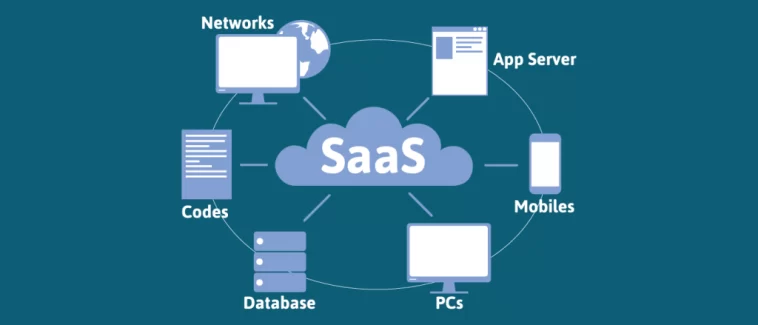
SaaS applications run on cloud servers maintained by service providers. The architecture typically includes:
Cloud infrastructure (servers, storage, networks)
Application layer (the SaaS software)
User interface accessed via browser or mobile app
Multi-tenancy, where multiple customers share the same application securely
This design allows providers to scale resources efficiently and deliver consistent performance to millions of users simultaneously.
Why SaaS Is Popular in Cloud Computing
Before exploring examples of SaaS in cloud computing, it is important to understand why organizations adopt SaaS solutions:
Lower upfront costs
Faster deployment
Minimal IT management
Scalability and flexibility
High availability and reliability
These benefits make SaaS ideal for both small businesses and large enterprises.
Examples of SaaS in Cloud Computing
Examples of SaaS in Cloud Computing
1. Google Workspace
Google Workspace is one of the most well-known examples of SaaS in cloud computing.
Services included:
Gmail
Google Docs
Google Sheets
Google Drive
Google Meet
Users can collaborate in real time, store files in the cloud, and access their data from any device. Google manages security, updates, and storage infrastructure.
2. Microsoft 365
Microsoft 365 delivers popular productivity tools as SaaS applications.
Key components:
Word
Excel
PowerPoint
Outlook
OneDrive
Microsoft Teams
Instead of installing software locally, users access these applications through the cloud with continuous updates and cloud storage integration.
3. Salesforce
Salesforce is a leading SaaS platform for customer relationship management (CRM).
Use cases:
Sales tracking
Customer support
Marketing automation
Analytics and reporting
Salesforce is a classic SaaS example where businesses access powerful enterprise tools without managing servers or software installations.
4. Dropbox
Dropbox is a cloud-based file storage and collaboration SaaS solution.
Features:
Cloud storage
File synchronization
Secure file sharing
Backup and recovery
Dropbox demonstrates how SaaS simplifies data access and collaboration for individuals and teams.
5. Zoom
Zoom is a widely used SaaS application for video conferencing.
Capabilities:
Video meetings
Webinars
Screen sharing
Cloud recording
Zoom runs entirely in the cloud, allowing users to host and join meetings from anywhere without complex setup.
Examples of SaaS in Cloud Computing
SaaS Examples for Business Operations
6. Slack
Slack is a SaaS communication platform used by teams for real-time collaboration.
Key benefits:
Cloud-based messaging
Integration with other SaaS tools
File sharing and search
Slack reduces reliance on email and improves team productivity.
7. Shopify
Shopify is an e-commerce SaaS platform that allows users to build online stores without managing hosting or infrastructure.
Features include:
Product management
Payment processing
Inventory tracking
Cloud hosting
Shopify is a powerful example of SaaS in cloud computing for online businesses.
8. HubSpot
HubSpot provides SaaS solutions for marketing, sales, and customer service.
Services:
Email marketing
CRM
Analytics
Automation tools
HubSpot helps businesses grow using cloud-based software accessible from anywhere.
Examples of SaaS in Cloud Computing
SaaS Examples in Education
9. Google Classroom
Google Classroom is a SaaS platform designed for online education.
Benefits:
Assignment management
Cloud-based collaboration
Integration with Google Workspace
It allows teachers and students to interact in a fully cloud-hosted environment.
10. Coursera
Coursera is a SaaS learning platform offering online courses and certifications.
Key features:
Video-based learning
Cloud-hosted content
Progress tracking
Coursera demonstrates how SaaS enables scalable global education.
SaaS Examples in Healthcare
11. Athenahealth
Athenahealth is a healthcare SaaS platform for managing patient records and billing.
Capabilities:
Electronic health records (EHR)
Appointment scheduling
Billing and compliance
Healthcare providers use Athenahealth without maintaining complex IT infrastructure.
12. Teladoc
Teladoc is a SaaS-based telemedicine platform.
Benefits:
Remote consultations
Secure cloud access
Integration with healthcare systems
It shows how SaaS improves accessibility in healthcare services.
SaaS Examples in Finance
13. QuickBooks Online
QuickBooks Online is a cloud-based accounting SaaS solution.
Features:
Expense tracking
Payroll management
Financial reporting
Small businesses benefit from easy-to-use accounting tools hosted in the cloud.
14. PayPal
PayPal operates as a SaaS platform for online payments.
Capabilities:
Secure transactions
Payment processing
Global accessibility
PayPal handles complex financial infrastructure while users access services through the cloud.
Examples of SaaS in Cloud Computing
Advantages of SaaS in Cloud Computing
Reduced IT costs
Automatic updates
High availability
Scalability
Enhanced collaboration
These advantages explain the widespread adoption of SaaS solutions.
Challenges of SaaS Applications
Despite its benefits, SaaS also presents challenges:
Internet dependency
Limited customization
Data privacy concerns
Vendor lock-in
Organizations must evaluate providers carefully to address these issues.
SaaS vs PaaS vs IaaS (Quick Comparison)
| Model | Purpose | User Control |
|---|---|---|
| SaaS | Use software | Minimal |
| PaaS | Build applications | Moderate |
| IaaS | Manage infrastructure | High |
SaaS is the most user-focused cloud model.
The Future of SaaS in Cloud Computing
The future of SaaS is driven by:
Artificial intelligence integration
Automation and analytics
Industry-specific SaaS solutions
Increased security and compliance
SaaS platforms will continue to evolve to meet growing digital demands.
Examples of SaaS in Cloud Computing
Conclusion
Understanding examples of SaaS in cloud computing helps illustrate how cloud technology impacts everyday life and business operations. From productivity tools and communication platforms to healthcare and finance applications, SaaS solutions offer unmatched convenience, scalability, and efficiency.
As cloud computing continues to grow, SaaS will remain the most accessible and widely used service model, enabling organizations and individuals to leverage powerful software without the complexity of traditional IT systems.