Examples of SaaS, PaaS, and IaaS: A Deep Professional Comparison
Cloud computing is often explained through three main service models: Software as a Service (SaaS), Platform as a Service (PaaS), and Infrastructure as a Service (IaaS). While these terms are widely used, many people only understand them at a surface level. The real value comes from seeing how they differ in control, responsibility, flexibility, and real-world use cases.
This article provides a professional, in-depth comparison of SaaS, PaaS, and IaaS, supported by practical examples and a clear explanation of how each model fits different business and technical needs.
Examples of SaaS PaaS and IaaS
Understanding the Cloud Service Stack
To understand the difference between SaaS, PaaS, and IaaS, imagine the full technology stack required to run an application. This stack includes:
Physical hardware
Networking
Storage
Virtualization
Operating systems
Middleware
Runtime environments
Applications
Data
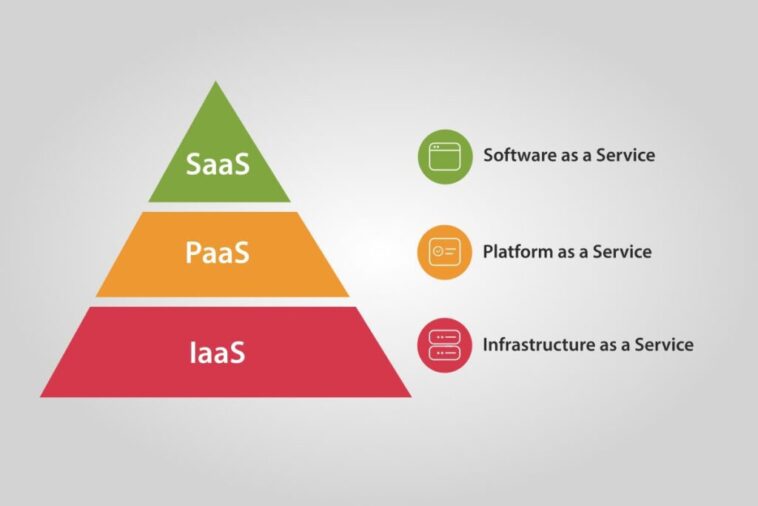
The three cloud service models divide responsibility for managing these layers between the cloud provider and the customer. The higher you go in the stack, the less the customer manages.
Examples of SaaS PaaS and IaaS
Examples of SaaS PaaS and IaaS
IaaS (Infrastructure as a Service): The Foundation Layer
Infrastructure as a Service is the most flexible and lowest-level cloud model available to customers. In IaaS, the provider offers virtualized computing resources such as servers, storage, and networking, while the customer manages everything above that level.
What Makes IaaS Unique
IaaS is essentially renting raw IT infrastructure from a cloud provider. Instead of buying physical servers and setting up a data center, companies provision virtual machines and storage on demand. However, they still need to install and manage operating systems, databases, middleware, and applications.
This model provides maximum control and is closest to traditional IT environments, except that everything is virtual and scalable.
Examples of IaaS
Amazon EC2 (Elastic Compute Cloud) is one of the most well-known IaaS services. It allows organizations to launch virtual servers in the cloud, choose operating systems, configure storage, and build custom environments. Companies use EC2 for hosting websites, running enterprise applications, or building complex backend systems.
Microsoft Azure Virtual Machines offers similar functionality, enabling businesses to run Windows or Linux servers in the cloud. It is often used for migrating legacy applications that cannot easily be redesigned for modern platforms.
Google Compute Engine provides high-performance virtual machines that can handle large-scale computing tasks, including big data processing and scientific workloads.
Examples of SaaS PaaS and IaaS
When IaaS Is the Best Choice
IaaS is ideal for organizations that need:
Full control over their environment
Custom software stacks
Support for legacy applications
Flexible scaling for unpredictable workloads
However, this flexibility comes with greater responsibility. IT teams must handle system updates, security patches, and software configuration.
Examples of SaaS PaaS and IaaS
PaaS (Platform as a Service): The Developer’s Environment
Platform as a Service sits above IaaS in the cloud stack. Here, the provider not only manages infrastructure but also supplies the platform needed to build and run applications. Developers can focus purely on writing code while the cloud provider handles operating systems, runtime environments, and scaling.
What Makes PaaS Different
PaaS abstracts away system administration tasks. Developers do not need to configure servers, install web servers, or manage operating system updates. The platform already includes development frameworks, database services, and deployment tools.
This model is designed to accelerate application development and is widely used in agile and DevOps-driven environments.
Examples of PaaS
Google App Engine allows developers to deploy applications without worrying about servers. It automatically scales applications based on traffic and handles load balancing behind the scenes. Startups and global services often use it to launch products quickly.
Microsoft Azure App Service supports multiple programming languages and frameworks, allowing businesses to build web applications and APIs with minimal infrastructure management. It integrates seamlessly with other Azure services, making it popular in enterprise environments.
Heroku is another well-known PaaS platform that emphasizes simplicity. Developers can deploy applications using Git commands, and Heroku manages everything from servers to scaling. It is widely used for prototypes, SaaS products, and startup applications.
Examples of SaaS PaaS and IaaS
When PaaS Is the Best Choice
PaaS works best when organizations want to:
Speed up development cycles
Reduce infrastructure management
Standardize development environments
Focus on innovation rather than system maintenance
The trade-off is less control over the underlying system, which can lead to vendor lock-in or limitations in customization.
Examples of SaaS PaaS and IaaS
SaaS (Software as a Service): The End-User Solution
Software as a Service is the highest-level cloud model and the most visible to everyday users. In SaaS, the provider delivers a fully functional application over the internet. Users simply log in through a browser — no installation, maintenance, or infrastructure management required.
What Makes SaaS the Simplest Model
SaaS eliminates the need for customers to manage any part of the technology stack except their data and user access. Everything else — from servers to application updates — is handled by the provider.
This makes SaaS highly accessible and cost-effective, especially for small and medium-sized businesses.
Examples of SaaS
Google Workspace (formerly G Suite) provides email, document editing, and collaboration tools entirely through the cloud. Businesses use it without worrying about servers or software updates.
Microsoft 365 offers cloud-based versions of Office applications, along with email and collaboration tools. Organizations adopt it to enable remote work and real-time teamwork.
Salesforce is a leading SaaS platform for customer relationship management (CRM). Companies use it to track sales, manage customer interactions, and automate marketing — all through a web interface.
Zoom is another example, providing video conferencing services entirely through the cloud without users needing to manage servers or networking.
Examples of SaaS PaaS and IaaS
When SaaS Is the Best Choice
SaaS is ideal when businesses need:
Ready-to-use applications
Minimal IT management
Fast deployment
Subscription-based pricing
The downside is limited customization compared to PaaS and IaaS.
Examples of SaaS PaaS and IaaS
Comparing Control and Responsibility
One of the clearest ways to compare SaaS, PaaS, and IaaS is by looking at who manages what.
With IaaS, the customer controls operating systems, applications, and data. With PaaS, the customer manages only applications and data. With SaaS, the customer mainly manages user settings and data, while the provider manages everything else.
As you move from IaaS to SaaS, control decreases but simplicity increases.
Examples of SaaS PaaS and IaaS
Business Perspective: Choosing the Right Model
From a business point of view, the choice between SaaS, PaaS, and IaaS depends on goals and resources.
A startup building a new application might choose PaaS to accelerate development without hiring a large IT operations team. A large enterprise migrating legacy systems might choose IaaS to maintain compatibility while moving away from physical data centers. A small business that simply needs email and accounting software will likely choose SaaS to avoid technical complexity altogether.
Examples of SaaS PaaS and IaaS
Many organizations actually use all three models at the same time. For example, a company may use:
Salesforce (SaaS) for customer management
Azure App Service (PaaS) for developing internal tools
AWS EC2 (IaaS) for hosting custom enterprise systems
This combination creates a flexible, layered cloud strategy.
Examples of SaaS PaaS and IaaS
Final Thoughts
SaaS, PaaS, and IaaS are not competing technologies — they are complementary layers of cloud computing that serve different purposes. IaaS provides the raw power and flexibility, PaaS empowers developers with ready-to-use platforms, and SaaS delivers complete software solutions to end users.
Understanding the differences between these models allows organizations to choose the right mix of services, balance control with convenience, and build an IT strategy that supports growth, innovation, and efficiency in the cloud era.
Examples of SaaS PaaS and IaaS