
How Long Does It Take to Become a Data Scientist? A Complete Guide to the Data Science Journey
In today’s data-driven world, the role of a data scientist has become one of the most coveted careers in technology. Data scientists are the analytical minds behind business decisions, artificial intelligence (AI) innovations, and predictive modeling systems. However, one common question among aspiring professionals is: “How long does it take to become a data scientist?”
The answer depends on several factors—your educational background, prior experience, chosen learning path, and dedication to mastering key skills. This article provides an in-depth look at the timeline, required skills, education options, and strategies to help you understand what it really takes to become a successful data scientist.
How Long Does It Take to Become a Data Scientist
What Does a Data Scientist Do?
Before exploring the time commitment, it’s important to understand what the job involves.
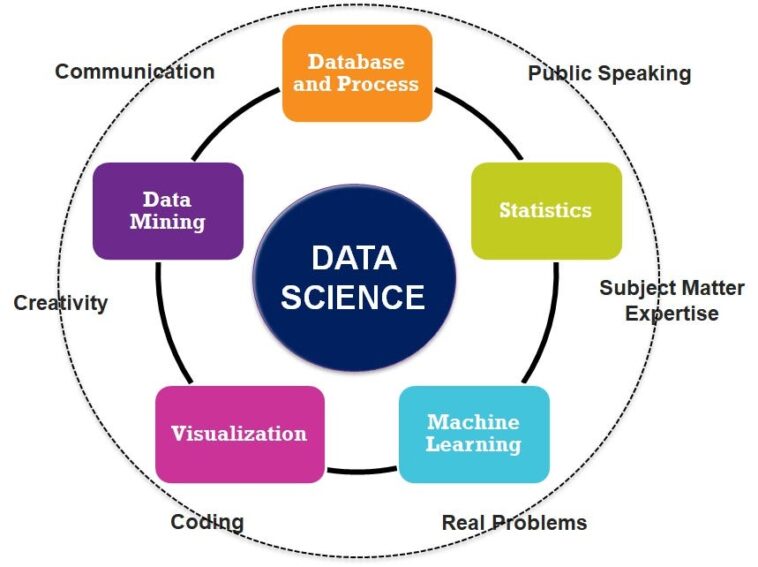
A data scientist uses mathematics, statistics, programming, and business insight to extract meaningful knowledge from raw data. They design algorithms, build predictive models, and use data visualization tools to communicate insights to decision-makers.
Key responsibilities include:
Data collection and cleaning
Exploratory data analysis (EDA)
Statistical modeling and hypothesis testing
Machine learning model development
Data visualization and storytelling
These multidisciplinary responsibilities explain why the path to becoming a data scientist can be lengthy and demanding.
How Long Does It Take to Become a Data Scientist
Typical Timeline: How Long Does It Take to Become a Data Scientist ?
On average, it takes between 2 to 5 years to become a competent data scientist. The time frame varies based on education, experience, and how intensively you pursue the learning process. Let’s break down the timeline by different paths.
1. Traditional Education Path: 4–6 Years
The traditional route involves earning a bachelor’s and often a master’s degree in a related field such as:
Computer Science
Statistics
Mathematics
Data Science
Engineering
Economics
Timeline Breakdown
Bachelor’s degree: 3–4 years
Master’s degree (optional but beneficial): 1–2 years
While a bachelor’s degree provides a solid foundation in statistics, programming, and analytical thinking, a master’s degree enhances specialization and hands-on experience through projects and internships.
Pros
Comprehensive academic knowledge
Access to internships and research opportunities
Strong theoretical foundation
Cons
Time-consuming and expensive
May lack practical industry exposure
2. Bootcamp or Certification Path: 6–12 Months
For career changers or professionals with prior experience in tech or analytics, data science bootcamps and certification programs offer a faster, more targeted path.
These programs—offered by institutions like Coursera, edX, General Assembly, and Springboard—focus on hands-on training in:
Python and R
Machine Learning
Data Visualization
SQL and Data Wrangling
Applied Statistics
Timeline
Full-time bootcamp: 4–6 months
Part-time or online course: 9–12 months
Pros
Accelerated, skill-focused learning
Real-world projects and portfolios
Strong job placement support
Cons
Limited depth in theory
Requires self-discipline and strong motivation
3. Self-Taught Path: 1–3 Years
With the rise of online resources, many aspiring data scientists are taking the self-learning route using free or affordable materials. This path can be effective if you are motivated and disciplined.
A self-taught path often includes:
Learning Python, R, and SQL through online tutorials
Studying statistics, probability, and linear algebra independently
Practicing machine learning and data visualization projects
Building a portfolio on GitHub and participating in Kaggle competitions
Timeline
Beginner to intermediate skills: 6–12 months
Advanced projects and job readiness: 1–2 additional years
Pros
Cost-effective and flexible
Tailored learning experience
Opportunity to focus on real-world problems
Cons
No formal credential
Requires strong self-discipline
Networking opportunities are limited
How Long Does It Take to Become a Data Scientist
Key Skills Required to Become a Data Scientist
Regardless of the path you take, every data scientist must master a specific set of technical and soft skills.
Technical Skills
Programming: Python, R, and SQL are essential for data manipulation and automation.
Statistics & Mathematics: A deep understanding of probability, linear algebra, and hypothesis testing.
Machine Learning: Knowledge of supervised and unsupervised algorithms, such as regression, decision trees, and neural networks.
Data Visualization: Proficiency with tools like Tableau, Power BI, Matplotlib, and Seaborn.
Big Data Technologies: Familiarity with Spark, Hadoop, and cloud computing platforms like AWS or Azure.
Soft Skills
Critical thinking and problem-solving
Communication and storytelling with data
Collaboration and teamwork
Business acumen and strategic thinking
Mastering these skills typically takes an additional 6–12 months of continuous learning and practice beyond formal education or bootcamps.
How Long Does It Take to Become a Data Scientist
Gaining Practical Experience
While theory and technical skills are important, hands-on experience distinguishes successful data scientists.
1. Internships and Entry-Level Roles
Start as a data analyst, junior data scientist, or research assistant. These roles build familiarity with real-world datasets and analytical workflows.
2. Personal and Open-Source Projects
Work on datasets available on platforms like Kaggle, UCI Machine Learning Repository, and Data.gov. Showcase your projects on GitHub to demonstrate your practical abilities to employers.
3. Networking and Mentorship
Join data science communities, attend webinars, and connect with professionals through LinkedIn or Slack channels. Mentorship can shorten your learning curve significantly.
How Long Does It Take to Become a Data Scientist
How to Accelerate the Process
If you want to become a data scientist faster, consider these strategies:
Focus on core skills: Master Python, statistics, and machine learning before exploring advanced topics.
Create a structured study plan: Allocate 2–3 hours per day consistently.
Build projects early: Apply knowledge in real-world problems.
Leverage AI learning tools: Use interactive platforms like DataCamp or Kaggle Learn.
Stay updated: Data science evolves rapidly; continuous learning is essential.
With full-time dedication, it’s possible to become job-ready within 12–18 months, especially with a technical background.
How Long Does It Take to Become a Data Scientist
Challenges on the Path
Becoming a data scientist is rewarding but not without challenges:
The vast scope of the field can be overwhelming.
Balancing theoretical learning with practical application is crucial.
Rapidly evolving technologies require ongoing skill updates.
Persistence, curiosity, and consistent practice are the keys to overcoming these challenges.
How Long Does It Take to Become a Data Scientist
Career Outlook and Salary
Once you’ve built the necessary skills and portfolio, job opportunities are abundant. According to the U.S. Bureau of Labor Statistics (BLS), employment for data scientists is expected to grow by 35% from 2024 to 2034, making it one of the fastest-growing occupations.
Average Salaries by Level
Entry-Level: $80,000 – $100,000
Mid-Level: $110,000 – $135,000
Senior-Level: $150,000 – $200,000+
These figures highlight that while the journey may be long, the financial and professional rewards are substantial.
How Long Does It Take to Become a Data Scientist
Conclusion
So, how long does it take to become a data scientist?
The answer depends on your starting point, learning strategy, and dedication. On average:
Traditional degree route: 4–6 years
Bootcamp route: 6–12 months
Self-taught route: 1–3 years
No matter which path you choose, success in data science requires continuous learning, practical experience, and a passion for solving complex problems with data. The investment of time and effort pays off—both in salary potential and in the opportunity to impact industries with data-driven innovation.
How Long Does It Take to Become a Data Scientist