IaaS SaaS PaaS Examples: Understanding the Core Models of Cloud Computing
Cloud computing has become the backbone of modern digital services. From streaming platforms and online collaboration tools to enterprise-level applications and data storage, cloud technologies power nearly every aspect of today’s internet-driven world. At the heart of cloud computing are three fundamental service models: Infrastructure as a Service (IaaS), Platform as a Service (PaaS), and Software as a Service (SaaS).
Although these terms are often used together, each model serves a different purpose and offers a different level of control, flexibility, and responsibility. Understanding the differences between IaaS, PaaS, and SaaS—and seeing real-world examples of how they are used—helps businesses, developers, and individuals choose the right cloud solution.
This article provides a detailed, professional explanation of all three cloud service models with practical examples, use cases, benefits, and comparisons.
IaaS SaaS PaaS Examples
What Are Cloud Computing Service Models?
Cloud computing service models describe how cloud resources are delivered and managed. Each model abstracts a different layer of the computing stack:
IaaS focuses on infrastructure
PaaS focuses on application development
SaaS focuses on end-user software
The higher the model, the less technical responsibility the user has.
IaaS SaaS PaaS Examples
IaaS SaaS PaaS Examples
Infrastructure as a Service (IaaS)
What Is IaaS?
Infrastructure as a Service (IaaS) provides virtualized computing resources over the internet. Instead of buying physical servers, networking equipment, and storage devices, organizations rent these resources from a cloud provider.
IaaS offers maximum flexibility and control, making it ideal for businesses with complex or custom infrastructure requirements.
Responsibilities in IaaS
Cloud Provider Manages:
Physical servers and hardware
Data centers
Power, cooling, and networking
Customer Manages:
Operating systems
Applications
Databases
Security configurations
Data
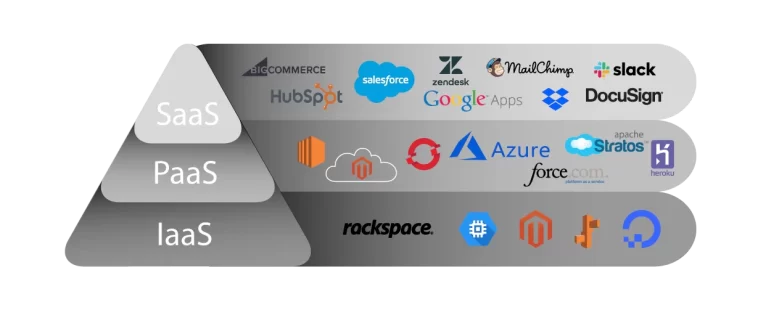
Popular IaaS Examples
Amazon EC2 (AWS) – Scalable virtual servers
Microsoft Azure Virtual Machines
Google Compute Engine
Oracle Cloud Infrastructure
IBM Cloud Virtual Servers
IaaS SaaS PaaS Examples
Real-World IaaS Example
A media streaming company uses Google Compute Engine to host its backend services. During peak viewing hours, additional virtual machines are automatically launched to handle increased traffic. When demand decreases, resources are scaled down to reduce costs.
Common IaaS Use Cases
Website and application hosting
Disaster recovery and backups
High-performance computing
Legacy application migration
IaaS SaaS PaaS Examples
Platform as a Service (PaaS)
What Is PaaS?
Platform as a Service (PaaS) provides a ready-to-use cloud environment for building, testing, deploying, and managing applications. PaaS removes the need to manage servers, operating systems, and runtime environments.
Developers can focus entirely on writing code and improving application functionality.
IaaS SaaS PaaS Examples
Responsibilities in PaaS
Cloud Provider Manages:
Infrastructure
Operating systems
Middleware
Runtime environments
Scaling and availability
Customer Manages:
Application code
Application data
Configuration settings
Popular PaaS Examples
Google App Engine
Microsoft Azure App Service
AWS Elastic Beanstalk
Heroku
Red Hat OpenShift
Real-World PaaS Example
A fintech startup builds a mobile payment application using Azure App Service. The development team deploys code directly to the platform, while Azure automatically handles scaling, load balancing, and system updates.
Common PaaS Use Cases
Web and mobile app development
API development
Microservices architecture
Continuous integration and deployment (CI/CD)
IaaS SaaS PaaS Examples
Software as a Service (SaaS)
What Is SaaS?
Software as a Service (SaaS) delivers fully functional software applications over the internet. Users access SaaS products through a web browser or mobile app without installing or maintaining software locally.
SaaS is the most user-friendly cloud model and requires minimal technical knowledge.
Responsibilities in SaaS
Cloud Provider Manages:
Infrastructure
Platform
Software
Updates and security
Availability and performance
Customer Manages:
User settings
Data input
Access permissions
Popular SaaS Examples
Google Workspace (Gmail, Docs, Sheets)
Microsoft 365
Salesforce
Dropbox
Zoom
Slack
Shopify
Notion
IaaS SaaS PaaS Examples
Real-World SaaS Example
A remote company uses Google Workspace for email, document collaboration, and file storage. Employees can access their work from any device without worrying about software updates or data backups.
Common SaaS Use Cases
Email and communication
Customer relationship management (CRM)
Project management
Online learning platforms
Accounting and invoicing
IaaS SaaS PaaS Examples
IaaS vs PaaS vs SaaS: A Clear Comparison
| Feature | IaaS | PaaS | SaaS |
|---|---|---|---|
| Level of Control | Very High | Medium | Low |
| Infrastructure Management | User | Provider | Provider |
| Application Management | User | User | Provider |
| Target Users | IT Teams | Developers | End Users |
| Deployment Speed | Slow | Fast | Instant |
Using IaaS, PaaS, and SaaS Together
Most modern organizations use a combination of all three cloud models.
Example Hybrid Usage
IaaS for hosting core systems and databases
PaaS for developing and deploying applications
SaaS for productivity tools, CRM, and collaboration
This approach provides flexibility while reducing operational complexity.
IaaS SaaS PaaS Examples
Benefits of Cloud Service Models
Lower upfront costs
On-demand scalability
Global accessibility
Faster innovation
Reduced IT maintenance
IaaS SaaS PaaS Examples
Challenges and Considerations
Despite their benefits, cloud service models also present challenges:
Data security and privacy risks
Compliance requirements
Internet dependency
Vendor lock-in concerns
Careful planning and provider selection help mitigate these risks.
IaaS SaaS PaaS Examples
Future of IaaS, PaaS, and SaaS
Cloud computing continues to evolve with trends such as:
Serverless computing
AI-powered SaaS platforms
Low-code and no-code PaaS solutions
Multi-cloud and hybrid cloud strategies
These developments are making cloud services more powerful and accessible.
IaaS SaaS PaaS Examples
Conclusion
IaaS, PaaS, and SaaS represent the foundation of cloud computing. Each model serves a unique purpose, from providing flexible infrastructure to delivering ready-to-use software applications. By understanding real-world examples and use cases, organizations and individuals can choose the cloud services that best align with their technical and business goals.
As digital transformation accelerates, mastering these cloud service models is essential for success in the modern technology landscape.