
IaaS vs PaaS Azure
As organizations accelerate their digital transformation efforts, Microsoft Azure continues to stand out as one of the most powerful and versatile cloud platforms in the world. Among its core service models, Infrastructure as a Service (IaaS) and Platform as a Service (PaaS) are two essential building blocks used to deploy applications, manage workloads, and scale business operations in the cloud.
This article provides a comprehensive, academically structured, and SEO-optimized explanation of IaaS vs PaaS in Azure, helping decision-makers, developers, and cloud architects understand the differences, use cases, benefits, and limitations of each model. By the end, you will have a clear understanding of which Azure service model is right for your business.
Cloud computing has completely transformed how organizations build, deliver, and maintain applications. Instead of relying solely on physical servers and traditional data centers, businesses now deploy workloads across cloud platforms that offer automation, scalability, and cost efficiency.
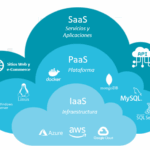
Microsoft Azure provides a wide range of cloud service models, but the two most widely adopted are:
Azure IaaS (Infrastructure as a Service)
Azure PaaS (Platform as a Service)
Understanding the differences between these models is crucial for creating efficient cloud architectures and optimizing workloads. This article explores IaaS vs PaaS Azure in depth.
What Is Azure IaaS?
Infrastructure as a Service (IaaS) is a cloud computing model where Azure provides the fundamental computing resources, while customers manage everything else above the virtualization layer.
In simple terms, Azure IaaS offers:
Virtual machines
Storage
Networking
Load balancers
Firewalls
Backup solutions
Monitoring tools
Key Features of Azure IaaS
Full control over the operating system (OS)
Custom configuration of virtual machines
Flexible network topology
On-demand scalability
Pay-as-you-go pricing
Azure IaaS Components
Some of the most widely used Azure IaaS services include:
Azure Virtual Machines (VMs)
Azure Virtual Networks (VNets)
Azure Load Balancer
Azure VPN Gateway
Azure Storage
Azure Backup
Azure Site Recovery
Azure Firewall
Who Uses Azure IaaS?
System administrators
IT teams needing full infrastructure control
Organizations migrating on-premises servers
Businesses running legacy applications
IaaS is ideal for workloads requiring custom operating systems, specialized configurations, or complex networking.
What Is Azure PaaS?
Platform as a Service (PaaS) is a cloud model where Azure provides not only the infrastructure but also the platform needed to develop, test, deploy, and run applications.
This includes:
Runtime environments
Operating systems
Development frameworks
Serverless computing
Managed databases
Monitoring and automated scaling
Key Features of Azure PaaS
Fully managed infrastructure
Built-in security and compliance
Automatic scaling and patching
Fast development and deployment
Supports modern application architectures
Azure PaaS Components
Azure offers a wide range of PaaS services, such as:
Azure App Service
Azure SQL Database
Azure Functions
Azure Kubernetes Service (AKS)
Azure Logic Apps
Azure API Management
Azure Service Bus
Azure Web Apps
Who Uses Azure PaaS?
Developers building cloud-native applications
Companies wanting minimal infrastructure management
Teams adopting DevOps and CI/CD pipelines
Organizations building microservices and serverless solutions
Azure PaaS is ideal for rapid development, reduced operational overhead, and modern application architecture.
IaaS vs PaaS Azure: Key Differences
Understanding the difference between Azure IaaS and Azure PaaS requires examining several key areas: control, management, flexibility, scalability, development support, and cost.
Below is a detailed comparison.
IaaS vs PaaS Azure
1. Control and Management
Azure IaaS
✔ Full control over virtual machines
✔ Users manage OS, middleware, and applications
✔ Ideal for customized configurations
Azure PaaS
✔ No need to manage servers or OS
✔ Azure handles updates automatically
✔ Focus is on application development, not infrastructure
Conclusion:
IaaS provides complete control, while PaaS reduces operational responsibilities.
2. Flexibility and Customization
Azure IaaS
Highly customizable
Suitable for unique or legacy applications
Flexible networking and hybrid cloud integration
Azure PaaS
Less customizable
Geared toward standardized application frameworks
Best for cloud-native development
Conclusion:
If your workload requires deep customization, choose IaaS. For simplicity and speed, choose PaaS.
IaaS vs PaaS Azure
3. Development and Deployment Speed
Azure IaaS
Slower setup due to infrastructure configuration
Requires more technical expertise
Suitable for applications requiring specific environments
Azure PaaS
Very fast deployment
Pre-configured development tools
Supports DevOps, automation, and CI/CD pipelines
Conclusion:
PaaS accelerates development significantly.
4. Security Responsibilities (Shared Model)
Azure IaaS
You manage:
OS security
Applications
Identity and access
Data
Azure manages:
Physical security
Networking
Hypervisor
Azure PaaS
You manage:
Application data
User access
Azure manages:
OS patches
Runtime
Environment security
Infrastructure
Conclusion:
PaaS reduces the customer’s security burden more than IaaS.
5. Scalability
Azure IaaS
Manual or semi-automatic scaling
VM resizing required
More operational effort
Azure PaaS
Automatic scaling built-in
Serverless options (Azure Functions)
Ideal for unpredictable workloads
Conclusion:
PaaS offers superior scalability with less admin work.
6. Cost Structure
Azure IaaS Costs
You pay for:
VM size
Storage
Networking
OS licenses
Costs increase with resource allocation.
Azure PaaS Costs
You pay for:
Runtime consumption
Platform services
API calls
Database usage
Often cheaper for application-focused workloads.
IaaS vs PaaS Azure
Azure IaaS Use Cases
1. Lift-and-Shift Migrations
Companies moving legacy apps to Azure without redesigning them.
2. Running Custom Software
Applications needing unique OS or runtime configurations.
3. Hosting Virtual Machines
Remote desktops, testing environments, and compute-intensive workloads.
4. Hybrid Cloud Deployments
Integration with on-premises environments using Azure VNets.
Azure PaaS Use Cases
1. Cloud-Native Development
Building modern apps using microservices, containers, and serverless.
2. API Development
Using Azure API Management and Functions.
3. Managed Databases
Using Azure SQL Database or Cosmos DB.
4. Automated Workflows
Using Logic Apps or Event Grid.
IaaS vs PaaS Azure
IaaS vs PaaS Azure: Which One Should You Choose?
Choosing between Azure IaaS and Azure PaaS depends on your business needs:
Choose Azure IaaS if:
You need full infrastructure control
You run legacy applications
You require custom OS or VM configuration
You prefer hands-on management
Choose Azure PaaS if:
Your goal is rapid development
You want minimal operational overhead
You are building cloud-native applications
You want automatic scaling and patching
Many modern organizations use both models together, creating a balanced cloud architecture.
IaaS vs PaaS Azure
IaaS and PaaS Together: A Hybrid Approach
Using both IaaS and PaaS can deliver powerful benefits:
IaaS handles legacy workloads
PaaS handles new cloud-native apps
Integrated security
Shared monitoring and governance
Seamless DevOps workflows
Azure’s ecosystem is designed to support hybrid cloud strategies effortlessly.
IaaS vs PaaS Azure
Conclusion
Understanding the difference between IaaS vs PaaS Azure is essential for choosing the right cloud architecture.
While Azure IaaS offers complete control and flexibility, Azure PaaS provides managed services that simplify development and reduce operational complexity.
By aligning your choice with workload requirements, skill levels, and business goals, you can achieve superior performance, cost efficiency, and scalability within the Azure ecosystem.