PaaS Examples: The Best Platform as a Service Solutions Explained
Cloud computing has transformed how businesses build, deploy, and manage applications. Among the different service models—IaaS, PaaS, and SaaS—the Platform as a Service (PaaS) model plays a key role in accelerating development while reducing complexity. In this article, we’ll dive deep into what PaaS really is, explore the most popular PaaS examples, and understand how they power the digital world today.
What Is PaaS (Platform as a Service)?
PaaS, or Platform as a Service, is a cloud computing model that provides developers with a complete platform—including tools, frameworks, and infrastructure—to build, test, and deploy applications.
Instead of managing servers, storage, or operating systems, developers can focus solely on writing code and innovation.
With PaaS, businesses gain:
Reduced time-to-market: Developers can deploy apps faster.
Lower costs: No need to buy or maintain hardware.
Scalability: Applications can handle increased traffic without manual upgrades.
Integrated tools: Built-in databases, runtime environments, and middleware.
To better understand how PaaS works, let’s explore the top PaaS examples that dominate the cloud ecosystem today.
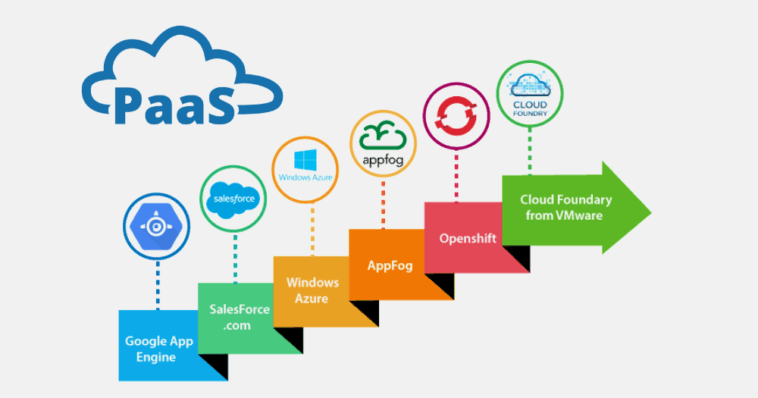
PaaS Examples
1. Google App Engine
One of the most widely recognized PaaS examples is Google App Engine.
Developed by Google Cloud, it allows developers to build scalable web applications using programming languages like Python, Java, Node.js, and Go.
Key Features:
Automatic scaling based on traffic.
Integrated with Google Cloud services such as Cloud Datastore and BigQuery.
Built-in security and monitoring tools.
Use Case:
Companies that want to build serverless, high-availability applications without worrying about infrastructure often choose Google App Engine.
2. Microsoft Azure App Service
Another strong PaaS example is Azure App Service, offered by Microsoft.
This platform enables developers to build and host web applications and APIs using .NET, Java, PHP, Python, or Node.js.
Key Features:
Supports continuous integration and deployment (CI/CD).
Advanced monitoring with Application Insights.
Auto-scaling and load balancing.
Integration with GitHub and Visual Studio.
Use Case:
Ideal for enterprises that already use Microsoft technologies and want seamless integration with Azure’s ecosystem.
3. AWS Elastic Beanstalk
Amazon Web Services (AWS) offers Elastic Beanstalk, a leading PaaS example for deploying and managing applications.
Developers simply upload their code, and Elastic Beanstalk automatically handles provisioning, load balancing, scaling, and monitoring.
Key Features:
Supports popular languages like Java, PHP, Python, Ruby, and .NET.
Easy management through the AWS console.
Integration with other AWS services like RDS and CloudWatch.
Use Case:
Startups and large enterprises use Elastic Beanstalk to deploy web apps quickly with minimal operational overhead.
4. Heroku
Heroku is one of the most developer-friendly PaaS examples available.
Originally built on top of AWS, it allows developers to focus purely on building applications while the platform handles deployment and scaling.
Key Features:
Supports multiple programming languages (“polyglot” platform).
Simple deployment with Git push commands.
Extensive marketplace of add-ons and third-party integrations.
Use Case:
Perfect for startups, small businesses, and developers who value simplicity and fast prototyping.
PaaS Examples
5. IBM Cloud Foundry
IBM Cloud Foundry is another enterprise-level PaaS example designed for organizations that need flexibility and hybrid deployment options.
Key Features:
Supports multiple languages and frameworks.
Open-source and multi-cloud compatible.
Streamlined DevOps workflows.
Use Case:
Enterprises with complex cloud environments often use Cloud Foundry to maintain portability between public and private clouds.
6. Red Hat OpenShift
Red Hat OpenShift is a PaaS example built on Kubernetes that helps developers build, test, and deploy containerized applications efficiently.
Key Features:
Container orchestration powered by Kubernetes.
Developer-friendly CLI and web console.
Integrated CI/CD pipelines and monitoring.
Use Case:
OpenShift is widely used by companies that want to adopt DevOps and microservices architectures for their applications.
7. Salesforce Heroku Enterprise
While Heroku is well-known among developers, Heroku Enterprise—a Salesforce offering—is designed for large organizations that need security, compliance, and scalability.
Key Features:
Enhanced performance for enterprise-scale apps.
Deep integration with Salesforce CRM and data tools.
Secure environments and private spaces for sensitive data.
Use Case:
Businesses using Salesforce often adopt Heroku Enterprise to build custom apps that extend CRM capabilities.
PaaS Examples
8. Oracle Cloud Platform (Oracle PaaS)
Oracle Cloud Platform provides a comprehensive suite of PaaS solutions for building and integrating enterprise applications.
Key Features:
AI-driven analytics and automation.
Database as a Service (DBaaS) included.
Strong security and compliance features.
Use Case:
Enterprises that rely on Oracle databases or ERP systems benefit from this PaaS by streamlining development and integrating business data.
9. Engine Yard
Engine Yard is another noteworthy PaaS example focused on Ruby on Rails and PHP applications.
It offers automation tools that handle configuration, monitoring, and scaling for developers.
Key Features:
Full control over app environments.
Automated backups and recovery.
Expert DevOps support.
Use Case:
Ideal for teams developing Ruby or PHP applications who need a managed yet flexible environment.
10. Mendix
Mendix is a low-code PaaS example that enables businesses to create applications quickly with minimal coding effort.
Key Features:
Visual app development interface.
Integration with cloud services and APIs.
AI-powered automation tools.
Use Case:
Perfect for companies that want to accelerate digital transformation without large developer teams.
PaaS Examples
Why Use PaaS?
After reviewing these PaaS examples, it’s clear that this model offers significant advantages for both developers and businesses:
Faster Development: Tools and frameworks are pre-configured for productivity.
Cost Savings: No need to purchase or maintain physical infrastructure.
Scalability: Applications automatically adjust to handle varying workloads.
Security: Cloud providers handle patching, monitoring, and compliance.
Collaboration: Teams can work on the same project from anywhere.
Conclusion
The variety of PaaS examples available today reflects the growing importance of cloud-based development. From Google App Engine and Azure App Service to Heroku and OpenShift, each platform offers unique advantages tailored to different needs.
By choosing the right Platform as a Service, developers can focus on innovation while letting the cloud handle the heavy lifting. Whether you’re a startup or a global enterprise, adopting PaaS can transform how your organization builds and scales applications—efficiently, securely, and cost-effectively.