
PaaS Sample: Real-World Examples of Platform as a Service Explained in Depth
Cloud computing has transformed the way modern applications are built, deployed, and scaled. Among the three primary cloud service models—Infrastructure as a Service (IaaS), Platform as a Service (PaaS), and Software as a Service (SaaS)—Platform as a Service (PaaS) stands out as a powerful solution for developers and businesses seeking speed, flexibility, and reduced operational complexity.
This article provides a comprehensive PaaS sample overview, including real-world examples, use cases, benefits, limitations, and how PaaS compares to other cloud models. Whether you are a beginner in cloud computing or an IT decision-maker, this guide will help you clearly understand how PaaS works in practice.
What Is Platform as a Service (PaaS)?
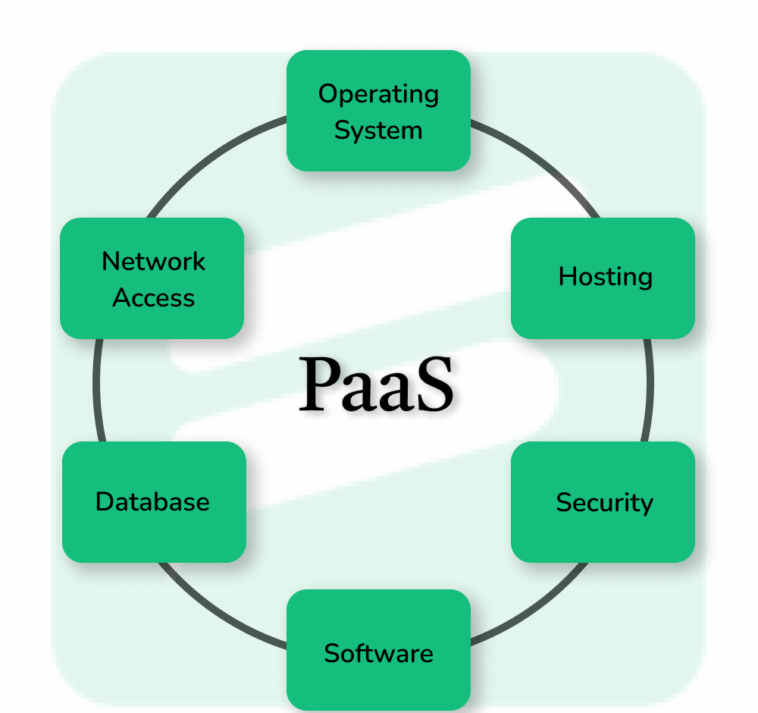
Platform as a Service (PaaS) is a cloud computing model that delivers a complete development and deployment environment over the internet. Instead of managing servers, storage, operating systems, and runtime environments, developers focus entirely on building and running applications.
A typical PaaS sample includes:
Operating systems
Runtime environments (Java, Python, Node.js, .NET)
Databases
Web servers
Development frameworks
DevOps tools
The cloud provider manages the infrastructure and platform layers, while the customer manages applications and data.
How PaaS Works
In a PaaS environment:
Developers access the platform via a web interface or CLI.
The platform provides pre-configured tools and environments.
Code is deployed directly without server setup.
The platform automatically handles scaling, patching, and maintenance.
This abstraction is what makes PaaS especially attractive for agile development teams.
Why PaaS Is Important in Modern Cloud Computing
The rise of DevOps, microservices, and continuous integration/continuous delivery (CI/CD) has made PaaS a foundational technology. Businesses no longer want to invest time and money maintaining infrastructure when they can focus on innovation.
A well-designed PaaS sample demonstrates how teams can go from idea to production in hours instead of weeks.
Popular PaaS Sample Examples in Real Life
1. Google App Engine (GAE)
Google App Engine is one of the most well-known PaaS samples.
Key Features:
Supports Python, Java, Go, Node.js
Automatic scaling
Built-in security
Integration with Google Cloud services
Real-World PaaS Sample Use Case:
A startup builds a mobile backend for a social media app. With App Engine, developers deploy code instantly while Google manages scaling during traffic spikes.
2. Microsoft Azure App Service
Azure App Service is a widely adopted PaaS solution for enterprises.
Key Features:
Supports .NET, Java, PHP, Python, Node.js
CI/CD with GitHub and Azure DevOps
Built-in authentication and monitoring
PaaS Sample Scenario:
A company hosting a customer portal migrates from on-premise servers to Azure App Service, reducing downtime and infrastructure costs.
3. AWS Elastic Beanstalk
AWS Elastic Beanstalk is a classic PaaS sample from Amazon Web Services.
Key Features:
Supports Java, Python, Ruby, Node.js, PHP
Automatic load balancing
Monitoring via CloudWatch
Example:
An e-commerce platform uses Elastic Beanstalk to deploy seasonal campaigns quickly without managing EC2 instances manually.
4. Heroku
Heroku is one of the earliest and most developer-friendly PaaS platforms.
Key Features:
Git-based deployment
Add-ons for databases and caching
Strong developer experience
PaaS Sample in Action:
A SaaS startup builds a minimum viable product (MVP) and deploys it on Heroku within a single day.
5. Red Hat OpenShift
OpenShift is a Kubernetes-based PaaS solution widely used in enterprises.
Key Features:
Container orchestration
DevSecOps tools
Hybrid and multi-cloud support
Use Case:
A financial institution deploys containerized applications securely across private and public clouds.
Core Components of a PaaS Sample Architecture
A typical PaaS sample architecture includes:
Application Code
Runtime Environment
Middleware
Databases
Load Balancers
Auto-Scaling Services
Monitoring and Logging Tools
This layered approach removes complexity from the developer’s workflow.
Benefits of Using PaaS (With Practical Examples)
1. Faster Development
Developers no longer configure servers.
Example:
A development team launches a web application in days instead of weeks.
2. Reduced Operational Costs
No need for hardware investment or maintenance teams.
Example:
A startup avoids hiring system administrators by using a managed PaaS.
3. Scalability
Automatic scaling based on traffic.
Example:
An online learning platform scales during exam seasons without manual intervention.
4. Improved Collaboration
Standardized environments improve teamwork.
Example:
Distributed teams work on the same platform without compatibility issues.
PaaS vs IaaS vs SaaS (Quick Comparison)
| Feature | IaaS | PaaS | SaaS |
|---|---|---|---|
| Infrastructure Management | User | Provider | Provider |
| Application Control | Full | Partial | None |
| Target Users | IT admins | Developers | End users |
| Example | AWS EC2 | Google App Engine | Gmail |
A PaaS sample clearly sits between raw infrastructure and fully managed software.
Limitations of PaaS
Despite its advantages, PaaS is not perfect.
1. Vendor Lock-In
Applications may depend heavily on provider-specific services.
2. Limited Customization
Less control over OS-level configurations.
3. Security Concerns
Shared responsibility requires proper configuration by developers.
Understanding these limitations helps organizations choose the right PaaS sample for their needs.
Who Should Use PaaS?
PaaS is ideal for:
Startups building applications quickly
Enterprises modernizing legacy apps
DevOps teams adopting CI/CD
Mobile and web app developers
If your goal is speed and efficiency, PaaS is often the best choice.
Future of PaaS
The future of PaaS includes:
AI-driven development platforms
Deeper Kubernetes integration
Low-code and no-code platforms
Serverless PaaS evolution
Modern PaaS samples are already blending with serverless computing and edge platforms.
Conclusion
A PaaS sample represents one of the most practical and powerful cloud computing models available today. By abstracting infrastructure complexity and offering ready-to-use development environments, PaaS enables faster innovation, reduced costs, and scalable applications.
From Google App Engine and Azure App Service to Heroku and OpenShift, real-world PaaS samples prove how organizations can focus on what matters most—building great software.
If you are looking to accelerate application development without the burden of infrastructure management, adopting a PaaS solution is a smart strategic move.