
The Future of Virtualization: How It Will Shape the Next Generation of Computing
Virtualization has already transformed the computing industry once. It allowed organizations to break free from hardware limitations and move toward flexible, software-defined infrastructure. What began as a way to run multiple operating systems on a single physical server has evolved into the backbone of modern cloud computing. Yet, virtualization is far from a finished technology. Instead, it is entering a new phase—one driven by cloud-native architectures, artificial intelligence, edge computing, and increasingly distributed digital ecosystems.
The future of virtualization will not simply focus on running virtual machines more efficiently. Rather, it will redefine how computing resources are delivered, managed, and consumed across global networks. As organizations adopt hybrid and multi-cloud strategies, and as billions of connected devices generate massive data streams, virtualization will become more intelligent, automated, and deeply integrated into everyday technology infrastructure.
The Future of Virtualization
From Server Consolidation to Intelligent Infrastructure
In its early days, virtualization primarily addressed a single problem: inefficient hardware utilization. Companies owned physical servers that operated at a small percentage of their capacity. Virtual machines solved this by allowing multiple workloads to share a single system. Over time, virtualization evolved into a platform for data centers and later into the foundation of public cloud computing.
The future, however, moves beyond simple consolidation. Virtualization is becoming intelligent infrastructure. Instead of administrators manually configuring resources, systems will dynamically analyze workloads and automatically adjust computing power, storage allocation, and network performance in real time. Artificial intelligence and machine learning algorithms will monitor patterns in application behavior and proactively optimize resource allocation.
For example, a virtualized environment may predict traffic spikes in an online service and automatically provision additional capacity before users experience slowdowns. This predictive capability transforms virtualization from a passive resource management tool into an active operational system.
The Future of Virtualization
The Rise of Containerization and Microservices
One of the most significant developments shaping the future of virtualization is container technology. Containers provide lightweight, isolated environments for applications without requiring a full operating system for each instance. Technologies such as Docker and orchestration platforms like Kubernetes allow applications to be broken into smaller components called microservices.
At first glance, containers appear to compete with virtual machines, but in reality they complement them. Virtual machines provide strong security isolation and hardware abstraction, while containers deliver speed and portability. In modern cloud environments, containers often run inside virtual machines. This layered approach combines the reliability of virtualization with the efficiency of containerization.
In the future, virtualization platforms will be optimized to host container workloads seamlessly. Instead of managing individual servers, administrators will manage application ecosystems where virtual machines and containers cooperate automatically. Infrastructure will be defined entirely by software policies rather than physical hardware configurations.
The Future of Virtualization
Virtualization in Edge Computing
Traditional cloud computing relies on centralized data centers. However, emerging technologies—such as autonomous vehicles, smart cities, and real-time analytics—require computing resources closer to the user. This concept is known as edge computing.
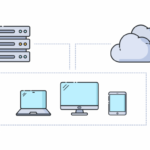
Virtualization will play a critical role in making edge computing practical. Small edge locations cannot maintain complex physical infrastructures for every application. Instead, virtualization allows a single edge device to host multiple independent environments securely and efficiently.
For instance, a smart factory may run monitoring systems, robotics controllers, and quality-inspection AI models on the same local hardware. Virtualization isolates each function while enabling shared processing power. As edge networks expand globally, virtualization will ensure consistent management across thousands of distributed nodes.
The Future of Virtualization
AI-Driven Virtualization Management
Managing large virtual environments has traditionally required skilled administrators and complex monitoring tools. In the future, artificial intelligence will automate much of this work.
AI-driven virtualization platforms will continuously analyze system metrics such as CPU usage, memory consumption, network latency, and application performance. Based on these insights, the system will make automatic decisions:
Rebalancing workloads across servers
Detecting hardware failures before they occur
Migrating virtual machines to optimize performance
Adjusting storage performance dynamically
Instead of reacting to failures, infrastructure will become self-healing. When a server shows signs of malfunction, virtual machines will automatically migrate to another host without interrupting users. This predictive maintenance will significantly improve reliability in cloud services.
The Future of Virtualization
Network and Storage Virtualization Expansion
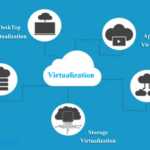
The future of virtualization extends beyond servers. Entire data centers are becoming software-defined environments where networking and storage are virtualized alongside computing resources.
Network virtualization allows organizations to create complex virtual networks using software. Firewalls, load balancers, and routing policies can be configured instantly without physical equipment changes. In multi-cloud environments, companies will manage unified networks spanning multiple providers as if they were a single infrastructure.
Storage virtualization will also evolve significantly. Instead of allocating fixed storage volumes, intelligent systems will distribute data across multiple storage tiers automatically. Frequently accessed data will move to high-performance storage, while archived data shifts to low-cost storage—all without manual intervention.
These developments will lead to the creation of fully programmable infrastructure environments known as software-defined data centers (SDDCs).
The Future of Virtualization
Virtualization and Cybersecurity
Security will be one of the most important drivers of virtualization innovation. As cyber threats become more sophisticated, organizations require stronger isolation and faster incident response.
Future virtualization platforms will integrate security directly into infrastructure. Security policies will follow workloads automatically, regardless of where they move. This concept, sometimes referred to as micro-segmentation, isolates each virtual machine or application component at the network level.
If a cyberattack compromises one environment, the attacker cannot easily move laterally across systems. Additionally, virtual machine snapshots allow rapid restoration to a secure state, reducing recovery time after incidents such as ransomware attacks.
In cloud environments, virtualization will also support zero-trust architectures, where every access request is verified continuously instead of assuming internal networks are safe.
The Future of Virtualization
Virtualization in Hybrid and Multi-Cloud Environments
Organizations increasingly adopt hybrid and multi-cloud strategies, combining on-premises infrastructure with multiple public cloud providers. Managing these environments manually is complex because each platform has different tools and configurations.
Virtualization will act as a unifying layer. Workloads will become portable, meaning an application running in a private data center can move to a public cloud without modification. Businesses will choose cloud providers based on cost, performance, or geographic requirements rather than technical limitations.
This portability reduces vendor lock-in and allows companies to optimize operations dynamically. If computing prices increase in one region, workloads can automatically migrate to another environment.
The Future of Virtualization
Integration with Emerging Technologies
The future of virtualization is closely tied to emerging technologies:
Artificial Intelligence and Machine Learning:
Virtualized environments will provide scalable training platforms for AI models. GPU virtualization will allow multiple users to share powerful processors, making advanced computing accessible without purchasing specialized hardware.
Internet of Things (IoT):
Billions of connected devices generate real-time data. Virtualization enables centralized management and analysis while supporting distributed processing at edge locations.
5G Networks:
High-speed mobile networks require flexible network infrastructure. Telecommunications providers are already using network function virtualization (NFV) to replace physical network appliances with software-based systems. Future 5G and 6G networks will rely heavily on virtualized network functions.
The Future of Virtualization
Challenges Ahead
Despite its promising future, virtualization faces challenges. Performance overhead still exists compared to running directly on hardware, particularly for high-performance computing workloads. Hardware acceleration technologies are improving this, but optimization remains necessary.
Complexity is another issue. As environments grow, managing virtual machines, containers, networks, and storage together requires advanced orchestration tools. Training and expertise will remain important.
Energy consumption is also a concern. Data centers already consume significant electricity. Future virtualization platforms must optimize power usage to support sustainable computing.
The Future of Virtualization
The Long-Term Vision
Looking ahead, virtualization will likely become invisible to most users. Infrastructure will be provisioned automatically through APIs and software policies rather than manual configuration. Developers will request computing resources the same way they request data from an application service.
Eventually, computing resources may be treated entirely as a global utility. Applications will run wherever capacity is available—data centers, edge locations, or distributed devices—without developers worrying about physical location. Virtualization will orchestrate this distributed computing fabric.
The Future of Virtualization
Conclusion
The future of virtualization extends far beyond running multiple operating systems on a single server. It is evolving into an intelligent, automated, and globally distributed infrastructure layer that powers cloud computing, edge networks, and modern digital services.
Through integration with artificial intelligence, containerization, and software-defined networking, virtualization will enable self-managing data centers, secure multi-cloud environments, and scalable edge computing platforms. It will strengthen cybersecurity, improve efficiency, and support emerging technologies such as IoT and 5G.
As organizations continue their digital transformation journeys, virtualization will remain a central technology shaping how computing resources are delivered and consumed. In many ways, the cloud era is only the beginning. The next phase—an interconnected, automated computing ecosystem—will depend heavily on the continued evolution of virtualization.