what is software as a service examples
The way software is created, delivered, and consumed has changed dramatically over the past two decades. In the past, users had to purchase software on physical media, install it on individual computers, and regularly manage updates and licenses. Today, most people access powerful applications directly through a web browser, paying a monthly or yearly subscription.
This modern delivery model is known as Software as a Service (SaaS).
In this professional and in-depth article, we will explain what is Software as a Service, how it works, why it has become the dominant software model, and provide clear, real-world software as a service examples used by individuals and businesses worldwide.
What is Software as a Service Examples
What Is Software as a Service (SaaS)?
Software as a Service (SaaS) is a cloud computing model in which software applications are hosted by a service provider and delivered to users over the internet. Instead of installing software on a local computer or server, users access the application through a web browser or lightweight client.
The SaaS provider is responsible for:
Hosting the application
Managing servers and infrastructure
Performing updates and patches
Ensuring availability and security
Scaling resources as demand grows
Users simply log in and use the software.
In essence, SaaS turns software into an on-demand service rather than a physical or locally installed product.
What is Software as a Service Examples
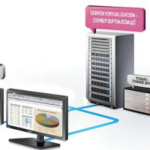
How Software as a Service Works
To better understand software as a service examples, it is important to know how SaaS operates behind the scenes.
The SaaS provider hosts the application in cloud data centers.
The application runs on shared or isolated infrastructure.
Users access the software via the internet.
Data is stored securely on the provider’s servers.
Updates are deployed automatically without user intervention.
This architecture allows SaaS applications to serve millions of users simultaneously while maintaining consistent performance.
What is Software as a Service Examples
Key Characteristics of Software as a Service
SaaS platforms share several defining characteristics:
1. Web-Based Access
Users access the software through a browser without local installation.
2. Subscription Pricing
Customers pay recurring fees (monthly or yearly) instead of a one-time purchase.
3. Centralized Management
The provider manages infrastructure, updates, and security centrally.
4. Scalability
Resources scale automatically as the number of users grows.
5. Multi-Tenancy
Multiple customers share the same application instance while keeping data isolated.
What is Software as a Service Examples
Why SaaS Has Become So Popular
The SaaS model offers significant advantages over traditional software distribution.
Lower Upfront Costs
There is no need to purchase expensive licenses or hardware.
Faster Deployment
Users can start using software immediately after signing up.
Automatic Updates
New features and security patches are delivered automatically.
Accessibility
Applications can be accessed from anywhere with an internet connection.
Reduced IT Complexity
Businesses no longer need to maintain on-premises servers or software installations.
These benefits explain why SaaS has become the standard software delivery model for modern organizations.
What is Software as a Service Examples
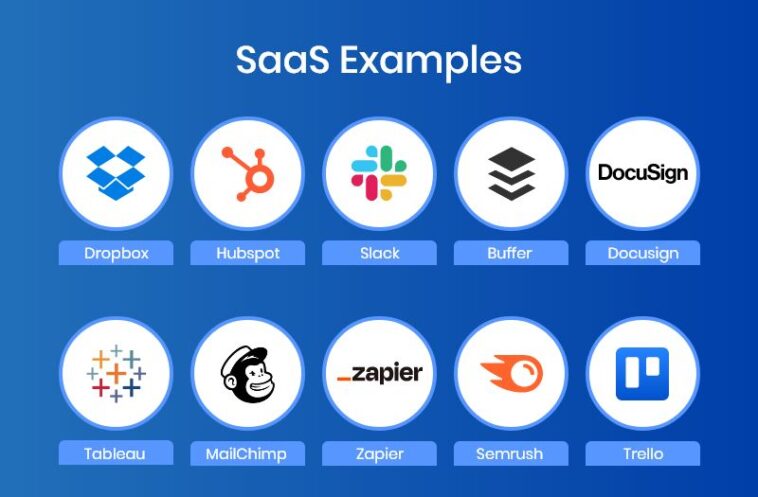
Software as a Service Examples (By Category)
To clearly answer the question what is software as a service examples, let’s explore some of the most popular SaaS applications across different industries.
1. Productivity and Collaboration Software
Google Workspace
Google Workspace includes Gmail, Google Docs, Sheets, Slides, and Drive. Users collaborate in real time, store files in the cloud, and access their data from any device.
Microsoft 365
Microsoft 365 delivers Word, Excel, PowerPoint, Outlook, and Teams as subscription-based services with cloud storage and collaboration features.
These tools are classic software as a service examples used daily by millions of users.
2. Cloud Storage and File Sharing
Dropbox
Dropbox allows users to store, sync, and share files securely across devices.
Google Drive
Google Drive provides cloud-based file storage integrated with Google’s productivity tools.
These platforms eliminate the need for physical storage devices.
3. Communication and Video Conferencing
Zoom
Zoom offers video meetings, webinars, and collaboration tools accessible via the web.
Slack
Slack enables real-time messaging, file sharing, and integrations with other tools, making it a core SaaS platform for remote teams.
4. Customer Relationship Management (CRM)
Salesforce
Salesforce is one of the most well-known SaaS platforms, helping businesses manage customer data, sales pipelines, and marketing campaigns.
CRM systems are among the earliest and most successful software as a service examples.
5. Project Management and Collaboration
Trello
Trello provides visual task management using boards and cards.
Asana
Asana helps teams plan, track, and manage work across projects.
These tools enable distributed teams to collaborate efficiently.
6. E-Commerce Platforms
Shopify
Shopify allows businesses to create and manage online stores without managing servers or software installations.
E-commerce SaaS platforms have enabled millions of small businesses to sell online.
7. Design and Creative Software
Canva
Canva allows users to create graphics, presentations, and marketing materials directly in a browser.
Adobe Creative Cloud
Adobe Creative Cloud delivers professional tools like Photoshop and Illustrator via subscription, making them SaaS applications.
8. Accounting and Finance Software
QuickBooks Online
QuickBooks Online helps businesses manage accounting, invoicing, and financial reporting.
Financial SaaS platforms reduce complexity for small and medium-sized businesses.
What is Software as a Service Examples
SaaS vs Traditional Software
| Feature | Traditional Software | SaaS |
|---|---|---|
| Installation | Local | Web-based |
| Updates | Manual | Automatic |
| Pricing | One-time purchase | Subscription |
| Accessibility | Single device | Anywhere |
| Maintenance | User-managed | Provider-managed |
This comparison shows why SaaS has largely replaced traditional software models.
What is Software as a Service Examples
SaaS vs Other Cloud Service Models
SaaS is often compared with IaaS and PaaS.
IaaS provides infrastructure (servers, storage).
PaaS provides development platforms.
SaaS provides complete applications.
SaaS is the most user-friendly model because it requires minimal technical knowledge.
What is Software as a Service Examples
Common Use Cases for SaaS
SaaS applications are used across nearly every industry:
Education (online learning platforms)
Healthcare (patient management systems)
Finance (online banking tools)
Marketing (email and analytics platforms)
Human resources (HR management systems)
Software development (collaboration tools)
The flexibility of SaaS makes it suitable for both individuals and enterprises.
Challenges and Limitations of SaaS
Despite its benefits, SaaS also has challenges:
Internet Dependency
Users need reliable internet access.
Data Security Concerns
Data is stored with third-party providers.
Limited Customization
Some SaaS applications offer fewer customization options than on-premises software.
Vendor Lock-In
Switching providers can be complex.
However, most organizations find that the advantages outweigh these limitations.
What is Software as a Service Examples
The Future of Software as a Service
The SaaS industry continues to evolve rapidly.
Future trends include:
AI-powered SaaS platforms
Vertical SaaS solutions tailored to specific industries
Deeper integrations between platforms
Usage-based pricing models
Increased focus on data privacy and compliance
SaaS is expected to remain the dominant software delivery model for the foreseeable future.
What is Software as a Service Examples
Conclusion
So, what is software as a service examples?
Software as a Service is a cloud-based model where applications are delivered over the internet and accessed through subscriptions. From productivity tools like Google Workspace and Microsoft 365 to CRM systems like Salesforce and communication platforms like Zoom and Slack, SaaS applications power modern digital life.
SaaS has transformed software from a static product into a dynamic, scalable service. It reduces costs, simplifies management, and enables global accessibility. As businesses and individuals continue to rely on cloud technologies, software as a service examples will only grow in number and importance.
Understanding SaaS is essential for anyone working in technology, business, or digital transformation today.