What Is STaaS (Storage as a Service)?
As data continues to grow at an unprecedented rate, businesses and individuals alike face increasing challenges in storing, managing, and securing digital information. Traditional on-premises storage solutions often require high upfront costs, constant maintenance, and limited scalability. To address these challenges, cloud computing has introduced several service models, one of the most important being STaaS (Storage as a Service).
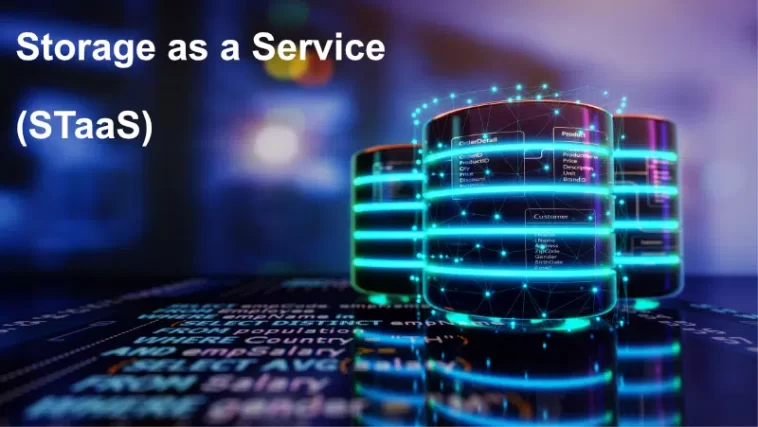
STaaS is a cloud-based storage model that allows users to access scalable and secure storage resources on demand without managing physical infrastructure. In this article, we will answer the question “What is STaaS?”, explore how it works, examine real-world use cases, discuss benefits and challenges, and explain why Storage as a Service plays a critical role in modern IT and digital transformation strategies.
What Is STaaS
What Is STaaS (Storage as a Service)?
STaaS (Storage as a Service) is a cloud computing model in which storage resources are provided to users over the internet by a third-party provider. Instead of purchasing and maintaining physical storage hardware, organizations subscribe to storage capacity that can be scaled up or down as needed.
In the STaaS model, the cloud provider is responsible for:
Storage infrastructure
Hardware maintenance
Availability and performance
Data replication and backup
Security and reliability
Users access storage resources through web interfaces, APIs, or integrated cloud platforms, paying only for the capacity and services they consume.
What Is STaaS
How STaaS Works
Storage as a Service operates using large-scale data centers managed by cloud providers. These data centers host distributed storage systems that allocate storage capacity dynamically.
The process typically involves:
Uploading data to the cloud via secure connections
Data being replicated across multiple servers
Continuous monitoring and performance optimization
On-demand retrieval of stored data
This architecture ensures high availability, durability, and scalability while reducing the burden on internal IT teams.
What Is STaaS
Key Characteristics of STaaS
STaaS is defined by several essential characteristics:
On-Demand Scalability
Users can instantly increase or decrease storage capacity without purchasing hardware.
Pay-As-You-Go Pricing
Costs are based on actual usage, avoiding large capital expenditures.
High Availability
Data is stored redundantly to minimize downtime and prevent data loss.
Accessibility
Stored data can be accessed from anywhere with an internet connection.
Managed Infrastructure
The provider handles system updates, hardware replacement, and fault tolerance.
What Is STaaS
Types of STaaS Storage
Object Storage
Designed for unstructured data such as images, videos, and backups.
Commonly used in web applications and big data analytics.
File Storage
Provides shared file systems accessible by multiple users and applications.
Block Storage
Offers low-latency storage used for databases and enterprise workloads.
Many STaaS providers offer a combination of these storage types to meet diverse needs.
What Is STaaS
Examples of STaaS Providers
Some well-known examples of Storage as a Service include:
Amazon S3
Google Cloud Storage
Microsoft Azure Blob Storage
IBM Cloud Object Storage
Oracle Cloud Storage
These platforms deliver scalable storage solutions for businesses of all sizes.
What Is STaaS
Use Cases of STaaS
Data Backup and Disaster Recovery
STaaS is widely used for automatic backups and disaster recovery planning due to its reliability and redundancy.
Application Data Storage
Modern applications rely on STaaS to store logs, user data, and media assets.
Big Data and Analytics
Large datasets can be stored and processed efficiently using cloud-based storage.
Media and Content Delivery
Video streaming and digital media companies use STaaS to handle massive volumes of data.
Remote Work and Collaboration
Teams access shared files securely through cloud storage platforms.
What Is STaaS
Benefits of Storage as a Service
STaaS offers a wide range of advantages for organizations and individuals.
Cost Efficiency
No need for physical hardware investments, maintenance, or upgrades.
Scalability
Storage grows with business needs without system redesign.
Reliability and Durability
Data replication ensures high durability and fault tolerance.
Faster Deployment
Storage resources can be provisioned in minutes rather than weeks.
Reduced IT Overhead
IT teams can focus on strategic initiatives instead of storage management.
What Is STaaS
STaaS vs Traditional Storage
| Feature | Traditional Storage | STaaS |
|---|---|---|
| Cost Model | High upfront cost | Pay-as-you-go |
| Scalability | Limited | Highly scalable |
| Maintenance | In-house | Provider-managed |
| Availability | Hardware dependent | High redundancy |
| Accessibility | Local access | Global access |
This comparison highlights why many organizations are migrating to STaaS solutions.
What Is STaaS
STaaS vs Other Cloud Service Models
STaaS vs IaaS
IaaS provides full infrastructure control, including storage, whereas STaaS focuses purely on storage services.
STaaS vs SaaS
SaaS delivers complete applications, while STaaS provides backend storage capabilities.
STaaS vs PaaS
PaaS includes development platforms, while STaaS supports data persistence and management.
STaaS often complements other cloud service models in hybrid architectures.
What Is STaaS
Security in STaaS
Security is a critical component of Storage as a Service.
Typical security features include:
Data encryption at rest and in transit
Identity and access management
Compliance certifications (ISO, SOC, GDPR)
Activity monitoring and logging
While cloud providers offer robust security, organizations must implement best practices such as access control and data classification.
What Is STaaS
Challenges and Limitations of STaaS
Despite its benefits, STaaS also presents challenges:
Dependence on internet connectivity
Data sovereignty and compliance concerns
Potential vendor lock-in
Ongoing operational costs
These challenges can be managed with proper planning and provider selection.
STaaS and Digital Transformation
STaaS plays a vital role in digital transformation by enabling organizations to modernize infrastructure quickly. It supports cloud-native applications, automation, artificial intelligence, and data-driven decision-making.
By eliminating storage limitations, STaaS empowers businesses to innovate faster and respond dynamically to market demands.
What Is STaaS
The Future of Storage as a Service
The future of STaaS is shaped by emerging technologies and trends, including:
AI-driven storage optimization
Edge computing integration
Hybrid and multi-cloud storage strategies
Advanced data lifecycle management
As data volumes continue to expand, STaaS will remain a cornerstone of cloud ecosystems.
What Is STaaS
SEO Benefits of STaaS-Based Infrastructure
From a digital performance standpoint, STaaS contributes to SEO by:
Improving website performance and scalability
Ensuring high availability and uptime
Supporting content delivery and faster loading times
Enhancing user experience
Websites leveraging cloud-based storage often perform better in search engine rankings.
What Is STaaS
Conclusion
Storage as a Service (STaaS) is a fundamental cloud computing model that addresses the growing demand for scalable, secure, and cost-effective data storage. By shifting storage responsibilities to cloud providers, organizations gain flexibility, reliability, and operational efficiency.
As data continues to drive innovation, STaaS will play an increasingly important role in IT infrastructure, cloud strategies, and digital transformation initiatives. Understanding what STaaS is and how it works enables businesses to make informed decisions and build future-ready systems.