
Advantages and Disadvantages of Cloud Computing
In the modern digital era, businesses and organizations rely heavily on technology to manage data, run applications, and deliver services. One of the most transformative technologies enabling this shift is Cloud Computing. Instead of relying on traditional on-premises infrastructure, companies can now access computing resources such as servers, storage, networking, and software over the internet.
Cloud computing has revolutionized how businesses operate by providing scalable, flexible, and cost-efficient solutions. From startups to global enterprises, organizations are increasingly migrating their workloads to the cloud to improve efficiency and innovation.
However, like any technology, cloud computing comes with both benefits and limitations. While it offers powerful capabilities and operational advantages, it also introduces certain risks and challenges that organizations must carefully consider.
This article explores the key advantages and disadvantages of cloud computing in detail, helping businesses understand when and how to adopt this technology effectively.
Advantages and Disadvantages of Cloud Computing
Understanding Cloud Computing
Before exploring its advantages and disadvantages, it is important to understand what cloud computing actually means.
Cloud computing refers to the delivery of computing services through the internet rather than through local hardware or private data centers. These services include computing power, data storage, databases, networking, analytics, and software applications.
Cloud providers maintain large data centers that host these services and allow users to access them on demand. Instead of buying physical servers, organizations simply rent computing resources and pay for what they use.
Many of the world’s leading technology companies provide cloud services, including Amazon Web Services, Microsoft through its Azure platform, and Google with its cloud infrastructure.
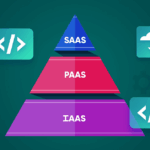
Cloud services are typically delivered through three main service models:
Each model offers different levels of control, flexibility, and management responsibility.
Advantages and Disadvantages of Cloud Computing
Advantages and Disadvantages of Cloud Computing
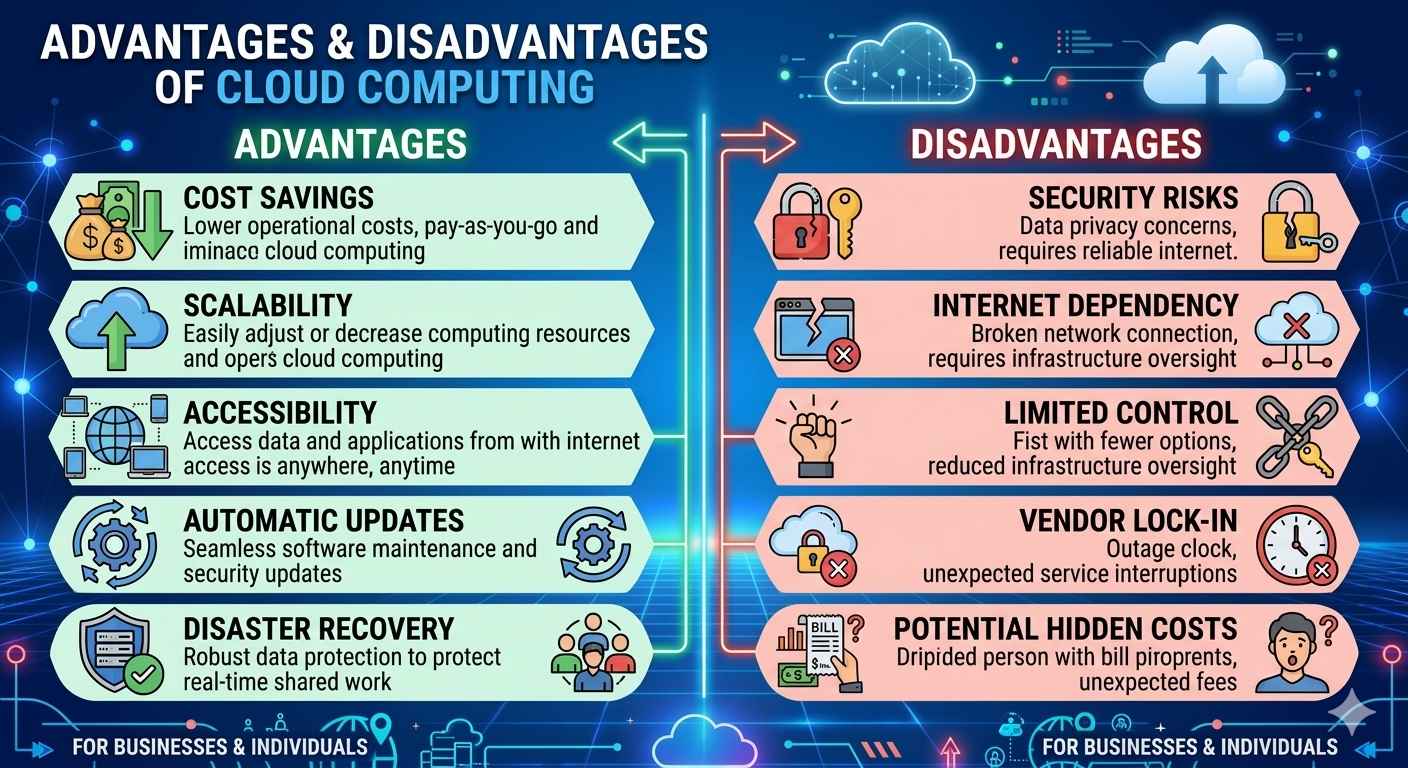
Advantages of Cloud Computing
Cloud computing has become a core part of modern IT infrastructure because it offers numerous advantages that traditional systems cannot easily match.
1. Cost Efficiency
One of the most significant advantages of cloud computing is cost reduction.
Traditional IT infrastructure requires large upfront investments in hardware, software licenses, and data center facilities. Organizations must purchase servers, maintain equipment, and hire technical staff to manage infrastructure.
Cloud computing eliminates many of these expenses by offering a pay-as-you-go pricing model. Companies only pay for the resources they actually use.
This model helps businesses:
Reduce capital expenditures
Avoid hardware maintenance costs
Optimize IT budgets
For startups and small businesses, this financial flexibility can make cloud adoption especially attractive.
2. Scalability and Flexibility
Another major benefit of cloud computing is its ability to scale resources quickly.
Businesses often experience fluctuating workloads. For example, an e-commerce website may experience significant traffic spikes during holiday sales.
With cloud infrastructure, companies can instantly increase or decrease computing resources depending on demand.
This scalability allows organizations to:
Handle sudden traffic spikes
Expand infrastructure as the business grows
Avoid over-provisioning hardware
Cloud platforms provide virtually unlimited computing capacity, making them ideal for growing companies.
Advantages and Disadvantages of Cloud Computing
3. Accessibility and Remote Work
Cloud computing enables users to access applications and data from anywhere with an internet connection.
Employees can work from home, collaborate across different locations, and access company systems on various devices.
This flexibility has become especially important in the era of remote work and global collaboration.
Cloud-based tools allow teams to:
Share files instantly
collaborate in real time
access applications across multiple devices
Services like Google Workspace and Microsoft 365 have become essential productivity tools for organizations worldwide.
4. Automatic Updates and Maintenance
Maintaining IT systems requires constant updates, security patches, and hardware upgrades. In traditional environments, these tasks can be time-consuming and expensive.
Cloud providers handle most of these responsibilities.
They regularly update infrastructure, apply security patches, and improve system performance without requiring direct involvement from users.
This allows IT teams to focus on strategic tasks instead of routine maintenance.
Advantages and Disadvantages of Cloud Computing
5. High Reliability and Availability
Cloud providers operate large networks of geographically distributed data centers.
This infrastructure ensures high availability and redundancy. If one data center experiences an issue, traffic can automatically shift to another location.
As a result, cloud services often achieve uptime levels of 99.9% or higher.
For businesses that rely on continuous availability, this level of reliability is extremely valuable.
Advantages and Disadvantages of Cloud Computing
6. Disaster Recovery and Data Backup
Data loss can be catastrophic for organizations.
Cloud computing simplifies disaster recovery by enabling automated data backups and replication across multiple regions.
Companies can recover data quickly in case of system failure, cyberattacks, or natural disasters.
Without cloud solutions, implementing such recovery systems would require significant investment.
7. Improved Collaboration
Cloud platforms enable teams to collaborate more effectively.
Employees can work on the same documents simultaneously, share files instantly, and communicate through integrated tools.
This real-time collaboration improves productivity and reduces communication barriers between teams.
Organizations with distributed workforces particularly benefit from cloud-based collaboration platforms.
8. Faster Deployment of Applications
Launching new applications traditionally requires purchasing servers, configuring networks, and installing software.
Cloud computing dramatically reduces this setup time.
Developers can deploy applications within minutes using cloud infrastructure and development platforms.
This speed accelerates innovation and allows companies to bring products to market faster.
Advantages and Disadvantages of Cloud Computing
Disadvantages of Cloud Computing
Despite its many advantages, cloud computing also has certain drawbacks that organizations must consider.
1. Security and Privacy Concerns
One of the most frequently discussed challenges of cloud computing is data security.
When companies store sensitive data in the cloud, they rely on third-party providers to protect that information.
Potential risks include:
Data breaches
unauthorized access
insider threats
Although major cloud providers implement advanced security measures, businesses must still carefully manage data protection and access controls.
Organizations handling sensitive data—such as healthcare or financial institutions—must ensure compliance with strict security regulations.
2. Internet Dependency
Cloud services require a reliable internet connection.
If internet connectivity is disrupted, users may lose access to applications and data stored in the cloud.
For businesses operating in areas with unreliable networks, this dependency can create operational risks.
To mitigate this issue, many organizations invest in redundant internet connections or hybrid cloud architectures.
Advantages and Disadvantages of Cloud Computing
3. Limited Control Over Infrastructure
With cloud computing, organizations rely on external providers to manage infrastructure.
While this simplifies operations, it also reduces control over hardware configurations, network settings, and system updates.
For companies requiring highly customized environments, this limitation may be a concern.
Certain industries may still prefer on-premises infrastructure for full control.
4. Potential Downtime
Although cloud providers aim for high availability, outages can still occur.
Large-scale cloud outages have occasionally affected major platforms, disrupting services for thousands of businesses simultaneously.
When cloud services become unavailable, organizations relying entirely on the cloud may experience operational interruptions.
Advantages and Disadvantages of Cloud Computing
5. Vendor Lock-In
Vendor lock-in occurs when organizations become heavily dependent on a single cloud provider.
Migrating applications and data to another provider can be technically complex and costly.
Different cloud platforms use proprietary tools, APIs, and services that may not easily transfer to other environments.
To reduce this risk, some companies adopt multi-cloud strategies.
Advantages and Disadvantages of Cloud Computing
6. Long-Term Costs
Although cloud computing can reduce upfront expenses, long-term costs may become significant if resources are not properly managed.
Organizations that fail to monitor usage may experience unexpected expenses due to unused or over-provisioned services.
Effective cost management and monitoring tools are essential for maintaining budget control.
Advantages and Disadvantages of Cloud Computing
When Cloud Computing Is the Right Choice
Cloud computing is particularly beneficial for organizations that need:
scalable infrastructure
remote accessibility
rapid application development
reduced hardware investments
Startups, software companies, and digital businesses often benefit the most from cloud adoption.
However, organizations handling extremely sensitive data or operating in highly regulated industries may require hybrid solutions that combine cloud services with private infrastructure.
Advantages and Disadvantages of Cloud Computing
The Future of Cloud Computing
Cloud computing continues to evolve rapidly.
Emerging technologies such as edge computing, serverless architectures, and artificial intelligence services are expanding the capabilities of cloud platforms.
As digital transformation accelerates across industries, cloud computing will remain a fundamental part of modern IT strategy.
Organizations that understand both the advantages and limitations of the cloud will be better prepared to build resilient, scalable, and secure technology environments.
Advantages and Disadvantages of Cloud Computing
Conclusion
Cloud computing has become one of the most important technological innovations of the modern era. By providing scalable resources, remote accessibility, and flexible pricing models, it allows organizations to operate more efficiently and innovate faster.
However, adopting cloud technology also requires careful consideration of potential challenges such as security risks, internet dependency, and vendor lock-in.
Ultimately, the decision to adopt cloud computing should be based on an organization’s specific goals, security requirements, and technical capabilities. By understanding both the advantages and disadvantages of cloud computing, businesses can make informed decisions that support long-term growth and technological advancement.
Advantages and Disadvantages of Cloud Computing