
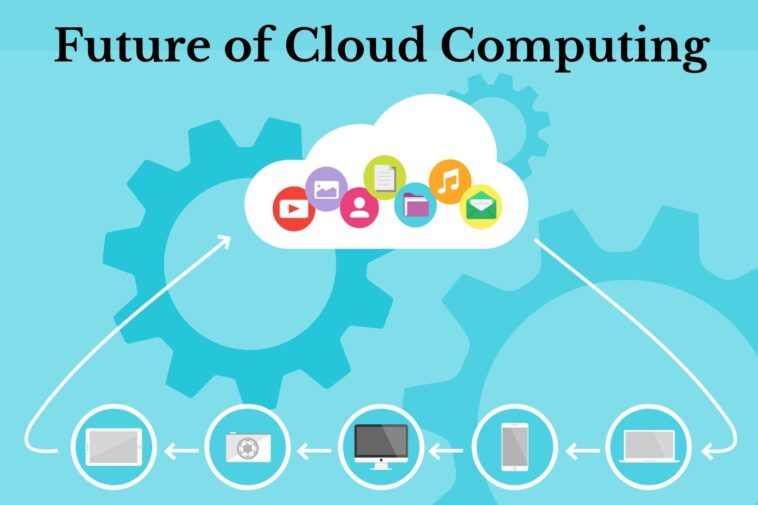
Future of Cloud Infrastructure
The Future of Cloud Infrastructure: Trends to Watch in 2025
As businesses continue their digital transformation journeys, cloud computing is no longer a supporting technology — it has become the backbone of global innovation. In 2025, the evolution of cloud infrastructure will shape how organizations deploy applications, store data, and deliver digital experiences to users across the globe.
This article explores the most impactful trends shaping the future of cloud infrastructure, from AI integration to sustainability, and how enterprises can prepare to thrive in this new era.
Future of Cloud Infrastructure
The Rise of AI-Powered Cloud Management
Artificial intelligence (AI) is fundamentally changing how cloud infrastructure is managed and optimized.
In 2025, we’re seeing the emergence of autonomous cloud operations, where AI and machine learning models automatically monitor workloads, predict failures, and optimize resource allocation in real time.
Instead of relying on static rules or manual scaling, AI-driven systems like AWS Auto Scaling, Azure Machine Learning, and Google Cloud’s Autonomic Platform use predictive analytics to prevent downtime before it happens.
For example, an e-commerce company in Singapore might use AI-based workload optimization to handle traffic spikes during major online shopping events — all without human intervention.
Key takeaway:
AI will reduce cloud management complexity, lower operational costs, and enable teams to focus on innovation rather than maintenance.
Future of Cloud Infrastructure
Multi-Cloud and Hybrid Cloud Become the Default Strategy
Gone are the days when businesses depended on a single cloud provider. In 2025, multi-cloud and hybrid cloud environments are now the standard, not the exception.
Enterprises in sectors like finance, healthcare, and logistics are increasingly adopting hybrid setups that combine private clouds for sensitive data and public clouds for scalability.
This flexibility not only improves performance but also mitigates risks like vendor lock-in and data sovereignty issues — especially important in regions such as the EU and Singapore with strict data regulations.
Platforms like VMware Cloud Foundation and Red Hat OpenShift are leading this hybrid revolution, allowing companies to run workloads seamlessly across multiple environments.
Key takeaway:
The future belongs to organizations that can intelligently orchestrate resources across clouds while maintaining performance, compliance, and security.
Future of Cloud Infrastructure
Edge Computing Expands Cloud Boundaries
In 2025, the cloud is no longer centralized. With billions of IoT devices generating massive data volumes, edge computing is becoming a crucial extension of the cloud.
By processing data closer to where it’s generated — at the “edge” — latency is reduced, and applications become faster and more reliable. This is particularly critical for industries like autonomous vehicles, smart manufacturing, and telemedicine.
For instance, an Australian telecom company can deploy edge servers across major cities to support ultra-low latency applications like 5G gaming and live VR streaming.
The result? Faster response times, reduced network congestion, and a superior user experience.
Key takeaway:
The combination of cloud and edge computing creates a distributed infrastructure capable of supporting the next generation of connected applications.
Future of Cloud Infrastructure
Sustainability Becomes a Core Cloud Metric
Sustainability is no longer a side initiative — it’s now a core requirement for enterprises and governments alike.
Cloud providers are competing to build green data centers that minimize carbon footprints while maximizing performance.
Google Cloud and Microsoft Azure are leading the charge with carbon-neutral and even carbon-negative infrastructure targets.
Data centers are adopting renewable energy, liquid cooling, and smart power distribution systems to reduce energy waste.
For example, a European fintech company may choose a provider based on sustainability certifications to align with ESG goals and attract eco-conscious investors.
Key takeaway:
Sustainability isn’t just about the environment — it’s a business advantage that drives brand reputation, compliance, and cost savings.
5. Quantum-Ready Infrastructure Is on the Horizon
While still in early stages, quantum computing is making its way into cloud ecosystems.
Cloud giants like IBM, AWS, and Google are offering quantum simulation and experimentation tools via their platforms.
By 2025 and beyond, quantum-ready cloud infrastructure will help organizations experiment with solving problems once deemed impossible — such as molecular modeling for drug discovery or optimizing complex supply chains.
Key takeaway:
Quantum integration represents the next frontier of cloud innovation, enabling breakthroughs that traditional computing cannot achieve.
Future of Cloud Infrastructure
Enhanced Cloud Security Through Zero Trust Architecture
As cloud adoption grows, so do security challenges. The “Zero Trust” model — where no user or device is automatically trusted — has become a foundational principle for modern cloud security.
Companies are now implementing continuous verification systems, identity-based access control, and end-to-end encryption across hybrid and multi-cloud setups.
This approach drastically reduces the attack surface and aligns with international compliance frameworks like GDPR and SOC 2.
Example:
An Indian fintech startup using AWS Zero Trust tools can isolate workloads, monitor traffic anomalies, and secure customer data more effectively than with traditional perimeter security.
Key takeaway:
Security is no longer a barrier to cloud adoption — it’s an enabler of digital confidence.
Future of Cloud Infrastructure
Cloud-Native Applications Dominate Development
The future of cloud infrastructure is cloud-native by design.
Microservices, containers, and serverless architectures are redefining how software is built and deployed.
Technologies like Kubernetes and Docker allow developers to deploy scalable, resilient apps faster than ever.
In 2025, enterprises are not just “moving to the cloud” — they’re building for the cloud from the ground up.
This shift reduces time to market, improves agility, and enhances developer productivity across global teams.
Key takeaway:
Cloud-native architecture is the new normal for building modern digital products.
Regional Cloud Expansion and Data Localization
As nations enforce stricter data sovereignty laws, cloud providers are expanding regional data centers to comply.
Countries in the EU and Asia-Pacific now require certain data to remain within borders — a challenge and opportunity for global providers.
This expansion ensures better performance, lower latency, and compliance with local laws.
For example, AWS’s new regions in India and Australia are designed to meet government data protection standards while improving service availability.
Key takeaway:
Localized infrastructure will define the competitive edge of global cloud providers.
Future of Cloud Infrastructure
Conclusion
The cloud of 2025 is intelligent, distributed, secure, and sustainable.
Enterprises that embrace AI-driven management, multi-cloud flexibility, and edge integration will stay ahead in a digital economy defined by agility and innovation.
As technology continues to evolve, cloud infrastructure will not just support business — it will become the business.