Advantages of Cloud Computing
Cloud computing has evolved into one of the most transformative technologies of the 21st century. It has reshaped modern IT operations and revolutionized how organizations deliver, scale, and manage digital services. From cost reduction to improved operational efficiency, the advantages of cloud computing have made it the strategic backbone of digital transformation across nearly every industry.
This article provides a detailed exploration of the key benefits of cloud computing, structured in a clear, academic, and SEO-optimized format to help students, professionals, and decision-makers better understand why cloud adoption continues to rise globally.
Advantages of Cloud Computing
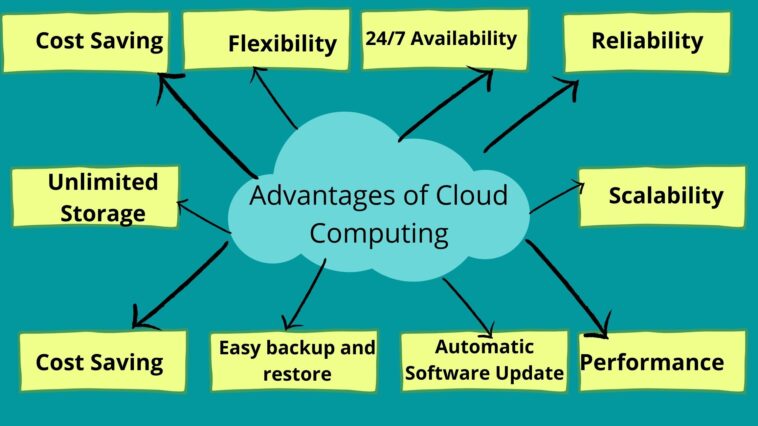
1. Cost Efficiency and Reduced Capital Expenditure
One of the most widely recognized advantages of cloud computing is its significant cost efficiency. Organizations no longer need to invest in expensive on-premises servers, hardware, cooling systems, or dedicated physical data centers.
Key Cost Benefits
Pay-as-you-go pricing: Businesses pay only for the computing resources they actually use.
No upfront capital costs: Cloud infrastructure eliminates the need for large initial investments (CapEx).
Reduced operational expenses (OpEx): Maintenance, upgrades, and support are handled by the cloud provider.
Organizational Impact
This financial flexibility allows small startups and large enterprises alike to optimize their budgets and redirect financial resources to innovation, talent, and strategic projects.
Advantages of Cloud Computing
2. Scalability and Flexibility
Cloud computing offers unmatched scalability, allowing businesses to adjust resources dynamically based on real-time demand.
Forms of Scalability
Vertical scaling: Increasing CPU, RAM, or storage on a single virtual machine.
Horizontal scaling: Adding more machines or containers to distribute workload.
Why Scalability Matters
Handles sudden spikes in traffic
Supports business growth
Increases performance and reliability
This flexibility is especially beneficial for industries with fluctuating workloads, such as e-commerce, media streaming, and data analytics.
3. Enhanced Collaboration and Remote Access
Cloud platforms make it easier for teams to collaborate, regardless of geographic location.
Collaboration Advantages
Real-time access to shared files and applications
Unified workspaces
Multi-user editing
Cloud-based productivity tools (e.g., Google Workspace, Microsoft 365)
Remote Work Enablement
Employees can access cloud resources from laptops, smartphones, or tablets. This accessibility enhances productivity, supports hybrid work models, and ensures business continuity even during unexpected disruptions.
Advantages of Cloud Computing
4. High Availability and Reliability
Reliability is one of the most critical advantages of cloud computing. Cloud providers offer robust, fault-tolerant systems designed to deliver continuous service.
Key Reliability Features
Multi-region and multi-zone redundancy
Automatic failover mechanisms
Load balancing
Distributed storage
Outcome
Businesses can achieve service uptimes of 99.9% or higher, ensuring consistent availability for critical applications and minimizing downtime risks.
5. Strong Security and Compliance
Cloud service providers invest heavily in advanced security systems and compliance frameworks.
Security Features
Data encryption (in transit and at rest)
Identity and access management (IAM)
Network firewalls
Zero-trust architecture
Continuous monitoring and threat detection
Compliance Standards
Cloud providers comply with internationally recognized standards, such as:
ISO/IEC 27001
GDPR
HIPAA
SOC 2
PCI-DSS
For many organizations, cloud security surpasses what they could achieve through traditional on-premises systems.
Advantages of Cloud Computing
6. Automatic Updates and Maintenance
Managing infrastructure manually is time-consuming and costly. One of the overlooked advantages of cloud computing is automatic system maintenance.
What Cloud Providers Handle
Software updates
Hardware upgrades
Security patches
Performance optimization
Backup management
Benefit
Businesses can focus on innovation and core operations while the cloud provider ensures that infrastructure remains up-to-date and secure.
7. Disaster Recovery and Business Continuity
Disaster recovery (DR) is essential for organizations dealing with sensitive or mission-critical data. Cloud computing simplifies and strengthens DR strategies.
Cloud DR Advantages
Automated backups
Geo-redundancy
Faster data recovery
Reduced costs compared to physical DR sites
Zero downtime migrations
Cloud infrastructure enables businesses to restore operations quickly following cyberattacks, natural disasters, or system failures.
8. Improved Performance and Speed
Cloud environments leverage high-performance computing resources that significantly enhance system speed and application responsiveness.
Performance Advantages
Optimized virtual machines
Global content delivery networks (CDNs)
High-speed networking
SSD-based cloud storage
Outcome
Applications load faster, data is processed more efficiently, and users experience smoother interactions—crucial for e-commerce, gaming, fintech, and AI applications.
9. Innovation and Rapid Deployment
The cloud accelerates innovation by enabling rapid deployment and experimentation.
Innovation-Enabling Features
Serverless computing
Containers and microservices
AI and machine learning APIs
Big data analytics platforms
DevOps and CI/CD pipelines
Business Value
Teams can test ideas, build prototypes, and bring new products to market faster—with minimal risk and cost.
10. Environmental Sustainability
Cloud computing contributes to sustainability by optimizing resource usage and reducing carbon footprints.
How the Cloud Is Greener
Shared infrastructure reduces waste
Efficient energy use in hyperscale data centers
Renewable energy adoption by major providers
Less hardware disposal and electronic waste
This makes cloud adoption beneficial not only economically but also environmentally.
11. Competitive Advantage for Businesses
Cloud adoption enables organizations to remain agile, scalable, and innovative—offering a significant competitive edge.
Competitive Gains
Faster launch of digital services
Enhanced customer experience
Ability to adopt emerging technologies quickly
Better data-driven decision-making
Organizations not leveraging the cloud risk falling behind competitors who enjoy the agility and performance it provides.
12. Access to Advanced Technologies
Cloud computing democratizes access to cutting-edge technologies that were once too expensive or complex to implement.
Examples of Advanced Tools
Artificial intelligence and machine learning
Internet of Things (IoT) platforms
Blockchain services
Real-time analytics
Cybersecurity automation tools
This accessibility fuels innovation and digital transformation across sectors like healthcare, finance, retail, and logistics.
Conclusion
The advantages of cloud computing are profound and far-reaching. From cost savings and scalability to enhanced security, global accessibility, and faster innovation, the cloud has become an essential foundation for modern digital infrastructure. By adopting cloud computing, organizations can operate more efficiently, deliver better services, and remain competitive in an increasingly digital world.
Whether a business is small or enterprise-level, cloud computing offers a powerful combination of flexibility, performance, and sustainability that traditional IT infrastructure cannot match.
As cloud technologies continue to evolve—especially in areas like serverless computing, AI integration, and edge computing—the advantages will only grow stronger, shaping the next generation of digital transformation.