Cloud Computing Explained
Cloud computing has become one of the most transformative technologies of the 21st century. Today, it powers everything from enterprise software systems and university research applications to consumer streaming services and personal data storage. Although the term “cloud” has been part of IT vocabulary for years, its meaning and impact are often misunderstood. This comprehensive guide explains what cloud computing is, how it works, the key service models, real‑world applications, business implications, and future trends—in a clear, expert‑level format that goes beyond typical online articles.
Cloud Computing Explained
What Is Cloud Computing?
At its core, cloud computing is the delivery of computing services over the internet. Instead of buying, installing, and maintaining physical servers, storage, databases, networking equipment, and software on‑site, organizations access these resources from third‑party providers. The cloud model abstracts the underlying hardware, allowing users to rent what they need and pay only for what they use.
Put simply:
Cloud computing lets people and businesses use powerful computing resources remotely without owning the infrastructure themselves.
This model eliminates the traditional IT burden of purchasing expensive hardware and software licenses, performing manual upgrades, and maintaining physical data centers.
Cloud Computing Explained
A Closer Look: How Cloud Works
Cloud computing runs on remote data centers owned and maintained by cloud providers such as Amazon Web Services (AWS), Microsoft Azure, and Google Cloud Platform (GCP). These data centers house huge pools of computing resources—servers, storage systems, and networking hardware—connected through high‑speed networks.
Here’s how the cloud process works:
Client Request – A user or application sends a request for a cloud service over the internet.
Resource Allocation – The cloud platform dynamically allocates the appropriate compute, storage, or network resources.
Execution & Delivery – The requested service is executed on remote infrastructure and results are returned.
Billing & Scaling – Usage is measured and billed accordingly; resources can scale up or down automatically.
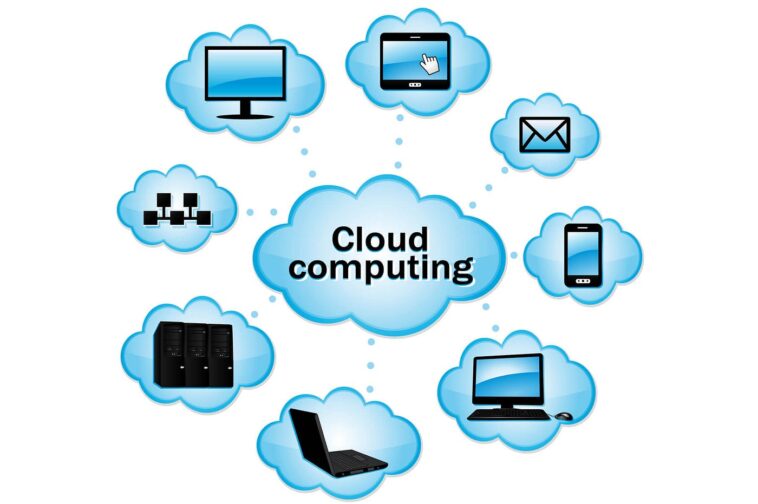
Because applications and data reside in the cloud rather than on physical devices, users can access cloud resources from any device and anywhere in the world, as long as there’s an internet connection.
Cloud Computing Explained
Core Characteristics of Cloud Computing
Cloud computing is defined by several essential properties that distinguish it from traditional computing models:
On‑Demand Self‑Service: Users request and provision computing resources without human intervention from the provider.
Broad Network Access: Cloud services are accessible across different platforms and devices (PCs, smartphones, tablets).
Resource Pooling: One set of infrastructure serves multiple customers dynamically.
Rapid Elasticity: Resources can expand or shrink almost instantly with demand changes.
Measured Service: Users pay only for what they use, based on metrics like storage, compute hours, or network bandwidth.
Cloud Computing Explained
Cloud Service Models
Cloud computing offers different levels of services depending on business needs. These are typically grouped into three major categories:
1. Infrastructure as a Service (IaaS)
IaaS provides the basic computing infrastructure (virtual machines, storage, networks). Users manage operating systems and applications, while the cloud provider manages hardware. Examples include AWS EC2 and Google Compute Engine.
2. Platform as a Service (PaaS)
PaaS offers a platform allowing customers to develop, run, and manage applications without worrying about the underlying infrastructure and operating systems. It’s widely used by developers to build and deploy software quickly.
3. Software as a Service (SaaS)
SaaS delivers fully functional applications over the internet. Users access software through a browser, often with subscription‑based pricing. Examples include Microsoft 365, Salesforce, and Slack.
Cloud Computing Explained
Cloud models can be deployed in different ways:
Public Cloud – Services delivered over the public internet.
Private Cloud – Dedicated infrastructure for one organization.
Hybrid Cloud – A combination of public and private cloud resources.
Cloud Computing Explained
Business Benefits of Cloud Adoption
Cloud computing provides significant advantages over traditional IT systems:
Reduced Costs
Companies avoid upfront capital expenses for hardware and long‑term software licenses. Instead, they benefit from pay‑as‑you‑go pricing.
Speed and Agility
Cloud resources can be provisioned rapidly—sometimes in minutes—allowing companies to innovate and respond to market needs faster.
Scalability
Cloud platforms enable automatic scaling of resources to match demand without manual intervention.
Global Accessibility
Cloud services are accessible from anywhere in the world, enabling remote work and global teams.
Advanced Security & Compliance
Leading cloud providers invest in state‑of‑the‑art security infrastructure and compliance certifications that many individual organizations cannot replicate.
Cloud Computing Explained
Cloud Providers
A cloud provider is a company that offers cloud computing services, including infrastructure, platforms, and software, to businesses and individual users. These providers own and maintain the physical data centers, networking equipment, and servers that power cloud services. Choosing the right cloud provider is critical, as it affects performance, security, scalability, and cost efficiency.
Some of the leading cloud providers in the market include:
Amazon Web Services (AWS): The largest and most widely adopted cloud platform, offering a comprehensive suite of services from compute and storage to AI and analytics.
Microsoft Azure: Popular among enterprises, Azure integrates seamlessly with Microsoft products and provides extensive support for hybrid cloud deployments.
Google Cloud Platform (GCP): Known for its strong data analytics and machine learning capabilities, GCP is ideal for businesses focused on innovation and big data.
IBM Cloud & Oracle Cloud: These providers often cater to large-scale enterprise needs with specialized tools for finance, healthcare, and hybrid deployments.
Cloud providers are responsible not only for hosting and scaling services but also for implementing advanced security measures, disaster recovery, and compliance standards. Their infrastructure allows businesses to focus on innovation rather than managing hardware, ensuring reliability and performance at a global scale.
Cloud Computing Explained
Common Cloud Use Cases
Cloud computing supports a broad range of applications:
Data Backup & Disaster Recovery – Automatically storing and protecting critical information.
Big Data Analytics & Machine Learning – Quickly processing large data sets for real‑time insights.
Remote Work Tools – Tools like Google Workspace and Microsoft Teams rely entirely on cloud infrastructure.
DevOps and Continuous Integration – Cloud platforms accelerate software development and deployment cycles.
Cloud Computing Explained
Challenges and Considerations
Despite its many benefits, cloud computing also presents challenges:
Dependency on Internet Connectivity – Without reliable internet, access to cloud services can be limited.
Data Privacy and Compliance – Organizations must ensure that cloud usage meets regulatory and security requirements.
Vendor Lock‑In – Migrating between cloud providers can be complex and costly.
Cloud Computing Explained
Looking Ahead: Future Cloud Trends
The cloud landscape continues to evolve rapidly:
Multi‑Cloud Strategies: Many organizations now use multiple cloud providers to reduce risk and optimize performance.
Edge Computing: Processing data closer to its source to reduce latency.
Serverless Computing: Developers can run code without managing servers, further simplifying operations.
AI Integration: Cloud platforms increasingly embed AI and automation tools to streamline business processes.
Cloud Computing Explained
Conclusion
Cloud computing represents a fundamental shift in how technology services are delivered and consumed. By abstracting infrastructure, providing scalable resources, and enabling rapid innovation, the cloud empowers organizations of all sizes to compete in the digital age. Whether you’re an enterprise architect, a developer, or a business leader, understanding cloud computing is essential for driving growth, efficiency, and strategic advantage in today’s fast‑moving technological landscape.
Cloud Computing Explained