Edge Computing Cloud Transformation
How Edge Computing Is Transforming Cloud Infrastructure
Cloud computing has long been the foundation of enterprise IT. However, as digital services demand faster responses and lower latency, the traditional centralized cloud model is evolving. Edge computing is now reshaping the cloud landscape, enabling businesses to process data closer to the user or device, improving performance, security, and scalability.
In 2025, enterprises across the US, Europe, Australia, India, and Singapore are leveraging edge computing to handle massive volumes of data from IoT devices, AI applications, and real-time analytics. This article explores how edge computing is transforming cloud infrastructure and what organizations need to know to adapt successfully.
Edge Computing Cloud Transformation
The Edge Computing Revolution Explained
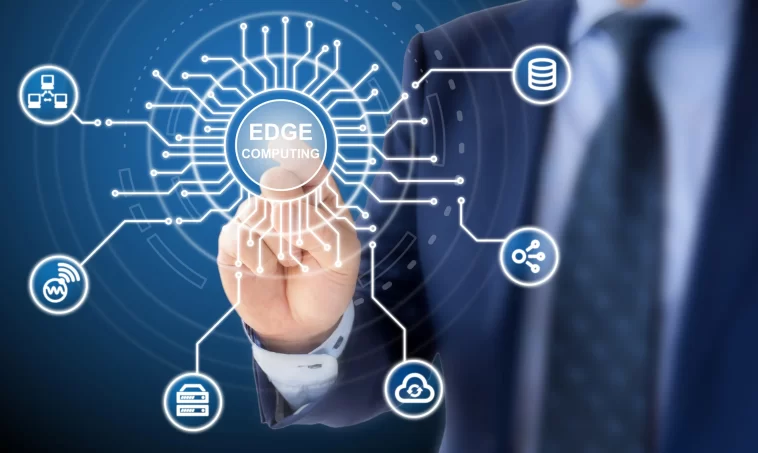
Edge computing refers to processing data at or near the source — such as IoT sensors, mobile devices, or local servers — rather than sending everything to a central cloud.
This approach dramatically reduces latency, improves reliability, and lowers bandwidth costs. It also enables real-time decision-making, which is critical for industries like autonomous vehicles, smart factories, and healthcare monitoring.
Example:
A logistics company in Singapore uses edge servers at key distribution hubs to analyze shipment data in real time, reducing delivery delays by 40% and improving customer satisfaction.
Key insight:
Edge computing doesn’t replace the cloud — it complements it by creating a hybrid infrastructure that balances centralization and locality.
Edge Computing Cloud Transformation
Why Enterprises Are Moving to Edge
Several key factors are driving the adoption of edge computing in 2025:
Latency-sensitive applications: AI-powered devices, gaming platforms, and AR/VR require instantaneous processing.
Data volume: IoT and sensor networks generate massive data streams that would overload traditional networks if sent to centralized clouds.
Regulatory compliance: Data residency laws in Europe, Asia, and the US require some data to remain local.
Cost optimization: Processing data locally reduces network bandwidth and cloud storage expenses.
Example:
An Australian healthcare startup uses edge nodes to analyze patient vitals on-site, ensuring immediate alerts in emergencies while reducing cloud storage costs.
Edge Computing Cloud Transformation
Edge vs. Cloud: Complementary Roles
While edge computing handles data locally, centralized cloud remains essential for long-term storage, heavy analytics, and AI model training.
Organizations are increasingly adopting edge-cloud hybrid architectures, which combine the strengths of both approaches.
Example:
A US retail chain uses edge servers to process in-store sales and inventory in real time while sending aggregated data to the central cloud for trend analysis and strategic planning.
Key takeaway:
The combination of edge and cloud maximizes performance, scalability, and flexibility for enterprise applications.
Edge Computing Cloud Transformation
Transforming Industries with Edge Computing
Edge computing is not just a technical trend — it is reshaping business operations across sectors:
Manufacturing: Real-time monitoring of machinery reduces downtime and improves predictive maintenance.
Healthcare: Wearable devices and local processing enable instant alerts for patients’ critical conditions.
Retail: Edge-based analytics improves personalized shopping experiences and inventory management.
Autonomous vehicles: Processing sensor data locally ensures faster decision-making and safer navigation.
Example:
An Indian smart city project deployed edge servers to manage traffic lights and public transportation data, resulting in a 25% reduction in congestion during peak hours.
Edge Computing Cloud Transformation
Key Edge Computing Technologies
Several technologies are driving the edge transformation:
Micro Data Centers: Small, localized data centers that bring cloud-like processing closer to users.
AI and Machine Learning at the Edge: Enables predictive analytics and real-time insights without relying on central cloud processing.
5G Networks: Low-latency, high-bandwidth connectivity enhances edge computing capabilities.
Containerization and Orchestration: Tools like Kubernetes and Docker help deploy edge workloads efficiently.
Example:
A European logistics firm uses Kubernetes at edge locations to deploy containerized applications, allowing rapid updates without interrupting real-time operations.
Edge Computing Cloud Transformation
Security Considerations in Edge Computing
Processing data at the edge introduces new security challenges:
Distributed attack surfaces: Multiple edge nodes increase potential points of vulnerability.
Device and network security: IoT sensors and gateways must be protected from tampering.
Data encryption: Ensuring encryption both at rest and in transit is crucial.
Best Practices:
Implement Zero Trust models for all edge devices.
Regularly patch firmware and software on edge nodes.
Use AI-based monitoring to detect anomalies in real time.
Example:
A Singapore-based smart grid company secures its edge nodes with end-to-end encryption and AI-driven intrusion detection, maintaining compliance with local energy regulations.
Edge Computing Cloud Transformation
Operational Challenges and Solutions
While edge computing offers significant advantages, it also comes with operational complexities:
Node management: Maintaining hundreds of distributed edge nodes can be challenging.
Data synchronization: Ensuring consistency between edge nodes and central cloud requires careful planning.
Latency trade-offs: Some processing may still require central cloud intervention.
Solutions:
Use centralized orchestration platforms to monitor and manage all edge nodes.
Adopt hybrid storage solutions for seamless data flow.
Implement redundancy and failover strategies at the edge.
Example:
An Australian gaming company ensures uninterrupted gameplay by orchestrating edge servers globally, with fallback to central cloud if local nodes fail.
Edge Computing Cloud Transformation
Measuring ROI of Edge Computing
To justify investment, enterprises need clear metrics:
Reduced latency: Measured in milliseconds for critical operations.
Operational efficiency: Decreased downtime and improved productivity.
Cost savings: Reduced bandwidth and cloud processing fees.
Business impact: Enhanced customer experience or revenue growth.
Example:
A US-based autonomous delivery startup reported a 30% decrease in network costs and a 20% improvement in delivery speed after deploying edge computing.
Edge Computing Cloud Transformation
Future Outlook: Edge and Cloud Convergence
By 2025, edge computing will continue to integrate with AI, 5G, and cloud-native technologies. Enterprises that adopt edge-first strategies will be better positioned for real-time analytics, IoT expansion, and AI-driven automation.
Key trends to watch:
AI-powered edge nodes for predictive decision-making
Serverless edge functions for rapid deployment
Multi-cloud edge orchestration for global scalability
Example:
A European smart manufacturing facility integrates edge AI with cloud analytics to predict equipment failures, reducing downtime by 40% annually.
Edge Computing Cloud Transformation
Conclusion
Edge computing is not just an enhancement of the cloud — it is a paradigm shift that allows enterprises to process data closer to users, reduce latency, optimize costs, and improve operational resilience.
Organizations that adopt edge computing as part of a hybrid cloud strategy will gain a competitive advantage in speed, efficiency, and innovation.
The future is clear: cloud and edge are inseparable partners in building intelligent, high-performance enterprise infrastructures.