
PaaS Example: Real-World Platforms That Power Modern Cloud Application Development
Cloud computing has fundamentally transformed the way applications are built, deployed, and managed. Instead of investing in expensive hardware and complex infrastructure, organizations can now rely on cloud service models that simplify operations and accelerate innovation. Among these models, Platform as a Service (PaaS) plays a critical role in modern software development.
Understanding a real PaaS example helps clarify how this model works in practice, why it is widely adopted, and how it enables businesses to focus on creating value rather than managing infrastructure. This article explores PaaS in depth, explains how it works, and provides detailed real-world PaaS examples, use cases, benefits, challenges, and future trends.
What Is Platform as a Service (PaaS)?
Platform as a Service (PaaS) is a cloud computing model that provides a complete development and deployment environment in the cloud. It includes infrastructure, operating systems, runtime environments, middleware, databases, and development tools—all managed by the cloud provider.
With PaaS:
Developers focus on writing and deploying code
The provider manages servers, networking, storage, and system updates
Applications can scale automatically based on demand
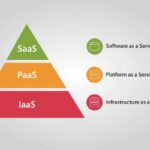
This model sits between Infrastructure as a Service (IaaS) and Software as a Service (SaaS).
Why PaaS Is Important in Cloud Computing
The rise of agile development, DevOps, microservices, and cloud-native applications has increased the demand for platforms that simplify development workflows. A strong PaaS example demonstrates how teams can build applications faster, reduce operational overhead, and improve reliability.
Core Components of a PaaS Platform
Before diving into specific PaaS examples, it is important to understand the key components typically included in a PaaS environment:
Application runtime environments
Programming languages and frameworks
Middleware and APIs
Managed databases and storage
DevOps and CI/CD tools
Monitoring, logging, and analytics
Security and identity management
These components work together to provide a seamless application lifecycle.
PaaS Example: Google App Engine
One of the most popular and mature PaaS examples is Google App Engine (GAE).
Overview
Google App Engine is a fully managed PaaS offering from Google Cloud that allows developers to deploy applications without managing servers.
Key Features
Support for multiple programming languages such as Python, Java, Node.js, and Go
Automatic scaling based on application traffic
Built-in security and authentication
Integrated logging and monitoring
High availability with minimal configuration
Real-World Use Case
A startup launching a global web application uses Google App Engine to deploy its service. As user traffic grows unpredictably, the platform automatically scales resources without manual intervention. This PaaS example highlights how infrastructure management is completely abstracted from developers.
PaaS Example: Microsoft Azure App Service
Another strong PaaS example is Microsoft Azure App Service, widely used by enterprises and developers.
Overview
Azure App Service enables developers to host web applications, APIs, and mobile backends in a fully managed environment.
Key Features
Support for .NET, Java, Python, PHP, and Node.js
Built-in CI/CD integration with GitHub and Azure DevOps
Automatic OS patching and security updates
Native integration with Azure databases and identity services
High availability and load balancing
Real-World Use Case
A large enterprise modernizes its legacy applications by migrating them to Azure App Service. Development teams deploy updates faster while maintaining enterprise-grade security and compliance.
PaaS Example: AWS Elastic Beanstalk
Amazon Web Services offers a widely used PaaS example through AWS Elastic Beanstalk.
Overview
AWS Elastic Beanstalk simplifies application deployment by handling infrastructure provisioning, load balancing, auto-scaling, and monitoring.
Key Features
Support for popular languages including Java, Python, Ruby, PHP, and Node.js
Automatic resource provisioning and scaling
Integration with AWS monitoring tools
Greater control over underlying resources compared to fully abstracted PaaS
Real-World Use Case
A development team wants to deploy applications quickly while retaining flexibility within AWS. Elastic Beanstalk allows them to focus on code while AWS manages the operational complexity.
PaaS Example: Heroku
Heroku is one of the earliest and most developer-friendly PaaS examples.
Overview
Heroku provides a simple, Git-based workflow for application deployment and management.
Key Features
Supports multiple programming languages
Extensive add-on ecosystem for databases and monitoring
Simple deployment with minimal configuration
Fully managed runtime environments
Real-World Use Case
A small development team builds and tests a prototype application on Heroku, enabling rapid iteration and quick market validation.
Common Use Cases for PaaS Platforms
PaaS platforms are used across industries and application types:
1. Web and Mobile Application Development
PaaS simplifies deployment and scaling for consumer and enterprise apps.
2. API and Microservices Architecture
Managed runtimes support containerized and microservices-based applications.
3. SaaS Product Development
Many SaaS companies rely on PaaS to build scalable, multi-tenant platforms.
4. DevOps and Continuous Delivery
Integrated CI/CD tools accelerate development and deployment cycles.
Benefits of Using a PaaS Model
A real-world PaaS example highlights several advantages:
Development Efficiency
Faster development cycles
Reduced setup time
Simplified collaboration
Operational Benefits
No server management
Automatic updates and patches
Built-in scalability
Business Advantages
Lower infrastructure costs
Faster time-to-market
Improved agility and innovation
Challenges and Limitations of PaaS
Despite its benefits, PaaS also presents challenges:
Vendor lock-in
Limited customization of infrastructure
Compliance and regulatory concerns
Performance constraints in highly specialized workloads
Organizations must evaluate these factors when selecting a PaaS example.
PaaS vs IaaS vs SaaS
| Model | User Control | Provider Responsibility |
|---|---|---|
| IaaS | High | Infrastructure only |
| PaaS | Medium | Platform and infrastructure |
| SaaS | Low | Entire application stack |
PaaS strikes a balance between flexibility and simplicity.
How to Choose the Right PaaS Example
When selecting a PaaS platform, consider:
Supported programming languages and frameworks
Integration with existing cloud services
Scalability and performance requirements
Pricing and cost management
Security and compliance support
The best PaaS example aligns with both technical needs and business goals.
The Future of PaaS
The PaaS landscape continues to evolve with:
Serverless computing integration
AI-powered development tools
Low-code and no-code platforms
Edge computing support
Future PaaS examples will focus on automation, intelligence, and developer productivity.
Conclusion
A practical PaaS example—such as Google App Engine, Azure App Service, AWS Elastic Beanstalk, or Heroku—demonstrates how Platform as a Service enables organizations to build, deploy, and scale applications efficiently without managing underlying infrastructure.
By reducing operational complexity and accelerating development, PaaS has become a cornerstone of modern cloud computing. As businesses continue to adopt cloud-native strategies, PaaS platforms will remain essential for innovation, scalability, and digital transformation.