SaaS Examples in Cloud Computing: A Comprehensive Academic Guide to Leading Platforms and Business Applications
Cloud computing has dramatically transformed the global technology landscape, reshaping how organizations build, deploy, and manage digital solutions. Among its three primary service models—IaaS, PaaS, and SaaS—the Software as a Service (SaaS) model remains the most widely adopted for businesses of all sizes. SaaS allows organizations to access software applications through the internet without installing them locally or maintaining technical infrastructure.
In this detailed academic article, we explore SaaS examples in cloud computing, analyze their characteristics, evaluate their benefits, and highlight how they are shaping enterprise operations worldwide. This guide aims to serve as a comprehensive reference for students, researchers, IT professionals, and business decision-makers.
SaaS Examples in Cloud Computing
What Is SaaS in Cloud Computing?
Software as a Service (SaaS) is a cloud-based model in which software applications are delivered over the internet on a subscription basis. Users access the software through a web browser or mobile app, while the provider manages hosting, security, updates, and maintenance.
Key Characteristics of SaaS in Cloud Computing
Cloud-based delivery: No need for on-premises installations.
Subscription pricing: Monthly or yearly plans instead of one-time licensing.
Automatic updates: The provider continuously enhances the software.
High availability: Accessible from any device with an internet connection.
Scalability: Businesses can easily upgrade or downgrade service plans.
Multi-tenancy: A single software instance serves multiple customers securely.
These features make SaaS an essential component of modern digital transformation.
SaaS Examples in Cloud Computing
Why SaaS Is Important in Cloud Computing
1. Reduces Operational Costs
SaaS eliminates the need for servers, storage systems, and technical teams for maintenance. Organizations pay predictable subscription fees rather than large upfront investments.
2. Accelerates Deployment
Traditional software may take months to install and configure, whereas SaaS applications can be launched immediately after signup.
3. Enhances Security and Data Protection
Leading SaaS providers implement enterprise-grade security measures such as encryption, identity management, and regular security audits.
4. Supports Remote and Hybrid Work
Teams can access SaaS tools from anywhere, enabling global collaboration and flexible work environments.
Top SaaS Examples in Cloud Computing
Below are the most significant SaaS examples in cloud computing, classified by category, with detailed descriptions of their functionality, business value, and relevance to cloud adoption.
1. Salesforce – A Leading Cloud CRM SaaS
Salesforce remains one of the most influential SaaS platforms globally, offering a comprehensive cloud-based Customer Relationship Management (CRM) system.
Key Features
Sales pipeline management
Marketing automation
Customer support services
Predictive analytics powered by Einstein AI
AppExchange for third-party integrations
Why It Stands Out
Salesforce is often cited as one of the best saas examples in cloud computing because it pioneered cloud software and created a full ecosystem of enterprise solutions.
2. Google Workspace – Productivity and Collaboration on the Cloud
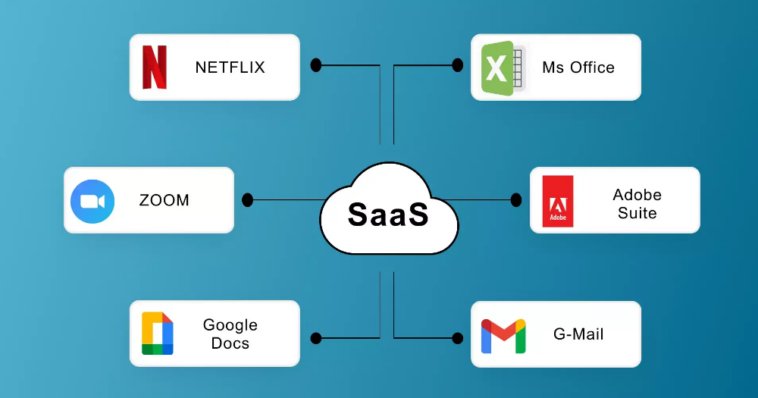
Google Workspace (formerly G Suite) includes Gmail, Google Docs, Sheets, Slides, and Drive. It is one of the most widely used cloud collaboration SaaS solutions.
Business Benefits
Real-time document editing
Cloud storage and backup
Calendar and scheduling tools
Seamless team collaboration
Its simplicity and accessibility make it a perfect SaaS example demonstrating how cloud software can replace traditional office tools.
SaaS Examples in Cloud Computing
3. Slack – Communication SaaS for Modern Teams
Slack is a cloud-based messaging and collaboration platform used by thousands of organizations.
Features
Organized channels for teams
Integrations with over 2,000 apps
File sharing
Workflow automation
Slack is often mentioned among top saas examples in cloud computing due to its essential role in team connectivity.
4. HubSpot – Cloud Marketing, Sales, and CRM Platform
HubSpot delivers an all-in-one SaaS ecosystem covering CRM, marketing automation, content management, and customer service.
Advantages
Easy-to-use interface
Advanced marketing analytics
Chatbots and AI-assisted marketing
SEO and content management features
HubSpot is particularly useful for small and medium businesses seeking growth through inbound marketing.
5. Shopify – SaaS for E-Commerce
Shopify is a cloud-based platform that enables businesses to create online stores without technical expertise.
Capabilities
Storefront creation
Integrated payment gateways
Inventory management
Multi-channel selling
Shopify is one of the strongest saas examples in cloud computing due to its scalability and ability to support millions of e-commerce businesses globally.
6. Zoom – Cloud Video Conferencing SaaS
Zoom provides high-quality video conferencing fully delivered via the cloud.
Core Features
HD video meetings
Webinars
Screen sharing
Cloud recording
Zoom became one of the most used SaaS applications in the world following the rise of remote work.
SaaS Examples in Cloud Computing
7. Microsoft 365 – Comprehensive Cloud Office Suite
Microsoft 365 includes Word, Excel, PowerPoint, Teams, OneDrive, and SharePoint.
Key Benefits
Familiar interface
Strong security and compliance
AI-powered enhancements
Enterprise-grade collaboration
Microsoft 365 is a textbook example of how SaaS can modernize legacy software.
8. ServiceNow – Enterprise Workflow Automation
ServiceNow is a cloud platform that automates IT service management and enterprise workflows.
Why It Matters
Automates incident management
Supports HR, IT, and facilities operations
Integrates easily with enterprise systems
ServiceNow exemplifies SaaS transforming enterprise operations at scale.
9. Workday – Cloud HR and Financial Management
Workday is an enterprise-grade SaaS that manages HR processes, payroll, and financial planning.
Strengths
Advanced analytics
Talent management
Payroll compliance
Workforce mobility
Organizations rely on Workday for mission-critical operations.
SaaS Examples in Cloud Computing
How SaaS Works in Cloud Computing Architecture
1. Hosted on Cloud Infrastructure
SaaS apps run on cloud providers such as:
Amazon Web Services (AWS)
Google Cloud Platform (GCP)
Microsoft Azure
2. Multi-Tenant Architecture
One software instance serves multiple clients, isolating data securely.
3. API-Based Integrations
SaaS applications integrate with ERP, CRM, HR, and finance systems via APIs.
4. Continuous Delivery
Updates are rolled out automatically through DevOps pipelines.
Advantages of SaaS for Businesses
1. Operational Agility
Companies can adopt new features without downtime or disruptions.
2. Global Accessibility
Employees can use the software from any device worldwide.
3. Automatic Backups
Cloud providers ensure redundancy and disaster recovery.
4. Lower Total Cost of Ownership (TCO)
SaaS eliminates hardware, IT staff, and upgrade costs.
SaaS Examples in Cloud Computing
Future Trends in SaaS and Cloud Computing
1. AI-Driven SaaS
Generative AI is transforming SaaS platforms by:
Automating content creation
Enhancing customer support
Improving decision-making through predictive analytics
2. Vertical SaaS
Industry-specific SaaS solutions for:
Healthcare
Financial services
Manufacturing
Real estate
3. No-Code and Low-Code Platforms
These empower non-technical users to build custom applications.
4. Cybersecurity SaaS
Cloud-based identity management and zero-trust security models.
5. Edge Computing Integration
SaaS systems will increasingly leverage the edge for faster processing.
SaaS Examples in Cloud Computing
Conclusion
The expansion of cloud computing has fueled the rapid growth of SaaS, making it the dominant software delivery model in the digital era. The numerous saas examples in cloud computing—including Salesforce, Google Workspace, Slack, HubSpot, Shopify, Zoom, Workday, and ServiceNow—demonstrate how cloud-based software can transform business operations, reduce costs, and enhance scalability.
As organizations continue to embrace AI, automation, and data-driven strategies, SaaS will remain at the center of technological innovation. Understanding SaaS and its leading examples is essential for businesses, IT leaders, and researchers navigating the evolving cloud ecosystem.