
Azure PaaS Examples
Platform as a Service (PaaS) has emerged as one of the most powerful models within the cloud computing ecosystem, providing developers and organizations with ready-to-use environments for building, deploying, and scaling applications without managing underlying infrastructure. Microsoft Azure, one of the world’s leading cloud providers, offers a rich suite of PaaS services that accelerate digital transformation and empower organizations to innovate rapidly.
This academic article explores the most important Azure PaaS examples, explains how Azure implements the PaaS model, and highlights real-world applications that demonstrate the value of these services in modern enterprise computing.
Understanding PaaS in Microsoft Azure
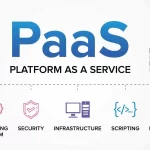
PaaS (Platform-as-a-Service) is a cloud computing model in which the cloud provider manages servers, networks, storage, middleware, and runtime environments. Developers focus solely on writing, testing, and deploying applications.
Key Characteristics of Azure PaaS
Fully managed hosting environment
Built-in scalability and high availability
Tools for application development, deployment, and management
Integration with DevOps pipelines
Built-in security, monitoring, and patching
API-driven access to cloud resources
These features make Azure PaaS an essential component for organizations seeking agility, reduced operational overhead, and rapid innovation.
Why Enterprises Use Azure PaaS
Microsoft Azure stands out in the PaaS market due to its deep integration with enterprise systems, extensive developer tools, and global cloud infrastructure.
1. Faster Application Development
Azure PaaS provides ready-made components such as databases, middleware, and runtime frameworks that significantly reduce development time.
2. Reduced Infrastructure Management
Azure handles operating system updates, security patches, and server maintenance, allowing developers to focus on logic and features.
3. Scalability and Global Reach
Azure PaaS offerings are available in dozens of regions worldwide, allowing companies to scale applications instantly.
4. Enhanced Security and Compliance
Azure provides enterprise-grade compliance standards including ISO, SOC, HIPAA, and GDPR.
5. Seamless DevOps Integration
Azure integrates deeply with GitHub, Azure DevOps, and CI/CD pipelines, enabling continuous delivery.
Top Azure PaaS Examples
Below are the most widely used and impactful Azure PaaS examples across the cloud ecosystem. Each example includes features, use cases, and strategic value for organizations.
1. Azure App Service
Azure App Service is one of the most prominent azure paas examples, enabling developers to host web applications, REST APIs, and mobile backends.
Key Features
Supports multiple languages: .NET, Java, Python, Node.js, PHP, Ruby
Auto-scaling
Custom domains and SSL certificates
Continuous deployment from GitHub or Azure DevOps
Staging slots for zero-downtime deployment
Use Cases
E-commerce websites
Internal business portals
API-based applications
SaaS web applications
Its simplicity and integration capabilities make it a core Azure PaaS service.
2. Azure SQL Database
Azure SQL Database is a fully managed relational database built on Microsoft SQL Server.
Key Features
Automatic performance tuning
High availability with no manual configuration
AI-powered query optimization
Threat detection and encryption
Elastic pools for cost-efficient scaling
Use Cases
Enterprise transactional systems
SaaS applications requiring shared databases
Reporting and analytics
It is often cited among the strongest azure paas examples due to its maturity and reliability.
3. Azure Functions
Azure Functions is a serverless compute service that allows developers to run event-driven code.
Key Features
Pay-per-execution pricing
Event triggered (HTTP, queue, blob, timer, etc.)
Supports multiple programming languages
Stateless and highly scalable
Use Cases
Background processing
Webhooks and API automation
IoT event processing
Real-time data transformation
As a serverless PaaS example, Azure Functions offers high agility and minimal management.
4. Azure Kubernetes Service (AKS)
While Kubernetes is often associated with container orchestration, AKS is considered a PaaS offering because Azure manages the control plane.
Key Features
Automated Kubernetes upgrades
Managed security patches
Autoscaling and self-healing clusters
Integration with container registries
Use Cases
Microservices-based applications
Cloud-native development
CI/CD-driven environments
AKS is a powerful PaaS platform for enterprises embracing DevOps and containerized workloads.
5. Azure Logic Apps
Azure Logic Apps is a workflow automation service with a visual designer.
Key Features
400+ built-in connectors (Office 365, SAP, SQL, Salesforce, etc.)
Low-code/no-code interface
Event-driven workflows
Enterprise integration patterns
Use Cases
Automation of manual business processes
Enterprise application integration
Data synchronization
Real-time notification workflows
Logic Apps is one of the most intuitive azure paas examples for business automation.
6. Azure API Management
Azure API Management (APIM) enables organizations to design, publish, and secure APIs.
Key Features
API gateway
Rate limiting and quotas
OAuth and JWT authentication
Developer portal generation
API versioning and analytics
Use Cases
API monetization
Partner integrations
Microservices API routing
Secure API exposure
APIM empowers businesses to build scalable API ecosystems.
7. Azure Cosmos DB
Azure Cosmos DB is a globally distributed NoSQL database service.
Key Features
Multi-model support (Key-Value, Document, Graph, Column-Family)
Global distribution with multi-region writes
Sub-millisecond latency
Automatic partitioning
Use Cases
IoT applications
Real-time analytics
High-performance gaming systems
Global e-commerce platforms
Cosmos DB is widely recognized as a cutting-edge Azure PaaS offering.
8. Azure Databricks
Azure Databricks is an AI and big data analytics platform co-developed with Databricks.
Key Features
Apache Spark-based analytics
MLflow integration for machine learning
Collaborative notebooks
Auto-scaling clusters
Use Cases
Data engineering
Machine learning pipelines
Predictive analytics
Real-time data streaming
It is considered among the advanced azure paas examples for AI and data science.
9. Azure Cognitive Services
Cognitive Services provides AI capabilities through prebuilt API models.
Capabilities
Computer Vision
Speech recognition
Language understanding (LUIS)
Anomaly detection
Face and sentiment analysis
Use Cases
AI chatbots
Content moderation
Smart applications
Voice-enabled systems
This service empowers developers to add AI without machine learning expertise.
How Azure PaaS Works
Azure PaaS services rely on the following cloud components:
1. Managed Infrastructure
Azure provides compute, networking, security, and OS management.
2. Middleware and Runtime
Developers access frameworks like .NET, Java, and Python without configuration.
3. Development Tools
Visual Studio
GitHub
Azure DevOps
4. Monitoring and Optimization
Azure Monitor and Application Insights provide deep observability.
Benefits of Azure PaaS for Organizations
1. Reduced Complexity
Organizations avoid hardware provisioning, OS updates, and infrastructure configuration.
2. Faster Innovation Cycles
Developers can deploy new features frequently using CI/CD pipelines.
3. Cost Optimization
Pay-as-you-go pricing ensures efficient use of resources.
4. Enhanced Security
Azure enforces encryption, identity management, and zero-trust security.
5. Business Continuity
Built-in backup and disaster recovery improve resilience.
Real-World Use Cases of Azure PaaS
Retail
AI-powered product recommendations
E-commerce microservices on AKS
Healthcare
HIPAA-compliant data storage via Azure SQL
Secure patient communication apps using App Service
Finance
Fraud detection using Azure Cognitive Services
Regulatory analytics with Databricks
Manufacturing
IoT telemetry ingestion via Functions and Cosmos DB
Predictive maintenance models
Future Trends in Azure PaaS
1. AI-Powered Application Platforms
Integration with Azure OpenAI Services will drive intelligent applications.
2. Serverless Expansion
Azure Functions and Logic Apps will become more central to event-driven architectures.
3. Hybrid Cloud PaaS
Azure Arc extends PaaS capabilities to on-premises environments.
4. Industry-Specific PaaS Solutions
Healthcare, retail, and financial PaaS products will continue to expand.
Conclusion
Microsoft Azure offers one of the most comprehensive PaaS ecosystems in the cloud computing market. The wide range of azure paas examples—including Azure App Service, Azure Functions, Cosmos DB, Azure SQL Database, AKS, Logic Apps, Databricks, and Cognitive Services—demonstrates Azure’s strong capabilities in application development, automation, analytics, and AI.
For organizations seeking scalability, agility, and innovation, Azure PaaS provides a strategic foundation that simplifies development, accelerates deployment, and supports global digital transformation.