What is a Cloud Provider
In the modern digital economy, the phrase “the cloud” has transitioned from a mysterious buzzword to the very foundation of global civilization. But behind this ethereal term lies a massive, physical, and highly sophisticated industry. At the heart of this industry is the Cloud Provider.
Whether you are a solo developer launching a viral app, a government securing national records, or a multinational corporation streaming high-definition content to billions, you are standing on the shoulders of these invisible giants. But what exactly is a cloud provider, how do they operate, and why have they become the most influential entities in the technology sector?
What is a Cloud Provider
What is a Cloud Provider
A Cloud Provider (also known as a Cloud Service Provider or CSP) is a company that offers a scalable, on-demand infrastructure of computing resources—including servers, storage, databases, networking, and software—delivered over the internet.
Think of a cloud provider as a “utility company” for the digital age. Just as you don’t build your own power plant to turn on a lightbulb, you no longer need to build your own data center to run an application. You simply plug into the provider’s grid and pay for what you consume.
What is a Cloud Provider
The Core Pillars: How Cloud Providers Work
To understand a cloud provider, we must look at the three foundational pillars that allow them to function at a global scale: Virtualization, Global Infrastructure, and the Shared Responsibility Model.
1. Virtualization: The Magic of Abstraction
The secret sauce of cloud computing is Virtualization. A cloud provider doesn’t just give you a physical computer; they use software to “slice” a massive physical server into dozens of smaller Virtual Machines (VMs). This allows multiple customers to share the same hardware securely and efficiently, driving down costs for everyone.
2. Global Infrastructure: Regions and Zones
In 2026, cloud providers operate on a scale that is difficult to fathom. Their infrastructure is organized into:
Regions: Geographic locations (like “US East” or “Europe West”) containing multiple data centers.
Availability Zones (AZs): Isolated locations within a region. If one data center loses power due to a local disaster, the others keep your data running.
Edge Locations: Smaller caches located closer to users to reduce latency for things like video streaming and gaming.
What is a Cloud Provider
3. The Shared Responsibility Model
A common misconception is that the cloud provider handles everything. In reality, they operate under a Shared Responsibility Model.
The Provider is responsible for the “Security of the Cloud” (physical hardware, cables, power, and the virtualization layer).
The Customer is responsible for “Security in the Cloud” (your data, your passwords, and your application code).
What is a Cloud Provider
The “Big Three” and the Evolving Market
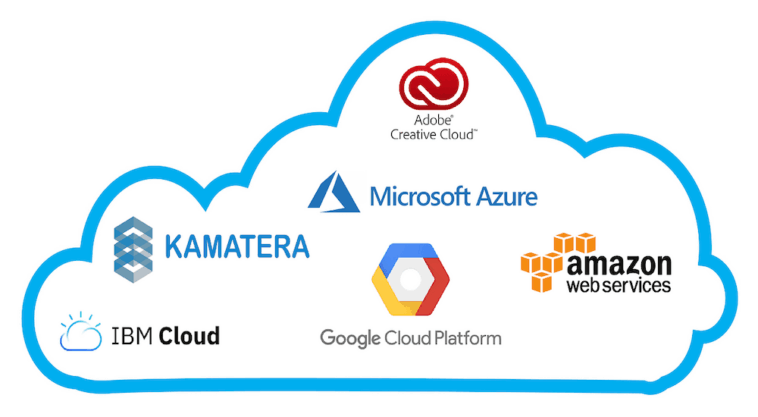
While there are hundreds of niche providers, the market is dominated by three titans that set the standard for the industry.
1. Amazon Web Services (AWS)
The pioneer. AWS launched in 2006 and remains the market leader. It offers the most exhaustive list of services—from basic storage to specialized satellite ground stations. If it exists in tech, AWS likely has a service for it.
2. Microsoft Azure
The preferred choice for enterprises. Because most large companies already use Windows, Office 365, and Active Directory, Azure offers a seamless “hybrid” transition. It allows companies to keep some data in their own basement while moving the rest to Microsoft’s cloud.
What is a Cloud Provider
3. Google Cloud Platform (GCP)
The data and AI specialist. Google Cloud leverages the same infrastructure that powers Search and YouTube. It is the go-to provider for organizations focused on Big Data, Machine Learning, and complex analytics.
4. The Specialists (Oracle, IBM, DigitalOcean)
Beyond the titans, companies like Oracle focus on high-performance databases, IBM focuses on mainframe integration and Watson AI, and DigitalOcean caters to independent developers who want simplicity and transparent pricing.
What is a Cloud Provider
The Economics of the Cloud: From CapEx to OpEx
The most profound impact of cloud providers isn’t technical—it’s financial. Before the cloud, starting a tech company required Capital Expenditure (CapEx). You needed to spend $50,000 on servers before you even knew if your product would work.
Cloud providers shifted this to Operating Expenditure (OpEx).
Pay-as-you-go: You only pay for the minutes your server is running.
No Maintenance: You don’t pay for electricity, cooling, or the person who replaces a broken hard drive.
Economies of Scale: Because AWS buys millions of hard drives, they get them cheaper than you ever could, and they pass those savings on to you.
What is a Cloud Provider
Cloud Deployment Models
Not every company uses the cloud in the same way. Cloud providers offer four primary deployment styles:
Public Cloud: You share resources with other customers on the provider’s public network. It’s the most cost-effective.
Private Cloud: The cloud infrastructure is dedicated solely to your organization. This is common for high-security industries like defense or banking.
Hybrid Cloud: A mix of both. You keep sensitive customer data in a private cloud but use the public cloud to run your website.
Multi-Cloud: The 2026 trend. Companies use AWS for storage, Google for AI, and Azure for their office tools to avoid being “locked-in” to a single provider.
What is a Cloud Provider
Key Services Offered by Cloud Providers
If you log into a cloud console today, you will see hundreds of icons. However, they almost all fall into these core categories:
Compute Services
The “brains.” This includes Virtual Machines (like Amazon EC2), Containers (like Kubernetes), and Serverless Functions (where you upload code and the provider runs it only when needed).
Storage Services
The “memory.” This ranges from “Object Storage” (for photos and videos) to “Block Storage” (high-speed drives for databases) and “Cold Storage” (for data you only need to look at once every five years).
What is a Cloud Provider
Database Services
Cloud providers offer managed databases. Instead of you installing MySQL or PostgreSQL, the provider gives you a finished database that backups itself and updates itself automatically.
Artificial Intelligence and Machine Learning
In 2026, this is the fastest-growing sector. Providers offer pre-trained models for image recognition, language translation, and generative AI (LLMs). You can “rent” a supercomputer-level AI for a few dollars an hour.
What is a Cloud Provider
Challenges: The Fine Print
It’s not all sunshine and rainbows. Relying on a cloud provider comes with its own set of “gotchas”:
Cloud Egress Fees: It’s often free to put data into the cloud, but providers charge you a “tax” to take your data out. This is a major point of contention in 2026.
Complexity: The “Big Three” consoles are so complex that they require specialized certifications (like AWS Solutions Architect) just to navigate them safely without accidentally running up a $10,000 bill.
Outages: If AWS US-East-1 goes down, half the internet goes down with it. Total reliance on a single provider creates a single point of failure for your business.
What is a Cloud Provider
The Future: What’s Next for Cloud Providers?
As we look toward the horizon of 2027 and beyond, three trends are defining the next generation of cloud providers:
1. The Rise of Sovereign Clouds
Governments are increasingly demanding that data about their citizens stay within their physical borders. Cloud providers are building specialized “Sovereign Regions” to comply with strict local data laws.
What is a Cloud Provider
2. Quantum Computing as a Service (QCaaS)
Quantum computers are too expensive for any single company to own. Leading providers are already offering “Quantum Cloud” access, allowing researchers to run complex simulations on quantum hardware via a standard web browser.
3. AI-Native Infrastructure
The hardware of the cloud is changing. Instead of standard CPUs, providers are filling their data centers with TPUs (Tensor Processing Units) and GPUs designed specifically to train the next generation of Artificial Intelligence.
What is a Cloud Provider
Conclusion: The Strategic Choice
Choosing a cloud provider is no longer just an “IT decision”; it is a foundational business strategy. The right provider doesn’t just host your files; they provide the tools that allow you to innovate faster than your competitors.
In 2026, the question isn’t whether you will use a cloud provider, but rather how many you will use and how deeply you will integrate their intelligence into your own operations. The giants are ready; you just need to know how to climb them.
What is a Cloud Provider