
Cloud Services: Concepts, Models, and Applications
Cloud services have become a fundamental component of modern digital transformation across industries, reshaping how organizations build, deploy, manage, and scale their IT systems. As businesses increasingly rely on cloud-based technologies to enhance agility and reduce operational costs, understanding the architecture, types, and applications of cloud services becomes crucial. This article provides an in-depth academic exploration of cloud services, highlighting service models, deployment approaches, and practical industry use cases. The discussion also analyzes the benefits, challenges, and strategic considerations for institutions adopting cloud computing.
Understanding Cloud Services
Cloud services refer to a broad set of on-demand computing resources—such as servers, databases, storage, networking, analytics, and software—delivered over the internet. Instead of owning physical infrastructure, organizations consume these services through a pay-as-you-go or subscription model. This approach transfers the responsibility for hardware management, updates, security patching, and scalability to cloud providers such as Amazon Web Services (AWS), Microsoft Azure, and Google Cloud Platform (GCP).
Core Characteristics of Cloud Services
Cloud services share several defining features that differentiate them from traditional on-premises IT systems:
On-Demand Self-Service: Users can provision computing resources automatically without requiring human intervention.
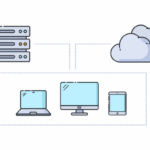
Broad Network Access: Services are accessible from multiple devices including desktops, tablets, mobile phones, and thin clients.
Resource Pooling: Providers use multi-tenant architectures to serve multiple customers with shared physical resources.
Rapid Elasticity: Computing power can be scaled up or down instantly based on demand.
Measured Service: Resource usage is monitored, controlled, and billed based on consumption.
These characteristics collectively enable high flexibility, operational efficiency, and improved cost management.
Cloud Service Models
Cloud services are classified into three primary service models: Infrastructure as a Service (IaaS), Platform as a Service (PaaS), and Software as a Service (SaaS). Each model offers varying degrees of control, flexibility, and management responsibility.
1 Infrastructure as a Service (IaaS)
IaaS is the foundational layer of cloud computing, providing virtualized computing resources over the internet. Customers rent virtual machines, storage, and networking components instead of purchasing physical hardware.
Key Features
Full control over operating systems and applications
Highly scalable virtualized hardware
Cost savings due to shared infrastructure
Examples of IaaS Providers
AWS Elastic Compute Cloud (EC2)
Google Compute Engine (GCE)
Microsoft Azure Virtual Machines
IaaS is commonly used for system migration, hosting large applications, and running high-performance computing workloads.
2 Platform as a Service (PaaS)
PaaS offers a cloud-based platform that developers use to build, test, and deploy applications without managing underlying infrastructure.
Key Features
Pre-configured development tools
Built-in database and middleware services
Automated scaling and integration support
Examples of PaaS
Azure App Service
Google App Engine
AWS Elastic Beanstalk
PaaS accelerates application development and reduces complexities associated with system administration, making it ideal for DevOps teams and software development companies.
3 Software as a Service (SaaS)
SaaS delivers ready-to-use applications accessible online through a browser or mobile app. Users do not manage the infrastructure, application code, or updates.
Common SaaS Applications
Google Workspace
Microsoft 365
Salesforce CRM
Zoom
SaaS is widely adopted across enterprises due to its minimal setup requirements and simplified IT maintenance.
Cloud Services Deployment Models
Cloud services can be deployed through various architectures depending on organizational requirements for control, privacy, scalability, and cost.
1 Public Cloud
A public cloud is hosted and managed by third-party vendors and offers services to multiple clients via the internet.
Advantages: cost-efficient, highly scalable, no maintenance.
Examples: AWS, Azure, GCP.
2 Private Cloud
A private cloud is dedicated to a single organization, offering higher control and security.
Advantages: regulatory compliance, data isolation, customization.
Examples: VMware vSphere, OpenStack.
3 Hybrid Cloud
Hybrid cloud combines public and private environments, allowing data and applications to move seamlessly between them.
Advantages: workload flexibility, cost optimization, enhanced resilience.
4 Multi-Cloud
This model involves using multiple cloud vendors simultaneously.
Advantages: vendor-lock avoidance, performance optimization, global redundancy.
Benefits of Cloud Services
Organizations adopt cloud services to gain strategic, technical, and financial advantages.
1 Scalability and Agility
Cloud services enable businesses to adjust computing capacity instantly, supporting growth and seasonal demand fluctuations.
2 Cost Savings
The pay-as-you-go model eliminates hardware purchases, reduces data center expenses, and enables precise cost management.
3 Enhanced Collaboration
With SaaS and cloud-based file systems, teams can collaborate in real time from any location.
4 Strong Security
Cloud providers implement advanced security technologies such as encryption, firewalls, identity management, and continuous monitoring.
5 Improved Disaster Recovery
Cloud services offer built-in redundancy, automated backups, and geographic distribution to ensure business continuity.
Challenges and Considerations
Despite their benefits, cloud services present several challenges that organizations must address before and during implementation.
1 Security and Compliance
Sensitive industries such as healthcare and finance must ensure compliance with regulations like HIPAA and GDPR.
2 Vendor Lock-In
Switching between providers can be complex due to different architectures and APIs.
3 Unexpected Costs
Poor resource management may lead to higher bills, especially in highly dynamic workloads.
4 Performance Variability
Network latency and shared infrastructure may affect application performance.
Understanding these challenges helps organizations design efficient and resilient cloud strategies.
Real-World Applications of Cloud Services
Cloud services are applied across virtually every sector, transforming operations and enabling innovation.
Healthcare
AI-driven diagnostics
Secure patient data management
Telemedicine platforms
Finance
Real-time fraud detection
High-speed trading algorithms
Cloud-native banking systems
Education
Learning management systems
Virtual labs
Remote learning tools
Retail
Inventory optimization
Cloud-based POS systems
Personalized customer experiences using analytics
Manufacturing
IoT-driven automation
Predictive maintenance
Smart factory solutions
These examples demonstrate the versatility and value of cloud services across industries.
The Future of Cloud Services
Technological innovation continues to shape the evolution of cloud services. Key future trends include:
1 Serverless Computing
Developers deploy code without managing servers, enhancing efficiency and reducing operational complexity.
2 Edge Computing
Computation moves closer to users, minimizing latency for IoT devices, autonomous vehicles, and real-time analytics.
3 AI-Integrated Cloud Platforms
Cloud services increasingly embed AI and machine learning to enhance automation, optimization, and analytics capabilities.
4 Quantum Cloud Computing
Vendors such as IBM and AWS are integrating quantum processing into cloud platforms to support advanced research.
Conclusion
Cloud services have revolutionized how organizations operate, innovate, and scale in the digital age. By offering infrastructure, platforms, and software over the internet, cloud services enable businesses to reduce costs, enhance performance, and access cutting-edge technologies. Understanding the key characteristics, service models, deployment architectures, and practical applications allows companies to make informed decisions about adopting cloud services. As cloud technology continues to evolve, it will remain central to global digital transformation, shaping the future of computing across every industry.