
Cloud Migration Checklist for Enterprise
Cloud Migration Checklist for Enterprise IT Teams
Migrating to the cloud is one of the most transformative — yet complex — initiatives an enterprise can undertake. It involves more than just moving data and applications; it’s about redefining how your organization operates, scales, and secures its digital assets.
In 2025, cloud migration has evolved from a technical task into a strategic business move that affects every department — from IT and security to finance and operations.
To ensure a successful transition, enterprise IT leaders must follow a well-structured plan that minimizes risk, prevents downtime, and maximizes performance.
This guide provides a comprehensive cloud migration checklist designed specifically for large-scale IT environments.
Cloud Migration Checklist for Enterprise
Define Your Cloud Vision and Business Objectives
Before migrating anything, your team must clearly understand why the migration is happening.
Is the goal to reduce costs? Improve scalability? Enhance security? Modernize legacy systems?
Without a defined purpose, cloud migration projects can become directionless and expensive.
Action Steps:
Establish measurable KPIs (e.g., reduce infrastructure costs by 30%).
Identify which workloads deliver the most value when moved to the cloud.
Align migration goals with broader digital transformation objectives.
Example:
A U.S.-based financial enterprise defined its main objective as “achieving real-time data analytics at scale.” This goal guided all technical and architectural decisions during the migration process.
Cloud Migration Checklist for Enterprise
Assess Your Current IT Environment
Before moving forward, conduct a comprehensive audit of your existing on-premises infrastructure.
This step helps identify what should move to the cloud, what can be modernized, and what should remain on-prem.
Action Steps:
List all applications, databases, and dependencies.
Evaluate system performance, resource usage, and integration points.
Use automated discovery tools like AWS Application Discovery Service or Azure Migrate for a full inventory.
Identify applications that may need refactoring or replacement.
Insight:
Many enterprises discover that 20–30% of their legacy workloads are not suitable for direct migration due to licensing, compliance, or performance constraints.
Cloud Migration Checklist for Enterprise
Choose the Right Cloud Model and Provider
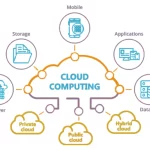
Selecting the right cloud model — public, private, or hybrid — is a critical decision.
Your choice should align with security, compliance, and cost priorities.
Key Considerations:
Public Cloud: Best for scalability and cost-efficiency (AWS, Azure, Google Cloud).
Private Cloud: Ideal for sensitive or highly regulated data (VMware Cloud, IBM Cloud).
Hybrid or Multi-Cloud: Offers flexibility and risk mitigation.
Pro Tip:
Don’t lock yourself into a single provider. Multi-cloud strategies are becoming the standard for large enterprises to avoid dependency and improve resilience.
Cloud Migration Checklist for Enterprise
Build a Cross-Functional Migration Team
Cloud migration is not an IT-only project — it requires collaboration across departments.
Form a dedicated migration task force that includes members from IT, cybersecurity, finance, DevOps, and business operations.
Roles to Include:
Cloud architect
Data engineer
Security specialist
Compliance officer
Project manager
Insight:
Successful enterprises often designate a “Cloud Transformation Officer” to coordinate efforts and ensure strategic alignment across departments.
Cloud Migration Checklist for Enterprise
Create a Comprehensive Migration Strategy
Your strategy defines how workloads will move to the cloud and in what sequence.
There are several migration approaches, commonly known as the “6 Rs” framework:
Rehost (Lift and Shift) – Move workloads as-is.
Replatform – Make minor optimizations.
Refactor – Redesign applications for the cloud.
Repurchase – Replace old software with SaaS alternatives.
Retain – Keep certain systems on-premises.
Retire – Decommission obsolete resources.
Best Practice:
Start with low-risk workloads first to test performance and gain confidence before moving mission-critical systems.
Cloud Migration Checklist for Enterprise
Prioritize Security and Compliance Early
Security can’t be an afterthought in any migration plan.
The cloud introduces new security considerations such as identity management, data encryption, and shared responsibility between you and the provider.
Checklist for Security:
Encrypt data in transit and at rest.
Implement multi-factor authentication (MFA).
Configure identity and access management (IAM) roles properly.
Review compliance with regulations like GDPR, HIPAA, and ISO 27001.
Set up logging and monitoring tools such as AWS CloudTrail or Azure Monitor.
Example:
A Singapore-based healthcare provider created automated compliance checks using Terraform and AWS Config, ensuring every new workload met HIPAA requirements before going live.
Cloud Migration Checklist for Enterprise
Plan Data Migration and Validation
Data migration is one of the most technically demanding stages.
Enterprises must ensure that all data — structured and unstructured — is transferred accurately and securely, with minimal disruption.
Action Steps:
Choose the right data migration tool (AWS DMS, Google Transfer Service, or Azure Data Box).
Conduct pilot migrations before the full move.
Validate data integrity post-transfer using hash or checksum methods.
Set up rollback procedures in case of migration failure.
Pro Tip:
Always plan for data synchronization during the transition — especially if your on-prem and cloud systems will run in parallel for a time.
Cloud Migration Checklist for Enterprise
Optimize Cloud Performance and Cost Post-Migration
Migration is only the beginning. Once workloads are in the cloud, continuous optimization ensures maximum ROI.
Steps to Take:
Implement auto-scaling to handle variable workloads efficiently.
Use cost management tools like AWS Cost Explorer or Azure Cost Management.
Set alerts for unused or underutilized resources.
Benchmark cloud performance regularly.
Consider reserved or spot instances to reduce compute costs.
Example:
An Australian logistics enterprise reduced monthly cloud expenses by 35% through automated scaling policies and resource tagging.
Cloud Migration Checklist for Enterprise
Establish Monitoring, Backup, and Disaster Recovery
Once your systems are live in the cloud, implement end-to-end monitoring and disaster recovery (DR) mechanisms.
Checklist:
Enable centralized logging with tools like CloudWatch or Datadog.
Automate backups and test recovery procedures regularly.
Create recovery time objectives (RTO) and recovery point objectives (RPO).
Simulate failure scenarios to ensure readiness.
Insight:
In 2025, enterprises increasingly use AI-powered monitoring that predicts issues before they cause downtime — shifting from reactive to proactive operations.
Cloud Migration Checklist for Enterprise
Educate, Train, and Continuously Improve
The final — and ongoing — phase of your migration journey is building a cloud-first culture.
Your IT staff must continuously update their skills to match evolving technologies.
Actions to Consider:
Offer certifications (AWS, Azure, GCP) for key personnel.
Conduct workshops to share lessons learned from the migration.
Establish a “Cloud Center of Excellence” to define best practices and governance.
Key takeaway:
Cloud migration is not a one-time event — it’s a continuous transformation that evolves alongside your organization’s needs.
Cloud Migration Checklist for Enterprise
Conclusion
A successful cloud migration requires more than technical expertise — it demands strategy, leadership, and continuous optimization.
By following this enterprise-focused checklist, IT teams can minimize risk, control costs, and unlock the full potential of cloud computing.
Cloud migration is not just about moving infrastructure; it’s about empowering your organization to innovate faster and smarter in a cloud-driven world.
Cloud Migration Checklist for Enterprise