Essential Characteristics of Cloud Computing: The Foundation of the Digital Era
In the modern digital ecosystem, cloud computing has revolutionized how organizations store, manage, and process data. It enables businesses and individuals to access computing resources — such as servers, storage, databases, and applications — over the internet without needing to own or maintain physical infrastructure.
But what truly defines a “cloud” system? What makes it different from traditional IT environments? The answer lies in the essential characteristics of cloud computing.
These characteristics, as defined by the National Institute of Standards and Technology (NIST), serve as the foundation of every true cloud service. They ensure flexibility, scalability, and efficiency across cloud environments, whether public, private, or hybrid.
In this article, we’ll explore in depth the five essential characteristics of cloud computing, how they work, and why they matter for modern enterprises.
Essential Characteristics of Cloud Computing
What Are the Essential Characteristics of Cloud Computing?
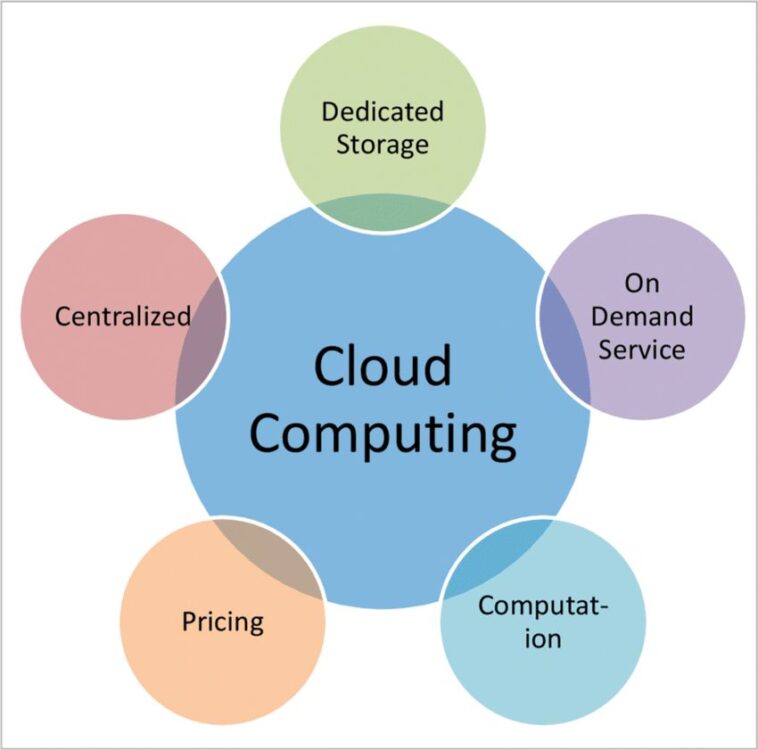
The essential characteristics of cloud computing are the defining features that differentiate cloud technology from traditional on-premises IT systems. According to the NIST Definition of Cloud Computing (SP 800-145), there are five key characteristics:
On-demand self-service
Broad network access
Resource pooling
Rapid elasticity
Measured service
Each of these characteristics plays a crucial role in ensuring that cloud computing remains efficient, scalable, and user-centric. Let’s explore each one in detail.
Essential Characteristics of Cloud Computing
1. On-Demand Self-Service
The first and most fundamental feature of cloud computing is on-demand self-service.
This means that users can provision computing resources automatically — such as storage, processing power, or network capacity — without requiring human intervention from the service provider.
How It Works
In traditional IT environments, users needed to contact IT departments to request additional storage or servers, which could take days or weeks. With cloud computing, users can do this instantly through a web portal or API.
For example, on Amazon Web Services (AWS), a user can launch a new virtual machine (EC2 instance) or increase storage on-demand with just a few clicks.
Benefits
Speed: Immediate access to resources speeds up innovation and deployment.
Flexibility: Users can scale up or down as needed.
Autonomy: Developers and organizations can manage resources independently.
2. Broad Network Access
The second essential characteristic is broad network access, which ensures that cloud services are available over the internet from anywhere, at any time, using various devices.
How It Works
Cloud services are accessible through standard network protocols and devices, including laptops, smartphones, and tablets. This universal accessibility makes cloud computing ideal for remote work, global collaboration, and mobile applications.
For instance, tools like Google Drive or Microsoft OneDrive allow users to store, edit, and share documents across devices seamlessly.
Benefits
Accessibility: Users can connect from any location with internet access.
Device Independence: Supports a range of devices and platforms.
Collaboration: Enables real-time teamwork and global communication.
3. Resource Pooling
One of the most technically powerful characteristics is resource pooling.
In this model, cloud providers use a multi-tenant architecture, where computing resources such as storage, processing, and memory are pooled together to serve multiple customers dynamically.
How It Works
Resources are allocated and reassigned automatically according to user demand. The customer typically has no control over the exact physical location of their resources, though some services allow choosing regions or zones for compliance purposes.
For example, Microsoft Azure uses shared resource pools to serve millions of clients simultaneously, optimizing hardware utilization and reducing costs.
Benefits
Efficiency: Maximizes hardware utilization by sharing resources.
Cost Savings: Lowers overall infrastructure and maintenance expenses.
Scalability: Supports fluctuating workloads without performance degradation.
Security Consideration
Because resource pooling involves multiple users sharing the same physical infrastructure, cloud providers implement strict isolation techniques and encryption to ensure data privacy and security.
4. Rapid Elasticity
The fourth characteristic — rapid elasticity — represents the cloud’s ability to scale resources dynamically in response to varying demand.
How It Works
Cloud platforms automatically expand or contract resources like CPU, RAM, or storage based on real-time requirements. This elasticity gives the illusion of infinite capacity, even though physical limits exist.
A great example is auto-scaling in AWS or Google Cloud, where an application automatically adds more computing instances during high traffic and reduces them when demand decreases.
Benefits
Scalability: Resources adjust instantly to match workload demands.
Cost Optimization: Users pay only for what they use.
Performance Stability: Prevents downtime during usage spikes.
Business Impact
Rapid elasticity enables startups, e-commerce platforms, and enterprises to handle unpredictable workloads — such as seasonal traffic or viral campaigns — without compromising performance.
5. Measured Service
The final essential characteristic is measured service, also known as pay-as-you-go or metered usage.
This means that cloud systems automatically measure and optimize resource usage, providing transparency and accountability to both provider and consumer.
How It Works
Every action — from data storage to compute power usage — is tracked and billed accordingly. Providers use monitoring tools to allocate resources efficiently and to generate detailed usage reports.
For example, AWS CloudWatch and Azure Monitor allow users to visualize consumption metrics and control costs effectively.
Benefits
Cost Transparency: Users can see exactly what they’re paying for.
Operational Efficiency: Encourages optimal resource use.
Automation: Simplifies billing, monitoring, and resource management.
This characteristic is crucial for businesses aiming to optimize budgets and prevent unnecessary spending.
Essential Characteristics of Cloud Computing
Why These Characteristics Matter
The five essential characteristics of cloud computing are not just theoretical concepts — they are the core enablers of cloud success.
Together, they allow organizations to:
Reduce capital expenditure (CapEx) by moving to an operational expenditure (OpEx) model.
Enhance agility and innovation, enabling faster time-to-market.
Improve business continuity through scalability and remote accessibility.
Increase competitiveness by leveraging global cloud infrastructure.
Without these characteristics, the “cloud” would simply be a traditional data center with remote access — lacking the flexibility, automation, and cost-efficiency that define modern computing.
Essential Characteristics of Cloud Computing
Additional Attributes Supporting Cloud Computing
Beyond the five essential traits, several supporting characteristics enhance the cloud experience:
Multi-tenancy: Multiple users share resources securely.
Service Models (IaaS, PaaS, SaaS): Provide different levels of abstraction and control.
Automation and Orchestration: Manage and coordinate complex cloud environments efficiently.
Security and Compliance: Integral layers that protect cloud workloads and meet regulatory standards.
These features work hand in hand with the essential characteristics to form a robust, reliable, and secure cloud ecosystem.
Essential Characteristics of Cloud Computing
Practical Examples in Major Cloud Platforms
| Cloud Provider | Implementation Example | Related Characteristic |
|---|---|---|
| AWS EC2 | Auto-scaling groups for web apps | Rapid Elasticity |
| Google Cloud Storage | Global access via REST APIs | Broad Network Access |
| Azure Virtual Machines | Pay-per-use billing system | Measured Service |
| Salesforce CRM | Multi-tenant SaaS platform | Resource Pooling |
| IBM Cloud | Self-service portal for provisioning | On-Demand Self-Service |
These examples show how the five characteristics are embedded in real-world platforms, driving efficiency and innovation across industries.
Essential Characteristics of Cloud Computing
Conclusion
The essential characteristics of cloud computing — on-demand self-service, broad network access, resource pooling, rapid elasticity, and measured service — form the backbone of all cloud systems.
They ensure that cloud computing remains scalable, flexible, efficient, and cost-effective, enabling organizations to transform digitally and compete globally.
Understanding these characteristics is not just important for IT professionals; it’s critical for any organization looking to harness the power of the cloud strategically.
By embracing these principles, businesses can create smarter, more agile systems — turning technology into a true enabler of innovation and growth.