Infrastructure as a Service Examples
The digital landscape is no longer built on bricks and mortar, but on silicon and fiber optics. For businesses navigating the complexities of the 21st century, the traditional model of purchasing, housing, and maintaining physical servers has become an anchor rather than an engine. Enter Infrastructure as a Service (IaaS)—the foundational layer of cloud computing that has revolutionized how we build and scale technology.
In this comprehensive guide, we will explore the architecture of IaaS, its distinct advantages, and provide detailed infrastructure as a service examples to help you understand how this model powers everything from lean startups to global enterprises.
Infrastructure as a Service Examples
What is Infrastructure as a Service (IaaS)?
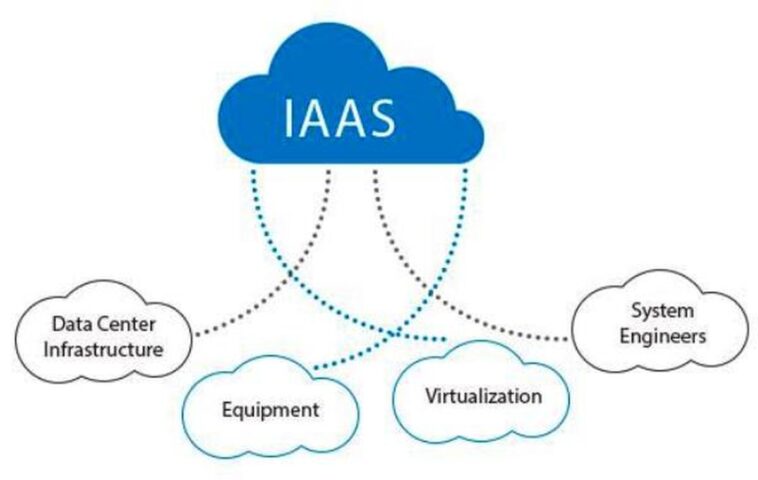
At its core, IaaS is a cloud computing model that provides on-demand access to fundamental computing resources over the internet. Instead of buying hardware, you rent it. This includes:
Compute: Virtual Central Processing Units (vCPUs) and memory (RAM).
Storage: Scalable disk space for databases and files.
Networking: Firewalls, IP addresses, and load balancers.
Unlike Platform as a Service (PaaS) or Software as a Service (SaaS), IaaS gives you the highest level of control. You are responsible for managing the operating system, middleware, and applications, while the cloud provider manages the physical data centers, cooling, and hardware maintenance.
Infrastructure as a Service Examples
The Core Advantages of Moving to IaaS
The shift from on-premise hardware to IaaS isn’t just a technical upgrade; it’s a strategic business move. Here is why organizations are making the switch:
1. Financial Flexibility (OpEx over CapEx)
Traditional infrastructure requires massive upfront capital expenditure (CapEx). You buy servers today based on what you think you might need in three years. With IaaS, you shift to an operational expenditure (OpEx) model. You pay only for what you use, often billed by the hour or even the second.
2. Infinite Scalability
If your website experiences a sudden surge in traffic—perhaps due to a viral social media post or a seasonal sale—IaaS allows you to “scale up” (add more power to existing servers) or “scale out” (add more servers) instantly. When the rush is over, you scale back down to save costs.
3. Reliability and Redundancy
Top-tier IaaS providers operate global networks of data centers. If one physical server fails, your virtual machine is automatically migrated to another. This level of built-in redundancy is nearly impossible for most companies to replicate in a private data center.
Infrastructure as a Service Examples
Real-World Infrastructure as a Service Examples
To truly understand the power of this model, let’s look at the industry leaders and the specific services they offer. These infrastructure as a service examples represent the backbone of the modern internet.
Infrastructure as a Service Examples
1. Amazon Web Services (AWS)
AWS is the pioneer and current market leader in the IaaS space. It offers a staggering array of services, but its core IaaS offerings are:
Amazon EC2 (Elastic Compute Cloud): This allows users to boot up virtual servers in minutes. You can choose the CPU, memory, and storage that fits your specific workload.
Amazon S3 (Simple Storage Service): An object storage service that offers industry-leading scalability, data availability, and security.
2. Microsoft Azure
Azure is the preferred choice for many enterprises, especially those already integrated into the Microsoft ecosystem.
Azure Virtual Machines: Similar to EC2, these provide the raw computing power needed to run Windows or Linux applications.
Azure Disk Storage: High-performance, durable block storage designed for use with Azure Virtual Machines.
3. Google Cloud Platform (GCP)
Google leverages the same infrastructure that powers its search engine and YouTube to offer highly efficient cloud services.
Google Compute Engine (GCE): Known for its fast boot times and high-performance networking.
Virtual Private Cloud (VPC): Provides a private, isolated network environment on Google’s global infrastructure.
4. DigitalOcean
While the “Big Three” focus on massive enterprises, DigitalOcean has carved out a niche by focusing on developers and startups. Their “Droplets” are simple, easy-to-configure virtual machines that allow developers to deploy applications without the complexity of larger enterprise platforms.
5. Oracle Cloud Infrastructure (OCI)
Oracle has made significant strides in IaaS by focusing on high-performance computing and database-heavy workloads. Their “Bare Metal” servers allow customers to run applications directly on physical hardware without a virtualization layer, offering maximum performance and isolation.
Infrastructure as a Service Examples
IaaS Use Cases: How Businesses Use These Tools
How do these infrastructure as a service examples translate into daily business operations? Here are the most common scenarios:
Web Hosting
Gone are the days of hosting a business website on a single, fragile physical server. Companies use IaaS to host complex web applications that require high availability and the ability to handle fluctuating traffic.
Big Data Analysis
Processing massive datasets requires incredible amounts of raw computing power for short periods. Instead of buying a supercomputer, a company can rent a high-powered cluster of virtual machines from Google Cloud or AWS, run their analysis, and shut the machines down when finished.
Disaster Recovery
Rather than building a second physical data center for “just in case” scenarios, businesses use IaaS to mirror their data and applications. If the primary site goes down, they can spin up their infrastructure in the cloud within minutes.
Software Development and Testing (DevTest)
Development teams need environments that mimic production. With IaaS, they can create a “sandbox” environment to test new code, then destroy it once the test is complete, ensuring they never pay for idle resources.
Infrastructure as a Service Examples
The Shared Responsibility Model
A critical concept for anyone using infrastructure as a service examples is the Shared Responsibility Model. It defines who is responsible for what:
The Provider’s Responsibility: The physical security of data centers, the hardware (servers, racks, cables), and the virtualization layer.
The Customer’s Responsibility: The operating system (patching and updates), application security, data encryption, and identity/access management (IAM).
Ignoring your side of this model is a common cause of data breaches. Even if you use the most secure IaaS provider in the world, a poorly configured firewall or an unpatched OS can leave you vulnerable.
Infrastructure as a Service Examples
Choosing the Right IaaS Provider
With so many options, how do you choose? Consider these four factors:
Region Availability: Does the provider have data centers near your users? Low latency is vital for user experience.
Cost Structure: Compare the pricing for compute and data egress (the cost of moving data out of the cloud). Some providers are cheaper for storage but more expensive for bandwidth.
Compliance: If you are in a regulated industry (like finance or healthcare), ensure the provider meets standards like GDPR, HIPAA, or SOC2.
Ecosystem: If your team is expert in Python and open-source tools, GCP might feel more natural. If you are a .NET shop, Azure is often the logical path.
Infrastructure as a Service Examples
The Future of IaaS: Trends to Watch
As we look toward 2027 and beyond, IaaS is evolving. We are seeing a rise in Serverless Computing, where the infrastructure is so abstracted that developers don’t even have to manage virtual machines—they just upload code.
Furthermore, Edge Computing is pushing IaaS resources closer to the user. Instead of a few massive data centers, providers are building thousands of smaller “micro-data centers” to support real-time applications like autonomous vehicles and AR/VR.
Infrastructure as a Service Examples
Conclusion
Infrastructure as a Service has democratized technology. It has leveled the playing field, allowing a two-person startup in a garage to access the same world-class computing power as a Fortune 500 company. By understanding these infrastructure as a service examples and the logic behind them, you can build a digital presence that is not only robust and secure but also ready to scale at the speed of your ambition.
Whether you are migrating a legacy database or building the next viral app, the cloud is no longer an “option”—it is the foundation upon which the future is built.