Cloud Computing Software Examples
Cloud computing has transformed the way individuals and businesses use technology. Instead of relying on local machines or on-premises infrastructure, users can now access powerful software and services over the internet. This shift has led to the rapid growth of cloud computing software, enabling greater flexibility, scalability, and efficiency.
In this article, we will explore cloud computing software examples in detail, understand their categories, and examine how they are used in real-world scenarios.
Cloud Computing Software Examples
What Is Cloud Computing Software?
Cloud computing software refers to applications and services that are hosted on remote servers and delivered to users عبر the internet. Instead of installing software on a local device, users can access it through a web browser or API.
These solutions are typically offered through different service models:
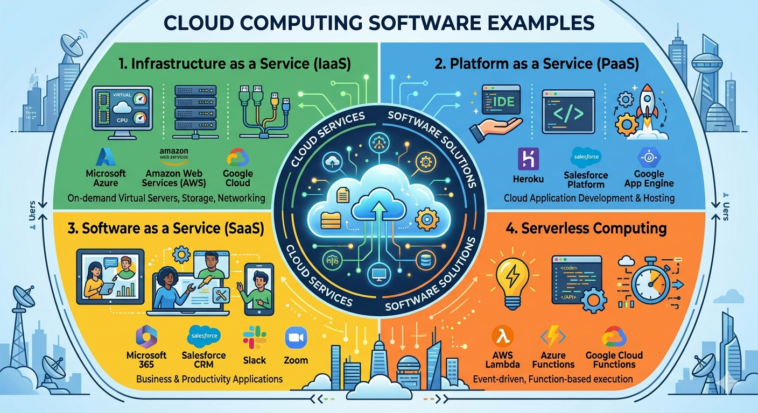
- SaaS (Software as a Service) – Ready-to-use applications
- PaaS (Platform as a Service) – Development platforms
- IaaS (Infrastructure as a Service) – Virtualized infrastructure
Each model serves different purposes and provides unique benefits.
Why Cloud Software Is Important
Cloud computing software has become essential due to several advantages:
- Accessibility: Access from anywhere with an internet connection
- Cost Efficiency: Pay only for what you use
- Scalability: Easily scale resources up or down
- Collaboration: Multiple users can work simultaneously
- Automatic Updates: No need for manual installation
These benefits make cloud software ideal for modern businesses and remote teams.
Cloud Computing Software Examples
Cloud Computing Software Examples
SaaS (Software as a Service) Examples
SaaS is the most common type of cloud computing software. It provides fully functional applications that users can access directly.
1. Google Workspace
Google Workspace includes tools like Gmail, Google Docs, Google Sheets, and Google Drive.
Use Case:
- Team collaboration
- Document sharing
- Cloud storage
Why It’s Popular:
- Real-time editing
- Easy sharing
- Integration with other tools
2. Microsoft 365
Microsoft 365 offers cloud-based versions of Word, Excel, PowerPoint, and Outlook.
Use Case:
- Business productivity
- Email management
- Document creation
Key Feature:
- Seamless integration with enterprise systems
3. Dropbox
Dropbox is a cloud storage and file-sharing platform.
Use Case:
- File backup
- Sharing large files
- Syncing across devices
4. Salesforce
Salesforce is a leading cloud-based CRM (Customer Relationship Management) platform.
Use Case:
- Managing customer data
- Sales automation
- Marketing campaigns
5. Zoom
Zoom is a cloud-based communication platform.
Use Case:
- Video conferencing
- Webinars
- Online meetings
Cloud Computing Software Examples
PaaS (Platform as a Service) Examples
PaaS provides developers with tools and environments to build, test, and deploy applications.
1. Google App Engine
A platform for building scalable web applications.
Use Case:
- Hosting web apps
- Backend services
2. Microsoft Azure App Services
A cloud platform for developing and deploying applications.
Use Case:
- Enterprise app development
- API hosting
3. Heroku
A popular PaaS for developers.
Use Case:
- Rapid app deployment
- Prototyping
Why Developers Love It:
- Easy setup
- Supports multiple programming languages
4. AWS Elastic Beanstalk
A service for deploying applications quickly.
Use Case:
- Managing infrastructure automatically
IaaS (Infrastructure as a Service) Examples
IaaS provides virtualized computing resources such as servers, storage, and networking.
1. Amazon EC2
Amazon Elastic Compute Cloud offers virtual servers.
Use Case:
- Running applications
- Hosting websites
2. Google Compute Engine
Provides virtual machines on Google Cloud.
Use Case:
- High-performance computing
- Data processing
3. Microsoft Azure Virtual Machines
Offers scalable virtual servers.
Use Case:
- Enterprise workloads
- Custom applications
Real-World Use Cases of Cloud Software
1. Remote Work
Cloud tools like Google Workspace and Zoom enable teams to collaborate from anywhere.
2. E-commerce
Platforms like Shopify (SaaS) allow businesses to build online stores .
3. Data Storage and Backup
Cloud storage solutions ensure data is safe and accessible.
4. Application Development
Developers use PaaS tools to build and deploy applications faster.
Cloud Computing Software Examples
Key Differences Between SaaS, PaaS, and IaaS
| Feature | SaaS | PaaS | IaaS |
|---|---|---|---|
| User Control | Low | Medium | High |
| Management | Provider | Shared | User |
| Use Case | End users | Developers | IT teams |
Advantages of Cloud Computing Software
Cloud computing software offers a wide range of advantages that have made it the backbone of modern digital transformation. These benefits go far beyond simple convenience and directly impact productivity, scalability, and business growth.
Cloud Computing Software Examples
Flexibility – Work from Any Device
One of the most powerful advantages of cloud software is flexibility. Users can access applications and data from virtually any device—whether it’s a laptop, tablet, or smartphone—as long as there is an internet connection. This enables remote work, global collaboration, and seamless switching between devices without losing progress. For businesses, this means employees are no longer tied to a physical office, increasing both efficiency and work-life balance.
Cost Savings – No Hardware Investment
Traditional IT infrastructure requires significant upfront investment in servers, storage, and maintenance. Cloud computing eliminates this need by offering a pay-as-you-go model, where businesses only pay for the resources they use. This reduces capital expenditure and allows startups and small businesses to access enterprise-level technology without massive financial barriers.
Cloud Computing Software Examples
Security – Advanced Protection Features
Cloud providers invest heavily in security technologies that most individual organizations cannot afford on their own. These include data encryption, firewalls, multi-factor authentication, and continuous monitoring. Additionally, many cloud platforms comply with international security standards, ensuring a high level of data protection. While no system is completely immune to threats, cloud security is often more advanced than traditional setups.
Cloud Computing Software Examples
Scalability – Grow with Your Business
Cloud computing allows businesses to scale resources up or down instantly based on demand. Whether you are experiencing rapid growth or seasonal traffic spikes, cloud platforms can handle increased workloads without requiring new hardware. This level of scalability ensures that companies can adapt quickly to changing market conditions without over-investing in unused resources.
Performance – High-Speed Infrastructure
Cloud providers operate large-scale data centers equipped with high-performance hardware and optimized networks. This results in faster processing speeds, reduced latency, and improved application performance. Many providers also use Content Delivery Networks (CDNs) to deliver content quickly to users worldwide, ensuring a smooth and responsive experience.
Cloud Computing Software Examples
Challenges of Cloud Software
Despite its many advantages, cloud computing software also comes with challenges that organizations must carefully consider before adoption.
Internet Dependency
Cloud services rely heavily on internet connectivity. Without a stable and high-speed connection, access to applications and data can be disrupted. This can impact productivity, especially in regions with unreliable internet infrastructure.
Data Privacy Concerns
Storing sensitive data on remote servers raises concerns about privacy and control. Organizations must trust cloud providers to handle their data securely and comply with regulations. Industries such as healthcare and finance must take extra precautions to ensure compliance with strict data protection laws.
Cloud Computing Software Examples
Vendor Lock-In
Switching from one cloud provider to another can be complex and costly. Many platforms use proprietary technologies that make migration difficult, leading to vendor lock-in. This can limit flexibility and reduce negotiating power over time.
Ongoing Subscription Costs
While cloud computing reduces upfront costs, the long-term expenses can add up. Monthly or yearly subscription fees, combined with additional charges for storage, bandwidth, and advanced features, can become significant if not managed properly.
Overall Perspective
Despite these challenges, the benefits of cloud computing software often outweigh the drawbacks. With proper planning, security measures, and cost management strategies, organizations can maximize the advantages while minimizing potential risks.
Cloud Computing Software Examples
Future Trends in Cloud Computing Software Examples
The future of cloud computing software is evolving rapidly, driven by innovation and increasing global demand for smarter, faster, and more efficient solutions.
AI Integration – Smarter Automation and Analytics
Artificial intelligence is becoming deeply integrated into cloud platforms. Cloud software is no longer just a tool—it is becoming intelligent. AI enables automation of repetitive tasks, predictive analytics, and real-time decision-making. Businesses can analyze massive amounts of data quickly, gaining insights that were previously impossible to obtain.
Serverless Computing – No Need to Manage Servers
Serverless computing is redefining how applications are built and deployed. Developers can focus entirely on writing code without worrying about managing infrastructure. The cloud provider automatically handles scaling, maintenance, and resource allocation, making development faster and more efficient.
Edge Computing – Faster Processing Near Users
As the demand for real-time applications grows, edge computing is becoming more important. Instead of processing data in centralized cloud data centers, data is processed closer to the user or device. This reduces latency and improves performance, especially for applications like IoT, gaming, and autonomous systems.
Cloud Computing Software Examples
Multi-Cloud Strategies – Using Multiple Providers
Organizations are increasingly adopting multi-cloud strategies, where they use services from multiple cloud providers. This approach reduces dependency on a single vendor, improves reliability, and allows businesses to choose the best services from different platforms.
Cloud Computing Software Examples
Enhanced Security – Zero-Trust Architectures
Security is evolving with the adoption of zero-trust models, where no user or system is automatically trusted. Every access request is verified, regardless of its origin. Combined with AI-driven threat detection and advanced encryption, this approach significantly improves protection against cyber threats.
Cloud Computing Software Examples
Final Insight
These trends indicate that cloud computing software is moving toward a future that is more intelligent, decentralized, and secure. The focus is shifting from simply providing infrastructure to delivering smart, autonomous, and highly optimized digital ecosystems.
As technology continues to evolve, organizations that embrace these innovations will gain a significant competitive advantage in the digital landscape.
Cloud computing software has revolutionized the digital landscape by providing accessible, scalable, and cost-effective solutions. From SaaS tools like Google Workspace and Zoom to powerful platforms like AWS and Azure, cloud software is at the core of modern technology.
Understanding these examples helps individuals and businesses make informed decisions about which tools to use. As technology continues to evolve, cloud computing software will remain a critical component of innovation and growth.
Whether you are a student, developer, or business owner, embracing cloud computing is no longer optional—it is essential for staying competitive in the digital age.
Cloud Computing Software Examples